
‘Ubebe I love you’: Ube more prized than gold and silver in Baguio
Acres of planted ones are reportedly wiped out by floods, not only among northern growers like Baguio and Benguet, but also among farmers in different parts of the archipelago like Quezon province. Who would have thought that ube could also be a victim of the flood control scandal?


From over P9,000 in 2023, gold prices have reportedly dropped to P8,000 per gram this year, making it a good time to invest in gold, a miner and jewelry shop owner in Baguio City public market told DAILY TRIBUNE.
Silver, another staple Baguio product, has a current price range of P80 to P211 per gram and is expected to continue to rise, an indication of it being a good investment like gold, the jewelry shop owner said.
In spite of these, the jewelry shop owner found it hard to attract gold and silver buyers. Many Baguio visitors still choose to line up instead for ube (purple yam) jams.
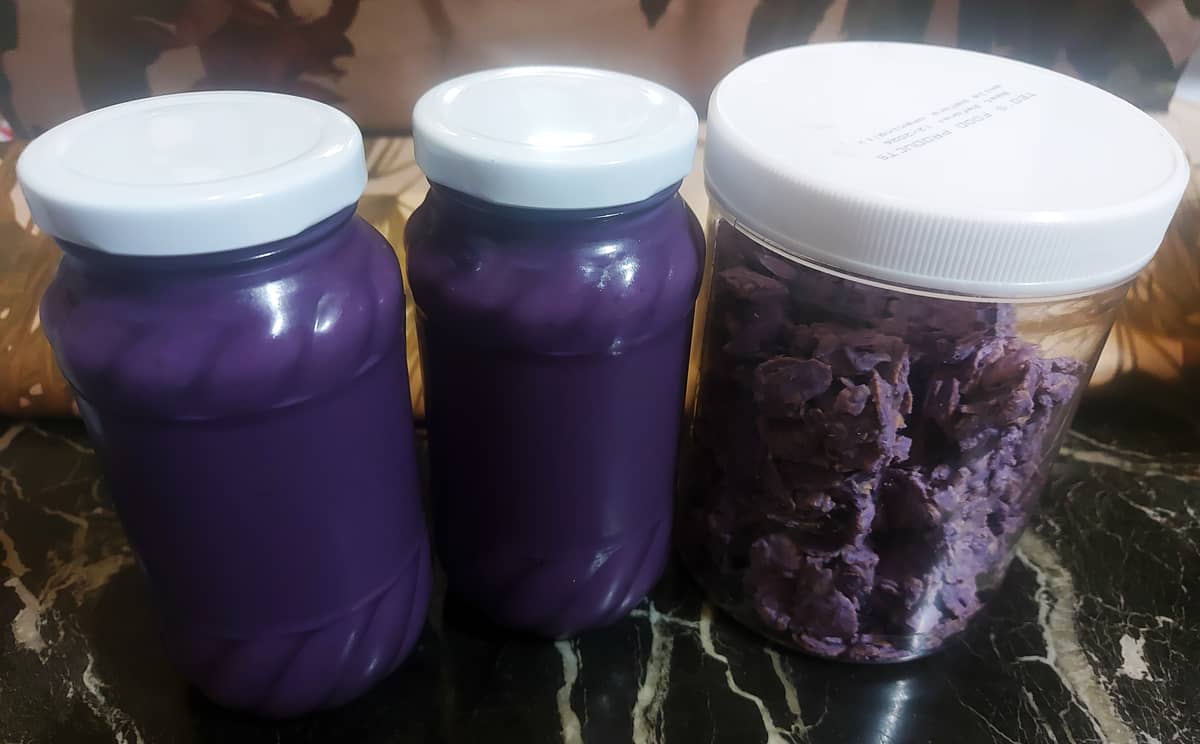
BAGUIO ube jams and flake.
Photograph courtesy of Deni Bernardo
DAILY TRIBUNE held its team-building activity in Baguio early this week and before heading back to Manila, we decided to stop over at Good Shepherd to buy pasalubong (souvenirs). At Good Shepherd last Monday before 11 a.m. when we arrived, there were several windows selling treats and the line for non-seniors and PWDs (persons with disabilities) was as usual, very long, taking 30 minutes to an hour to reach the counter.
But a few minutes into the line, our group heard the intercom announcing: “Ube jam is sold out!”
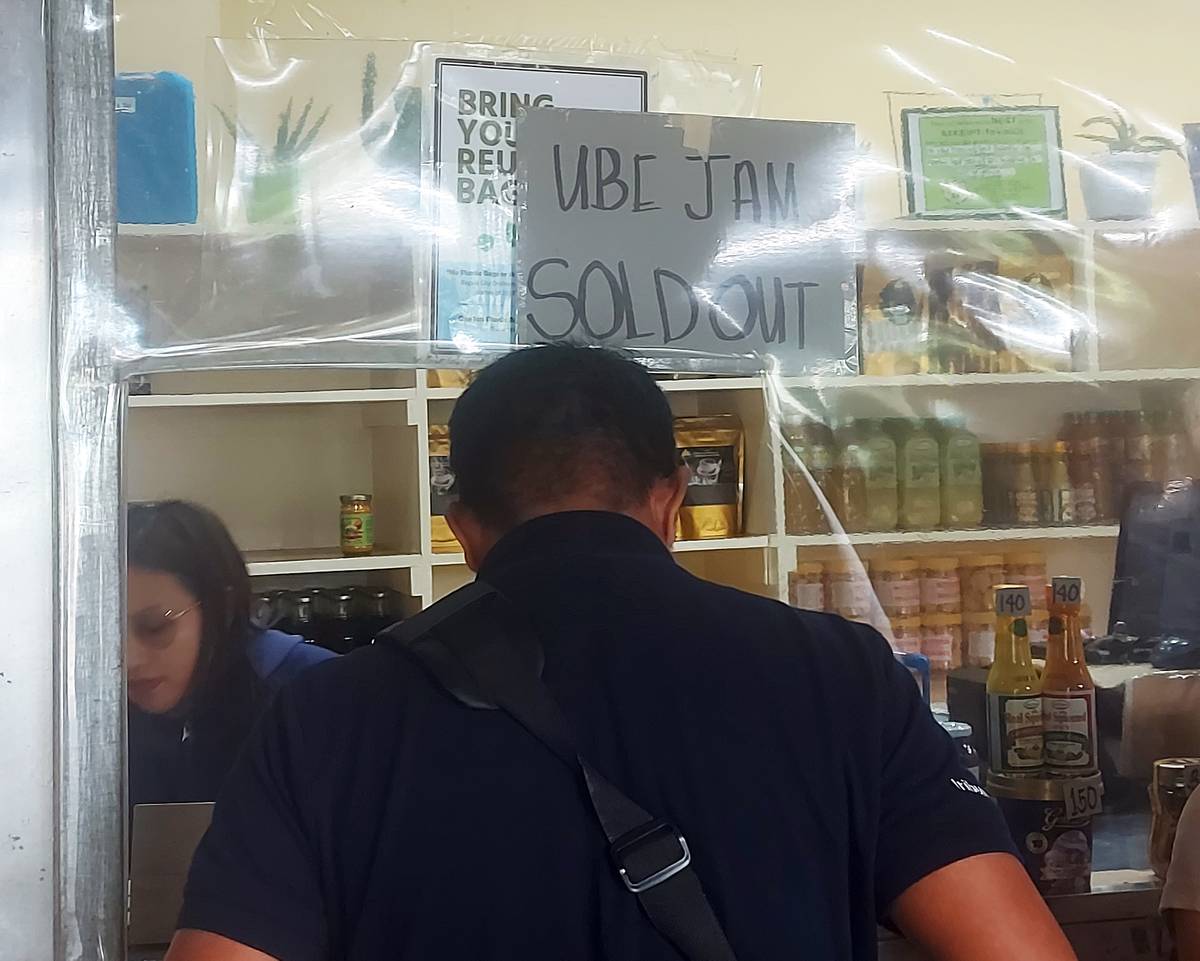
SIGNAGE informing customers that ube jam is sold out for the day at Good Shepherd.
Photograph courtesy of Deni Bernardo
Immediately, the crowd evaporated and all that was left were very short queues of people interested to buy something else in lieu of ube jam.
“It’s so unfair! I haven’t been back to the Philippines for 33 years, I lined up for a long time for ube jam, but I wasn’t able to get any!” cried a visiting Filipino migrant. “If you’re able to buy one, I’m willing to buy it from you for P5,000 just so my efforts won’t be for naught!” she told the crowd.
Other customers responded by giving recommendations on where she could also shop for ube jam. “Hmp! Let’s just go home and make ube ourselves!” declared another disappointed customer.
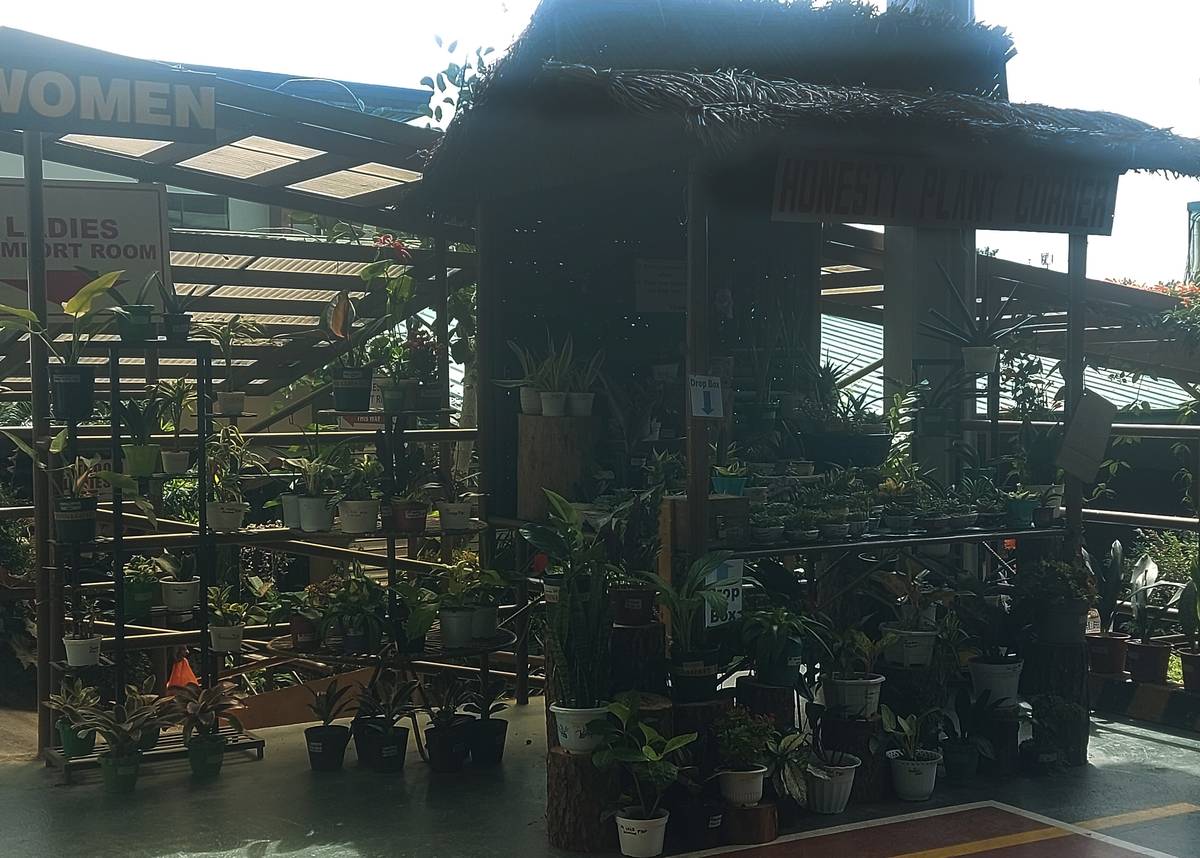
TO divert customers from just buying ube jams, Good Shepherd has diversified its offerings to include this honesty plant store.
Photograph courtesy of Deni Bernardo
In a chat with DAILY TRIBUNE, a seller explained the real reason there is not enough ube jam for everyone. According to the Good Shepherd representative at the first selling counter, the nunnery’s scholars, who process the jams, don’t work on Sundays, which is why the store doesn’t have too much to sell on Mondays.
The representative told this writer that they have enough raw materials and that it wasn’t true they were running out of ube.

LINES at the selling area prior to sold-out ube jams announcement.
Photograph courtesy of Deni Bernardo
Determined to look for ube jam alternatives to Good Shepherd, this writer and her colleagues headed to Baguio’s public market. A seller at the market affirmed the Good Shepherd seller’s claim that there’s no ube shortage. According to the seller, in fact, purple yams are even becoming more abundant in their area since summer, the season for many Philippine produce like purple yam, is almost here.
Proof that there is no purple yams shortage, she said, is the rise of new ube jam brands such as JJ, which she claims is now second to Good Shepherd as the in-demand ones.
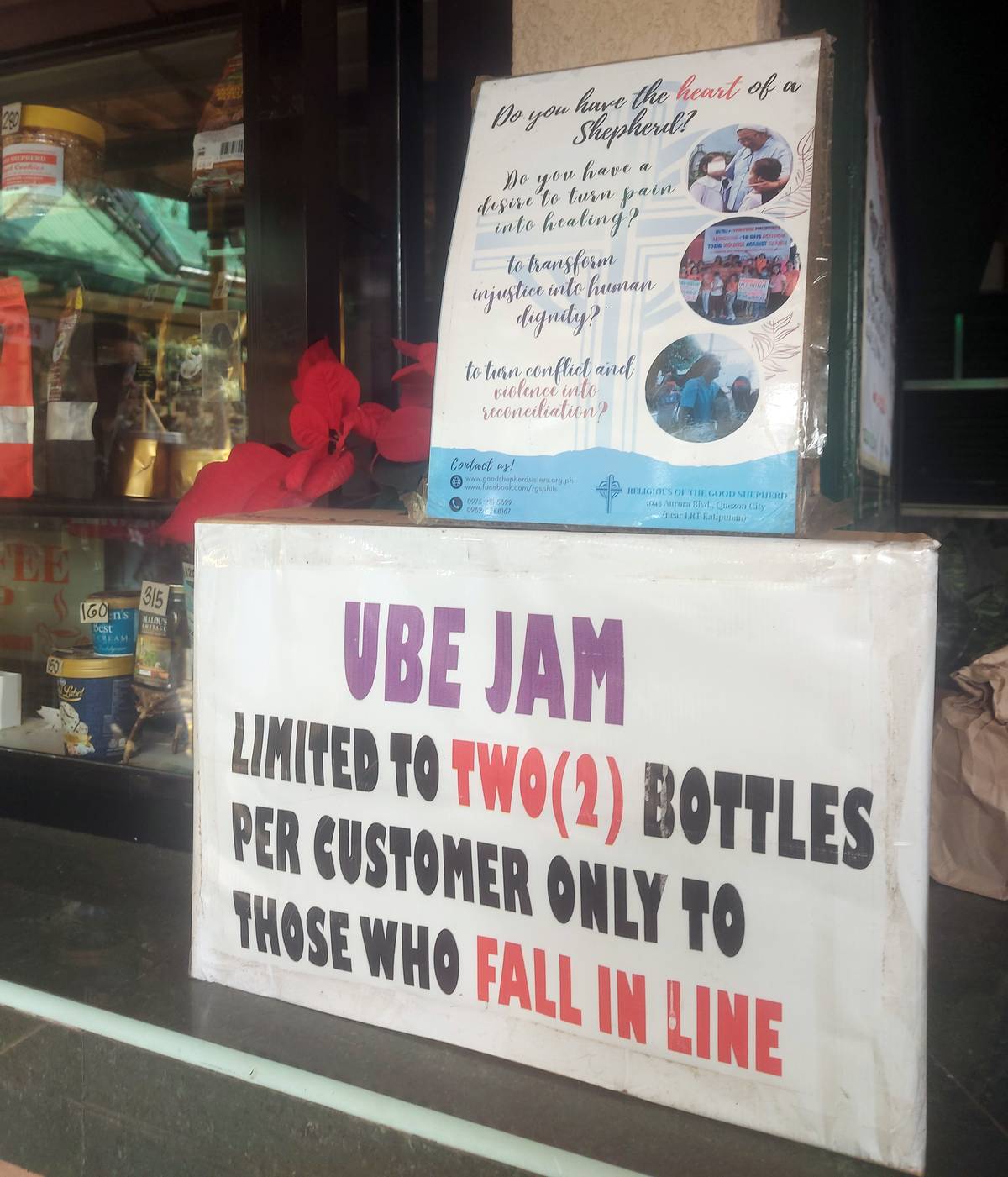
GOOD Shepherd limits ube jam purchase to two bottles per person.
Photograph courtesy of Deni Bernardo
‘Ube is the new matcha’
Ever since Sister Fidelis Atienza, RGS (Religious of the Good Shepherd), of the Good Shepherd Convent in Baguio City introduced the convent’s ube jam recipe in 1976 as a sustainable livelihood project for the Mountain Maid Training Center for funding education for local youth and livelihood for marginalized women, the jam, made of fresh purple yam, condensed milk and butter, has been an iconic pasalubong from Baguio. What sets it apart from competition are its thickness and creaminess, marked by the unmistakable green and white logo.
In recent years, climate change reportedly made ube production a challenge for Good Shepherd, but according to the representative that DAILY TRIBUNE spoke with, this is no longer the case today.
“There’s no problem with the raw materials. The raw materials are there. The bottleneck is with processing the purple yams, which takes a lot of time and effort,” the representative explained.
The lengthy production time has obviously made it hard for Good Shepherd to keep up with the demand. Thus, based on the Law of Supply and Demand, the low supply but high demand has resulted into hoarding and jacked-up prices. A bottle of jam only costs P350 at Good Shepherd, but since only two bottles are allowed per customer starting at 8:30 a.m. every day, with no reservations permitted, these have prompted many other stores to line up early and resell the jam at P450 to P600 at their stalls, citing long lines to justify the exorbitant markup.
From Baguio, the demand for Philippine purple yam has spiraled to reach New York, Australia and Paris, where the Philippine ube is “the new matcha” used for lattes and cakes and other desserts, The New York Times reported last December. The report further claimed that while China and Vietnam have joined the ube race, the supply could not still keep up with the global demand.
The tuber, although easy to reproduce, grows only seasonally, preferring dry months like summer. But because of rains due to climate change, the crop rots back into the earth. Acres of planted ones are reportedly wiped out by floods, not only among northern growers like Baguio and Benguet, but also among farmers in different parts of the archipelago like Quezon province. Who would have thought that ube could also be a victim of the flood control scandal?
Because of the high demand, ube growers can now sell ube at higher prices, leaving almost nothing left, not even cut ups needed to be replanted to grow new batches.
Good Shepherd, the representative told DAILY TRIBUNE, has enough seeds to grow ube, but seeds take longer to grow and harvest.
The country’s Agriculture department told New York Times that government cut the already small budget of P10 million for ube by 10 percent for this year. The budget is supposed to help provide more planting materials to farmers. More budget is allocated for rice, corn and vegetables to reportedly help address malnutrition.
Ube, however, is also nutritious and can help combat malnourishment. Antioxidants give it its vibrant hue. Since it is starchy, it’s a good source of fiber that promotes proper digestion and reduces blood sugar levels and high blood pressure, according to Healthline. It is also a good source of potassium, carbohydrates and vitamin C.
Ube is even more nutritious than the white rice most Filipinos eat since white rice has lost most of its nutrients to processing, Singapore-based Raffles Medical Group reported.
Surely, an immediate and effective action plan is needed to address the country’s ube problem because the country’s need to cement its reputation as reportedly the world’s biggest ube producer could also become its citizens’ purple ticket out of poverty.
As for my ube jam pasalubong from Baguio, an ube lover from Manila said after tasting the Good Shepherd alternative: “It’s so overrated! My officemate, a single mom from Tondo, sells better-tasting ube jam for only P150!”
The ube lover showed more appreciation instead for my other pasalubong, a silver pendant.