
Turning back the hands of time and tradition: Ilocos Norte town revives the panagdapil
The age-old process of extracting of sugarcane juice in San Nicolas returns returns, yielding sweets and a link to Ilocano heritage.
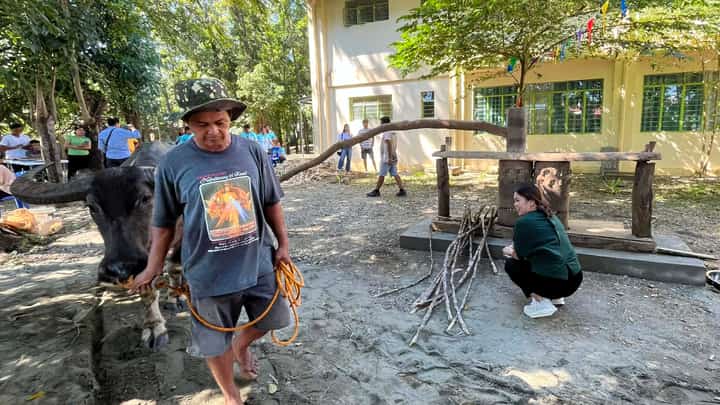
After a five-year hiatus, the local government of San Nicolas in Ilocos Norte has brought back the age-old traditional method called panagdapil or dapil, using the dadapilan, a contraption or a mill used to press sugarcane stalks to extract bennal, or sugarcane juice.
In Tagalog- and Kapampangan-speaking areas of Luzon, the dapil is known as cabio or cabiao, a term that has also given rise to place names such as Cabiao in Nueva Ecija, Pulong Kabyawan in Pulilan, Bulacan and Cabio Bakal in Apalit, Pampanga.
The dadapilan consists of a pair of large rotating cylindrical wooden presses, operated by a cow or carabao through an attached log. Sugarcane stalks are placed between the rotating wooden cylinders, which extract the juice through steady pressure.
The revival of the dapil is part of the local government’s effort to promote and reintroduce this traditional practice, which is considered one of San Nicolas’ important cultural heritage assets. Beyond its educational value, the initiative also aims to inspire continued use of the dapil and ensure the sustainability of the practice for future generations.
The panagdapil was first revived in 2004 during the term of then mayor Alfredo Valdez Jr. and remained active until 2019.
Its recent return was highlighted during a dapil demonstration held as part of the town’s Damili Festival, held from 19 to 30 December. San Nicolas Mayor Ed Mar Vincent Bonoan underscored the importance of the tradition, noting that it is deeply intertwined with the municipality’s culture and local economy.
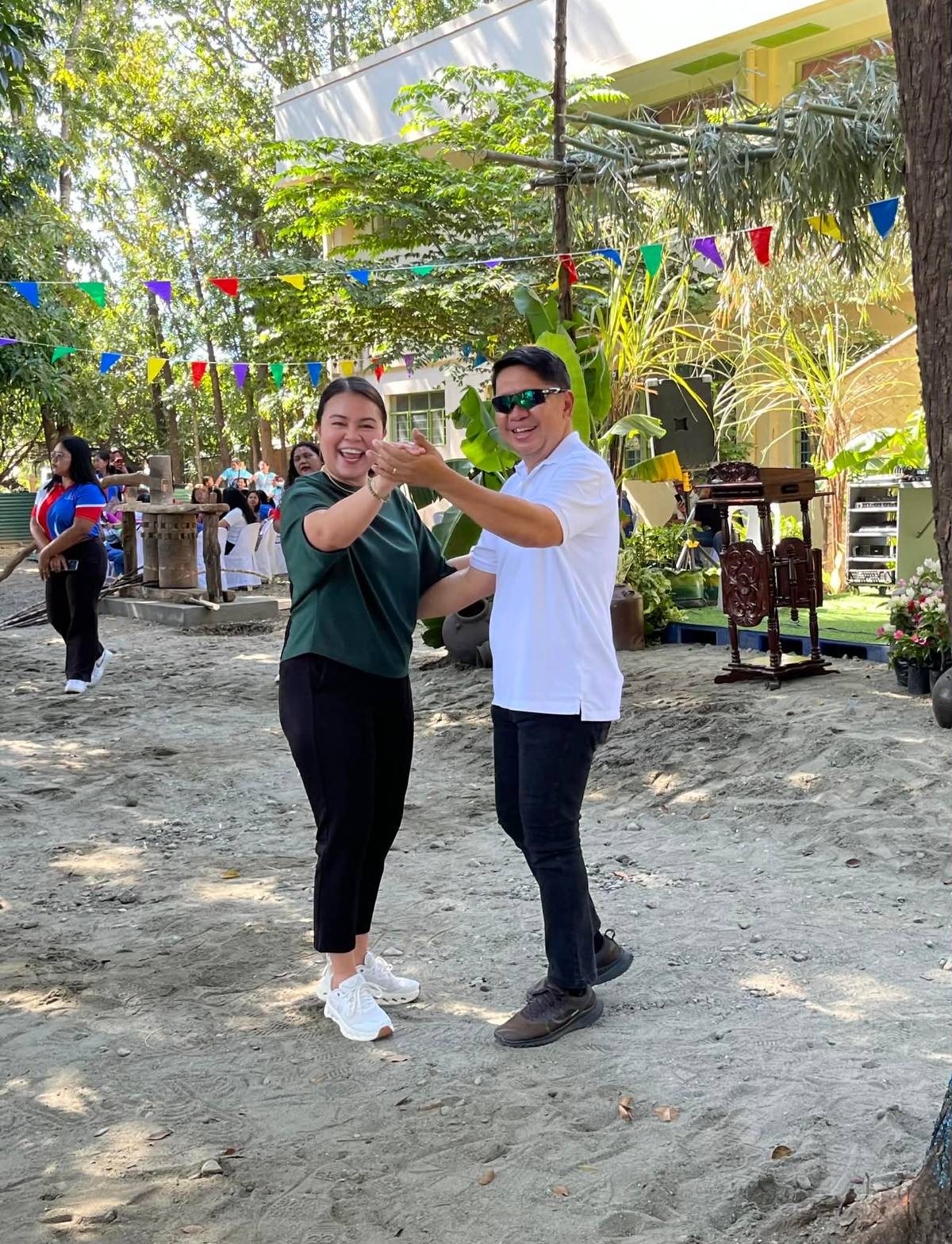
SAN Nicolas Mayor Ed Mar Vincent Bonoan shares a light moment with Nayong Pilipino Executive Director Marygrace Ac-ac during the event.
According to the mayor, the dapil is part and parcel of the identity of the San Nicoleños.
Held at Barabar Elementary School and infused with the atmosphere of a traditional fiesta, one major event was attended by balikbayans and notable guests, including Department of Foreign Affairs Undersecretary Ma. Helen de la Vega, Damili Festival director-general Roen Valdes, theater luminary Frank Rivera, master sculptor Luis Ac-ac, and his daughter Marygrace Ac-ac, executive director of Nayong Pilipino.
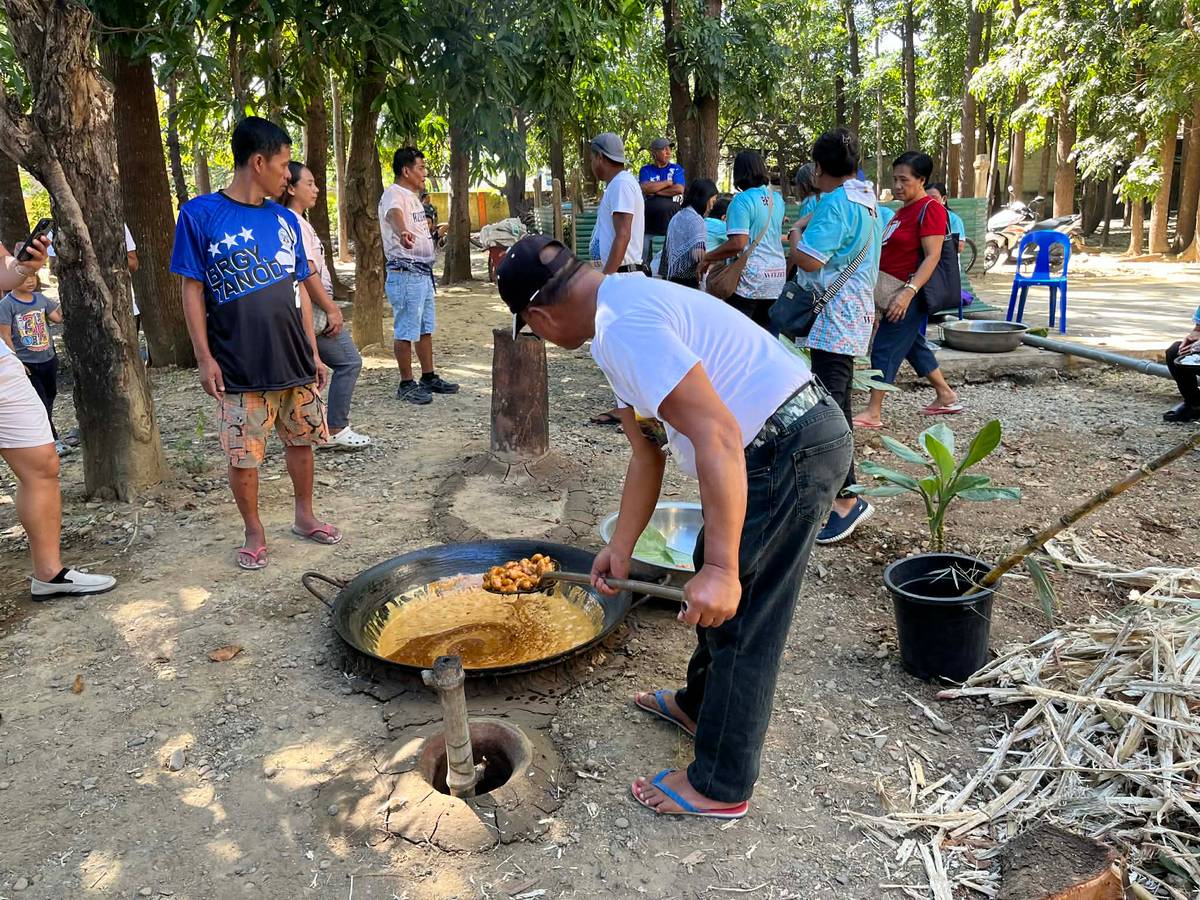
TAGAPULOT is slowly cooked over an open fire to prepare kalti, a traditional Ilocano sweet.
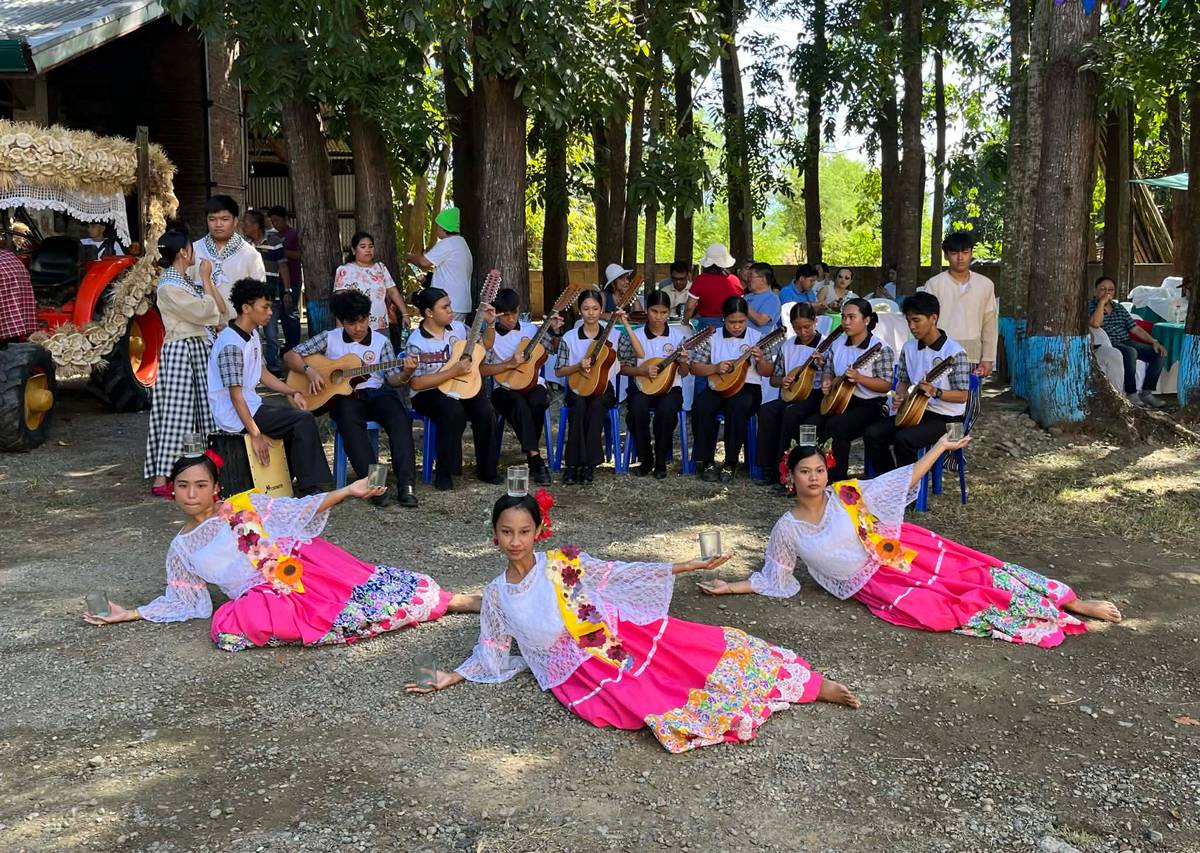
LOCAL folk dancers perform to live music.
The celebration featured traditional dance performances and an array of Ilocano dishes, such as dinengdeng, pancit guisado, dinardaraan, pinakbet, dinegdeng and dinakdakan. A highlight of the event was the showcase of Ilocano sweets made from bennal, which is cooked down into tagapulot, or jaggery. From this, the dish known as kalti or kinalti is prepared.
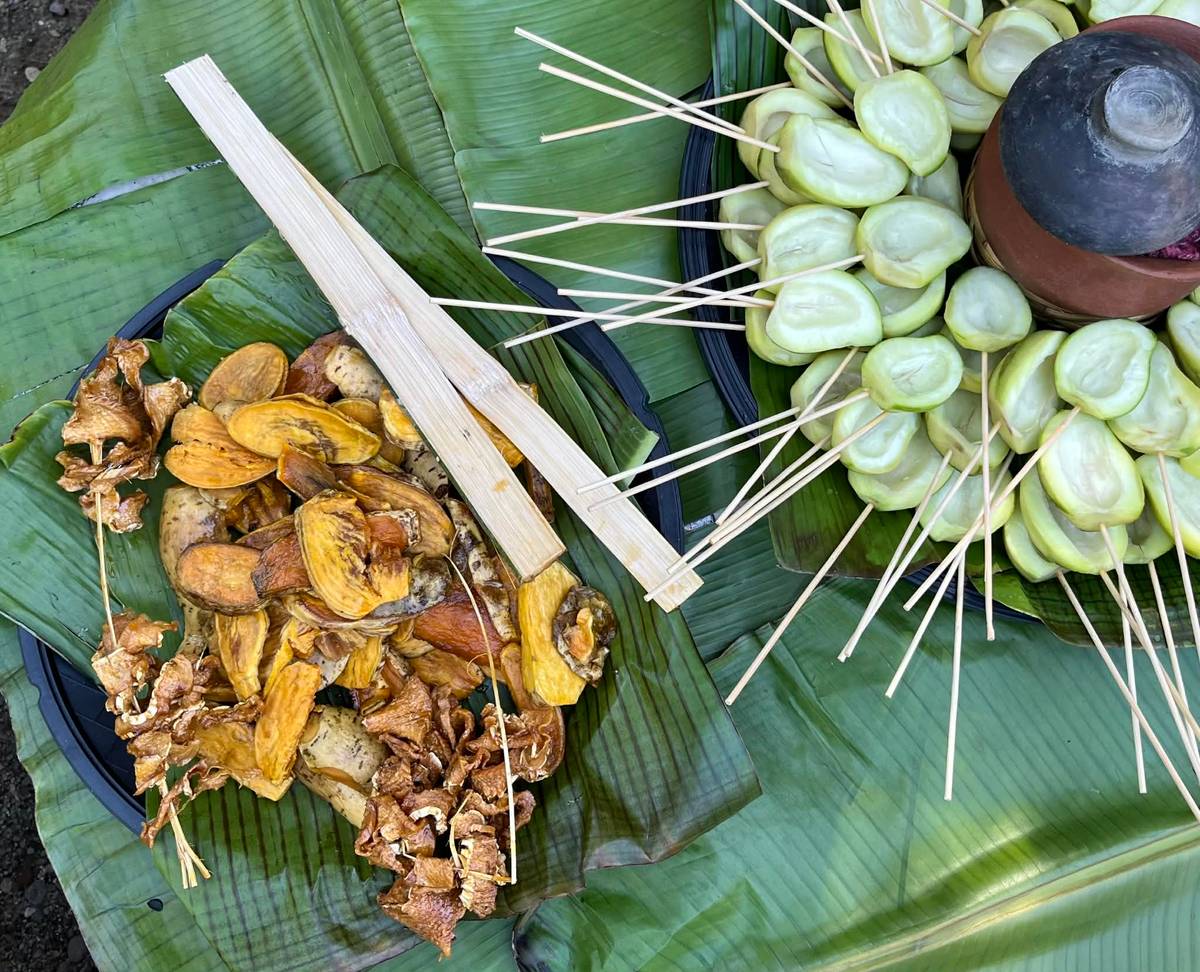
KALTI nga papaya ken camote, and manga ken aramang.
Banana slices cooked in jaggery are called kalti nga saging, while sliced papaya trunks prepared in the same way are known as kalti nga papaya, a unique Ilocano delicacy. In these dishes, the ingredients are simmered with jaggery until fully glazed.
Through kalti, Ilocanos demonstrate their resourcefulness, finding ways to transform ingredients that are seldom eaten elsewhere in the country into nourishing food — an enduring tradition practiced since time immemorial.
Teacher-tour guide Jonathan Macatbag added that even burnt rice and leftover dried pancit are repurposed into kalti. These leftovers are sun-dried before being cooked in molasses, resulting in a favored Ilocano snack.
On the sidelines of the event, Bonoan said the local government continues to push for the promotion of native delicacies and local industries. This initiative supports farmers, mothers who prepare kalti and the broader community of San Nicolas.