
Miss Universe Philippines Ahtisa Manalo shines as festival queen in Mak Tumang national costume
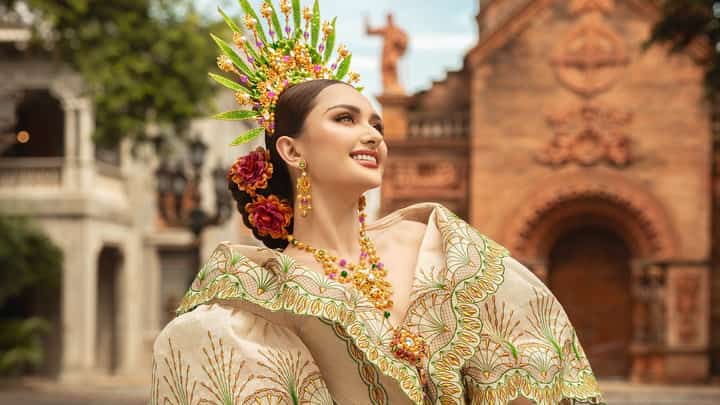
Miss Universe Philippines 2025 Ahtisa Manalo channels her inner festival queen in a national costume designed by Mak Tumang.
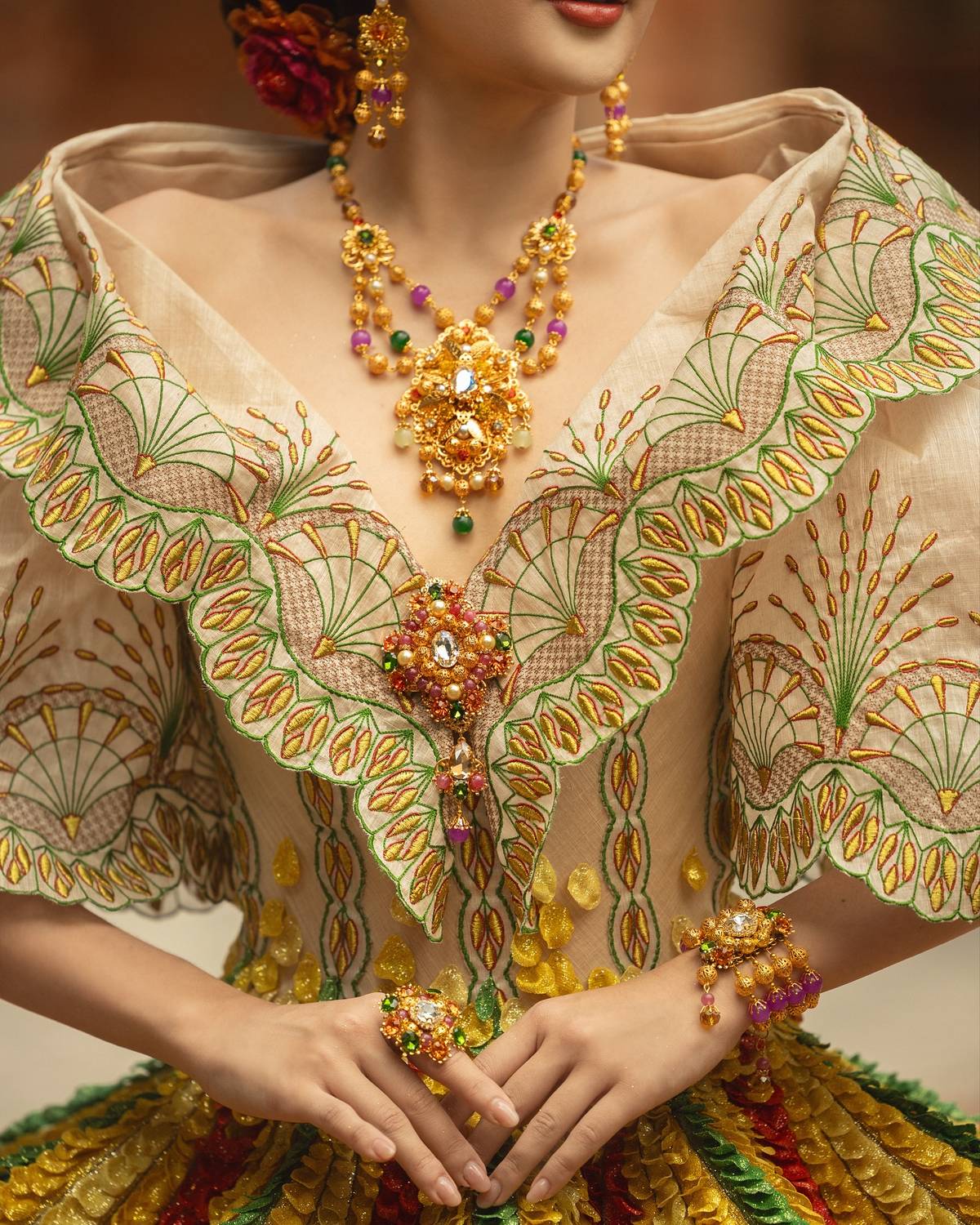
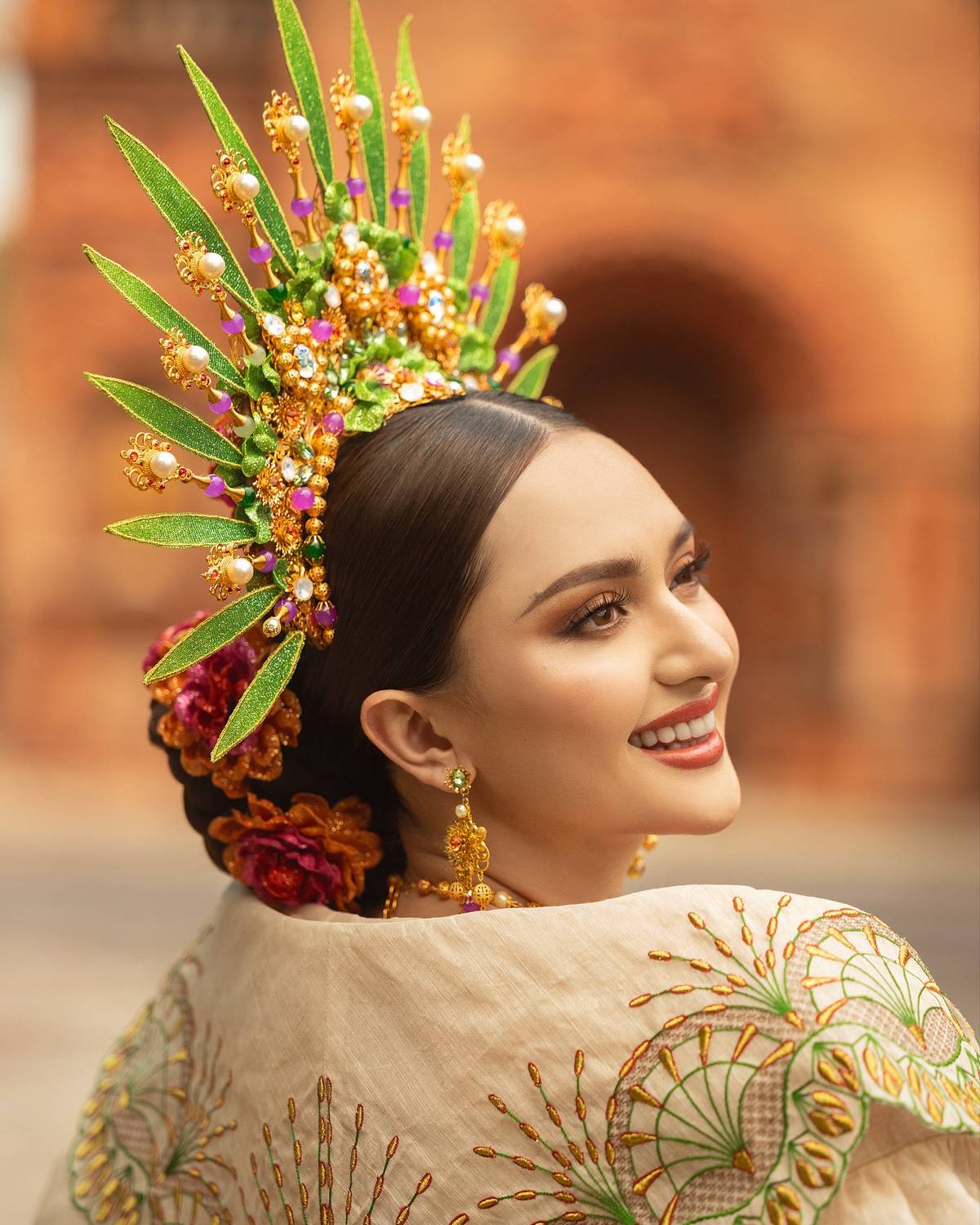
Her ensemble features the classic traje de mestiza, composed of the camisa with its signature bell-shaped sleeves, the saya or skirt, and a modest pañuelo draped across the shoulders.
Photograph courtesy of FB/Ahtisa Manalo
The design draws inspiration from María Clara, the iconic heroine of Dr. José Rizal’s Noli Me Tangere, whose image has come to represent the ideal Filipina — virtuous, modest and dignified. This traditional attire later evolved into the modern terno, now recognized as the national dress of the Philippines.
Manalo’s costume is crafted from hand-embroidered piña, a textile made from pineapple leaf fibers and known for its natural sheen. Its use highlights Filipino craftsmanship, reflecting centuries of tradition and symbolizing resilience and cultural pride.
Photograph courtesy of FB/Ahtisa Manalo
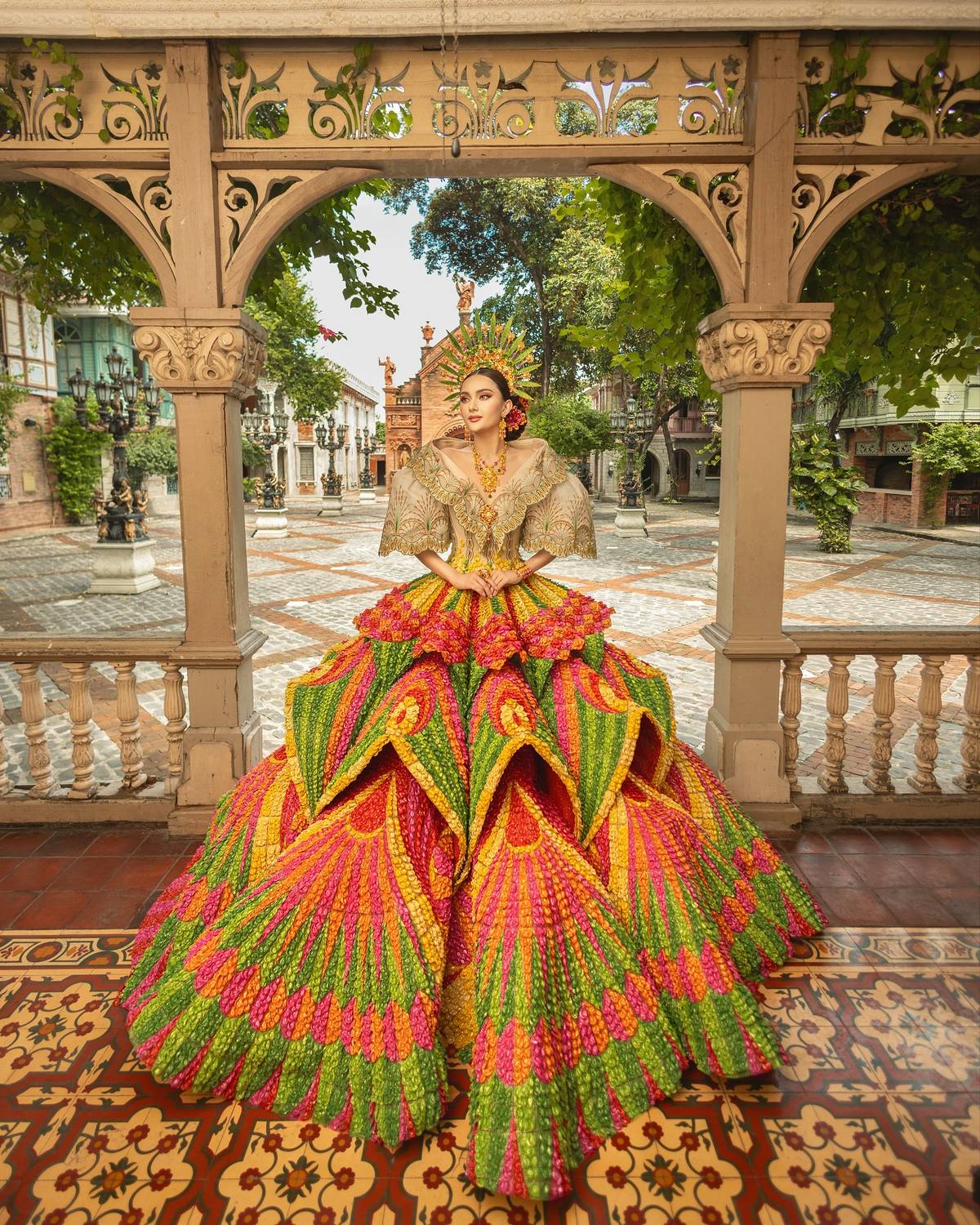
One of the centerpiece features is the skirt, designed to evoke the energy of Philippine festivals. It is made from dyed fabric adorned with individually sewn, hand-cut and heat-pressed petals.
Photograph courtesy of FB/Ahtisa Manalo
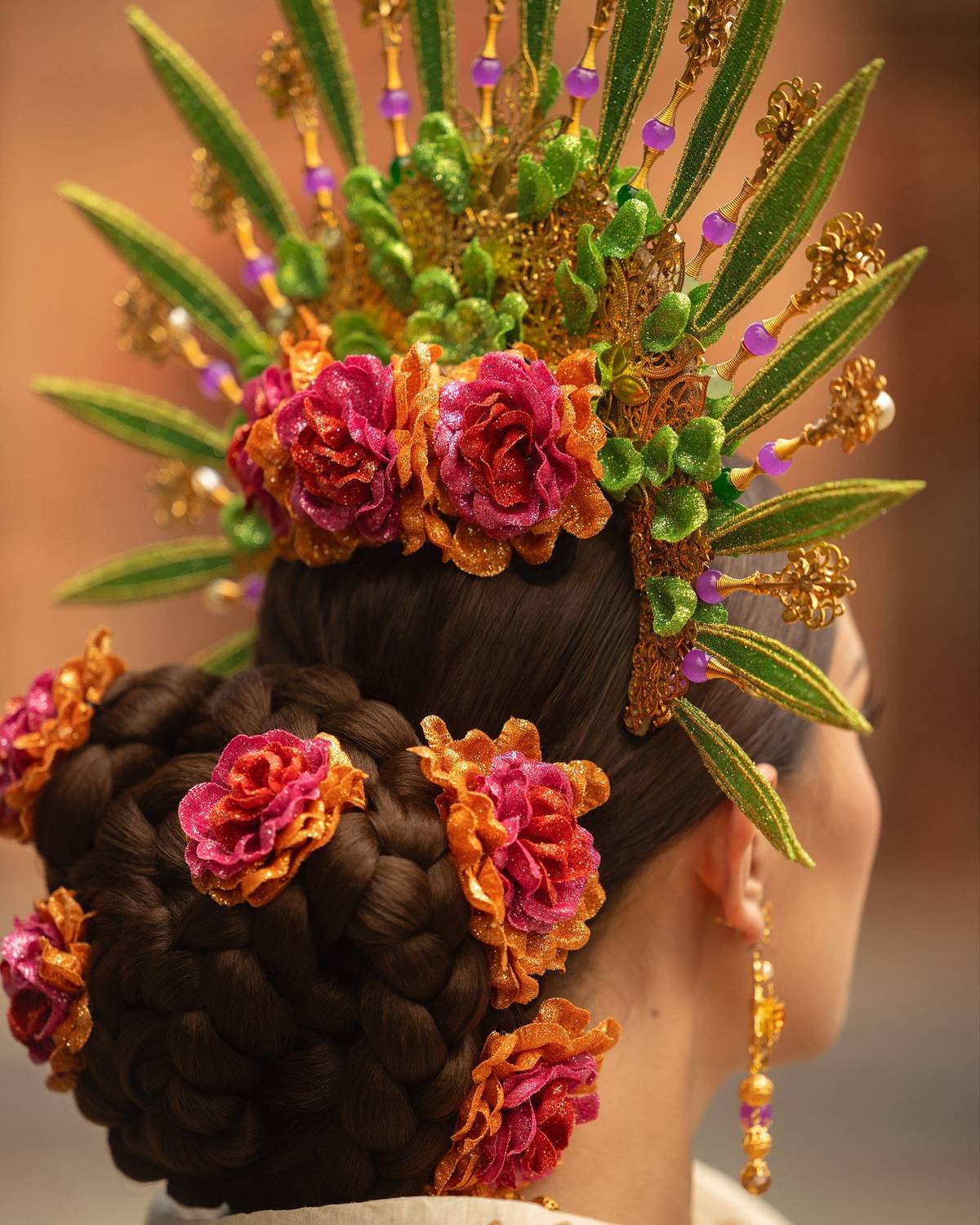
Photograph courtesy of FB/Ahtisa Manalo
The colors and textures are inspired by major celebrations across the country, including The Giant Lantern Festival of Pampanga, The Pahiyas Festival of Lucban and The Panagbenga Festival of Baguio.