
SCUTTLEBUTT

WiFi for all takes off
Most of the time, what matters for a government project is that the official at the top knows the problem he is up against.
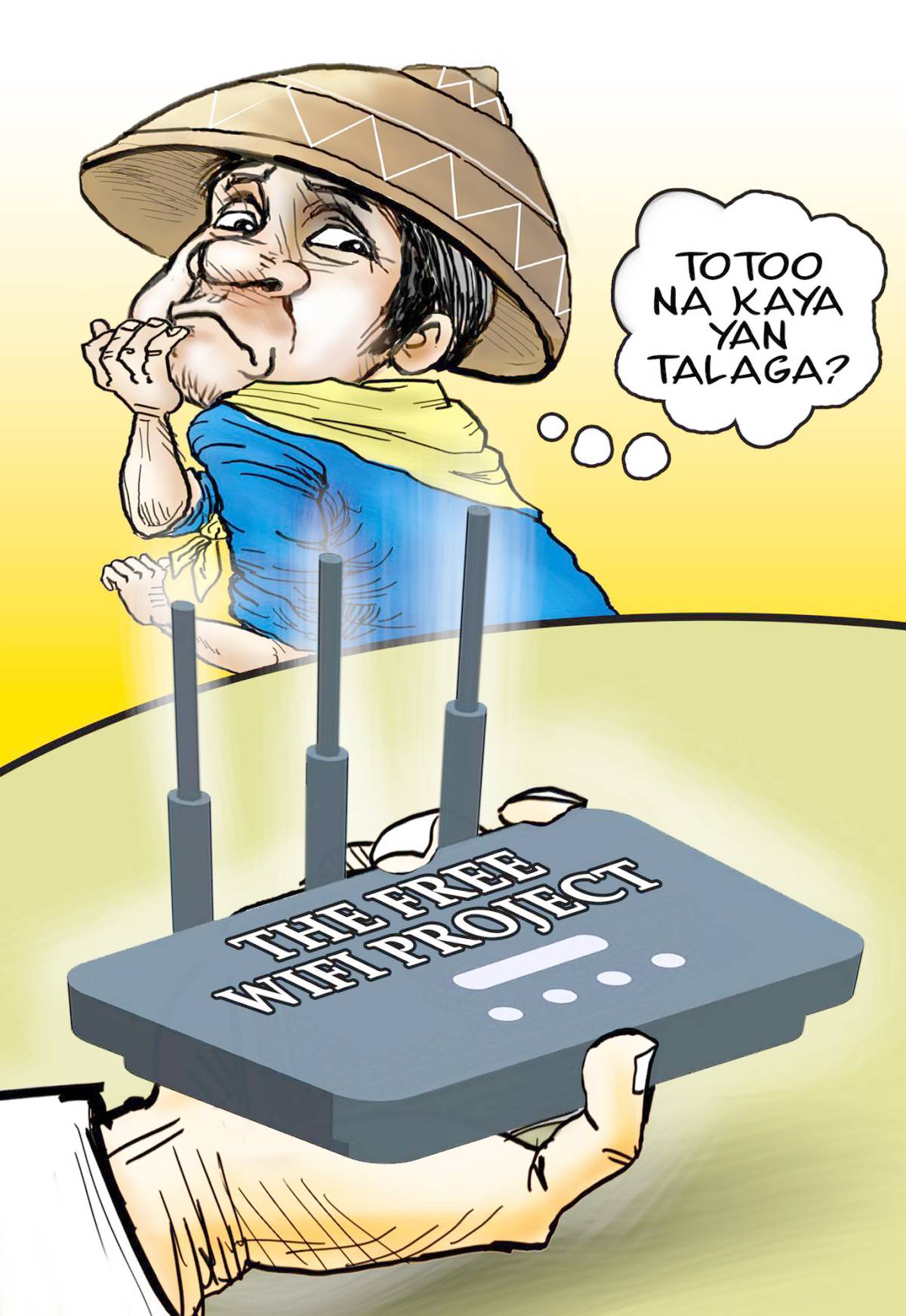
The Free WiFi project, stalled for nearly eight years, is finally moving with purpose after Henry Aguda, the digital banking whiz, was named to head the Department of Information and Communications Technology (DICT), the agency implementing the project.
The target now is as many as 70,000 Free WiFi sites nationwide by next year, with an immediate focus on expanding access in public schools, health centers and barangay halls.
Aguda said the government is prioritizing public schools to reach full coverage, while preparations are underway to expand connectivity to underserved community centers.
Health centers as internet hubs
“Our estimate is that there are 10,000 to 20,000 health centers and hospitals, while about 50,000 barangay halls. We will try to implement that next year immediately,” according to Aguda.
“Originally, we wanted to finish that by 2028, but we now want to fast-track it and finish it by 2026. Once completed, we will increase capacity to deploy free WiFi,” he said.
He cited the 18,000 to 19,000 Free WiFi sites nationwide, with the figure expected to reach 30,000 by the end of the year.
Aguda said the DICT is also accelerating the National Broadband Program (NBP) ahead of schedule to support the Free WiFi expansion.
DICT has completed Phase 1 of the NBP, a 1,245-kilometer fiber backbone from Laoag, Ilocos Norte, to Quezon City with 28 nodes. It has an initial 600 gigabit-per-second capacity to serve the government, 14 provinces, and two national data centers.
Phases 2 and 3 will extend the network to southern Luzon, Visayas, and Mindanao, connecting submarine cables from abroad to support the country’s broadband infrastructure.