
Enriqueta de Peralta: ‘Poetess of Ilocandia’ and voice for women’s suffrage
Among her achievements were the successful initiative to honor mothers with a national declaration of Mother’s Day in 1921, support of Filipino women’s right to vote, and pioneering the establishment of puericulture centers to take care of mothers and children in Ilocos Norte.

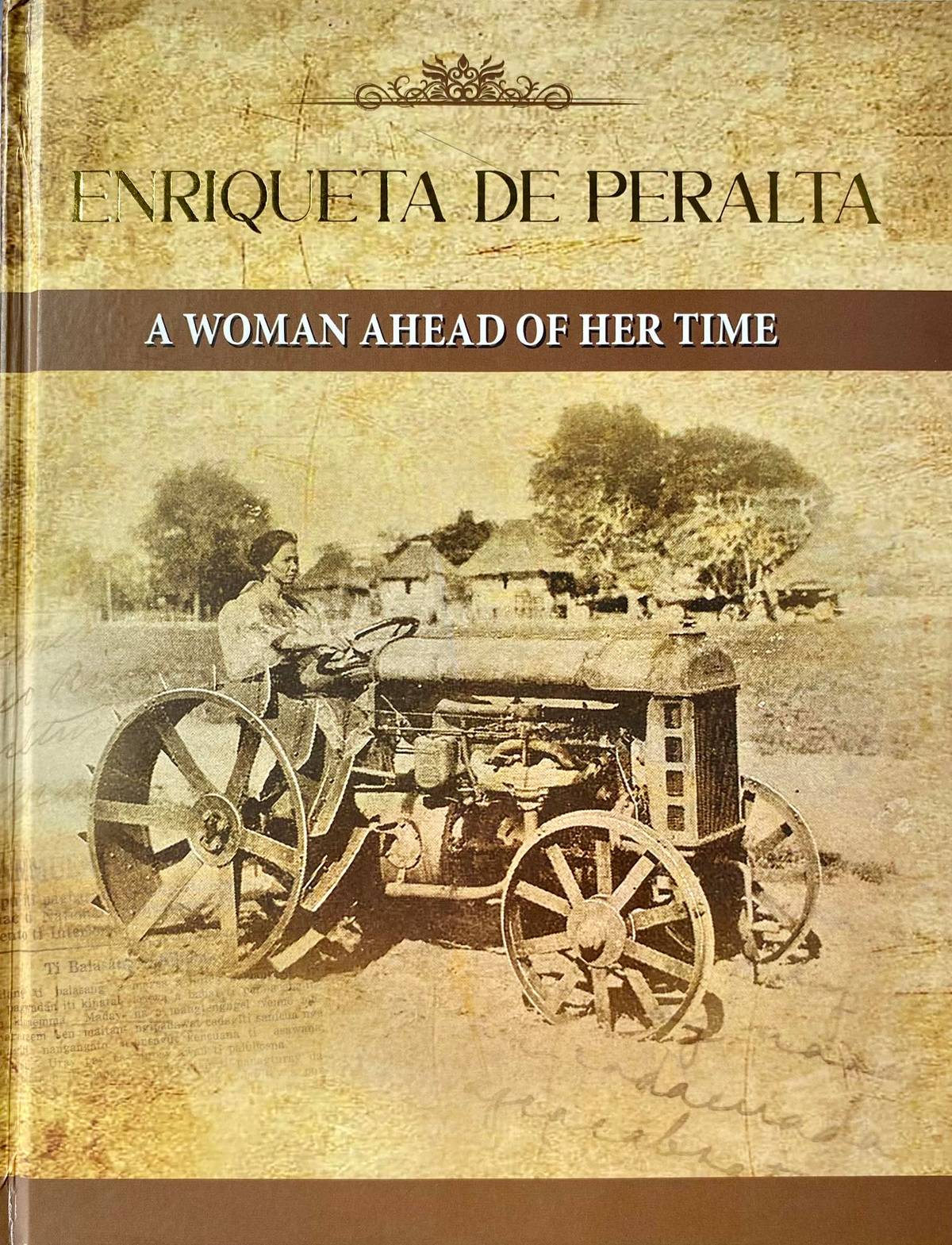
The recently launched book.
Fire razed the ancestral house of the De Peraltas, a prominent family of Dingras, Ilocos Norte, on 11 September 2021. Valuable letters, documents, manuscripts, and photos that served as testament to the life and times of Enriqueta “Quitang” Guerrero de Peralta went up in smoke and seemingly shrouded the rightful legacy of the woman dubbed the “Poetess of Ilocandia.“
Yet the embers in the hearts of those who love and remember Lola Quitang re-ignited a passion to share with more Filipinos her remarkable life as leader and organizer of the women of Ilocos Norte.
Among her achievements were the successful initiative to honor mothers with a national declaration of Mother’s Day in 1921, support of Filipino women’s right to vote, and pioneering the establishment of puericulture centers to take care of mothers and children in Ilocos Norte. All these she accomplished while producing a set of poetry in Ilocano that earned her the title of “Poetess of Ilocandia.”
The first in a series of projects to promote her legacy takes the form of a book, Enriqueta de Peralta: A Woman Ahead of Her Time. It is published by Minda de Peralta Acacio Garcia, a grandniece of Enriqueta. The book chronicles her life in two parts. The first focuses on her family and socio-civic work, and the second delves on her poetry. She lived from 15 July 1882 to 13 April 1940.
Three book launches have been held in collaboration with the International Professional Association of Dingras (IPAD), a civic non-profit organization that weighs in on relevant issues of their community. These were held the Bonifacio Global City in Taguig City, in New York City and in Hawaii. The latter two were held at the respective consulates in the United States.
A more recent one — the Dingras launch — was also organized by IPAD at the Dingras Civic Center last 22 March, timed with the town’s fiesta.
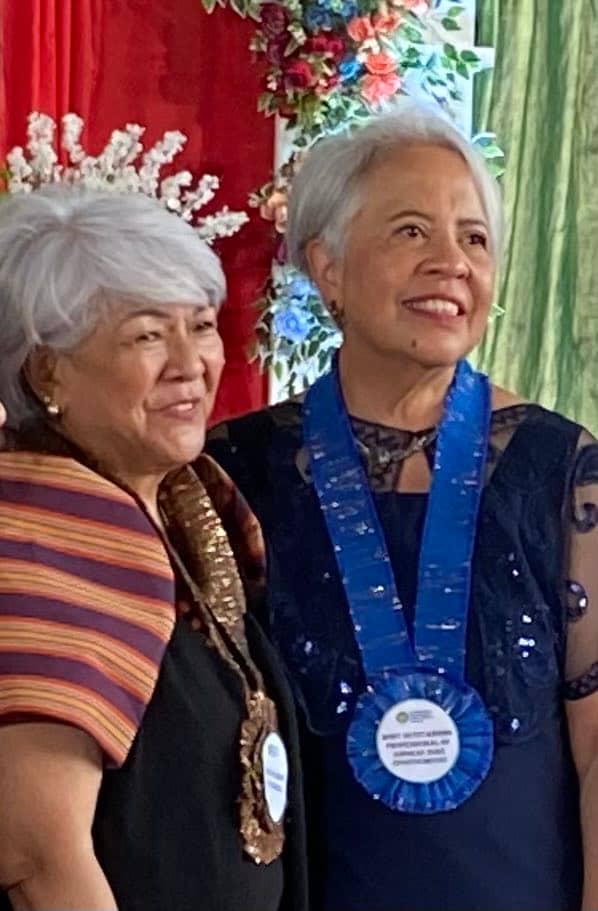
Ilocos Norte Vice Governor Cecilia Araneta-Marcos (left) with Patricia de Peralta Quiason during the program.
Ilocos Norte Vice Governor Cecilia Araneta-Marcos led officials, guests including officers of the distinguished women’s group Zonta Club of Ilocos Norte, and IPAD organizers who attended the launch and program for IPAD honorees.
It was deemed extra special also because her life-size monument stands in Dingras. Built by the National Historical Commission of the Philippines (NHCP) in front of their family home on Peralta Street in the barangay of Albano in 1989, it remained standing, untouched by the fire.
The monument received a fresh layer of gold lacquer in time for wreath-laying rites, while the marker got a swab of white paint to make more readable her long list of achievements.
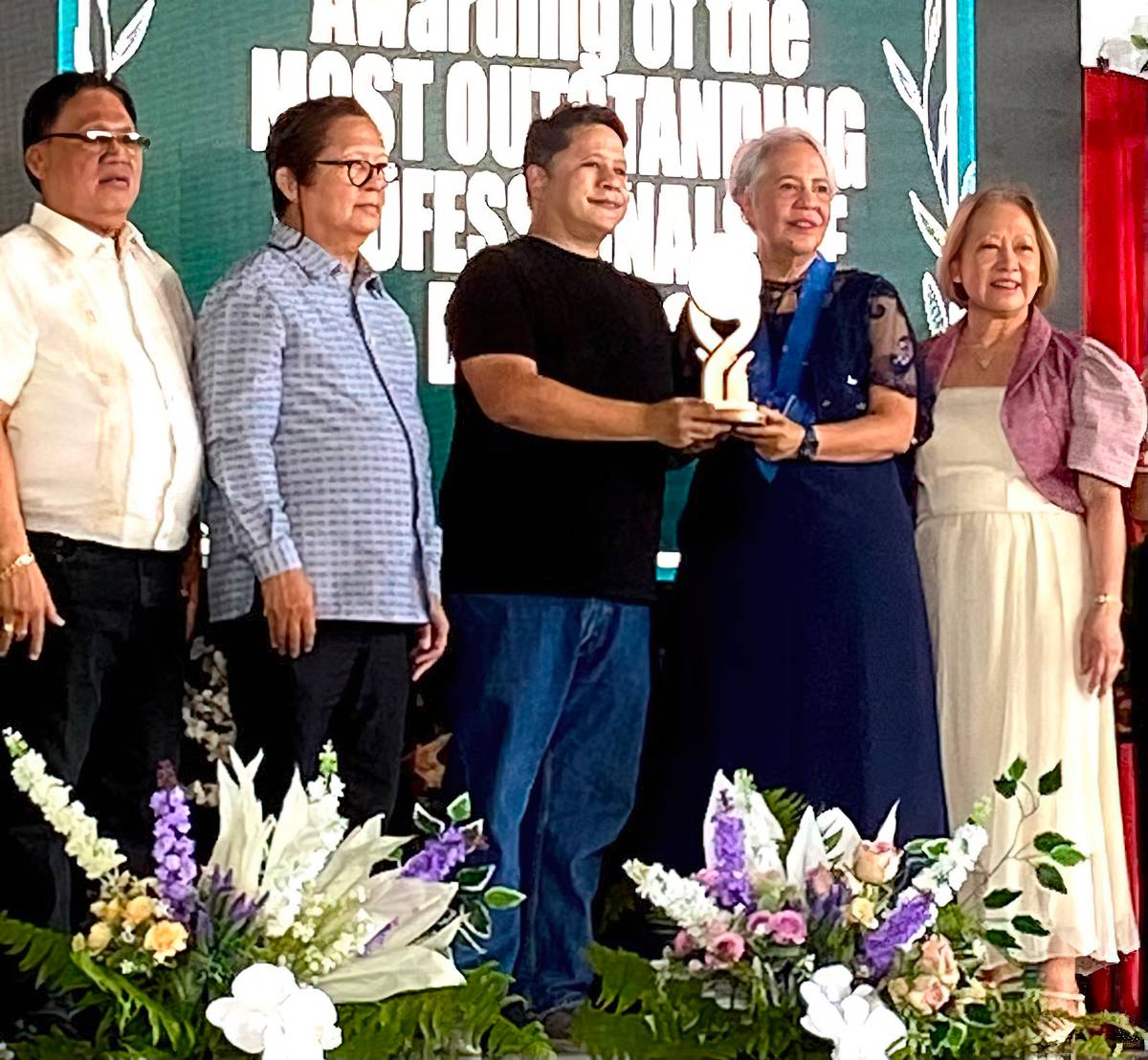
Patricia de Peralta Quiason (second from right) and Raoul de Peralta hold the trophy presented to Dr. Rizal Guerrero de Peralta as 2025 Most Outstanding Professional of Dingras (posthumous) by the International Professional Association of Dingras. Looking on, from left, are Dingras Vice Mayor Erdio Valenzuela, IPAD president Reynaldo L. Saludares and IPAD chairman Marilyn Baquiran.
The rites were officiated in the presence of Dingras Vice Mayor Erdio E. Valenzuela, Patricia de Peralta Quiason and Raoul de Peralta who both represented the De Peralta descendants, and IPAD officials led by its president, Reynaldo L. Saludares, and chairman, Marilyn Baquiran.
Patricia Quiason, the granddaughter of Enriqueta’s brother Abraham, gave a slide presentation on highlights of Enriqueta’s life. She had actively engaged her first cousin Minda in jumpstarting the publication of the book. Together, they pulled in interested kin and friends to piece together the life of their accomplished elder.
Still within fortune, certain documents and photos had been copied by Minda’s daughter Katrina Garcia Diaz before the fire.
One may ask how relevant it is to highlight her work and the origin of celebrating Mother’s Day in the Philippines when the world now eagerly anticipates this in May, and with its coming, the cyberworld explodes with affectionate Mother’s Day greetings.
This is answered in the book which points to the Filipino core value of family where “solid mutual relationship is bound by love, understanding and respect towards each family member, especially the mother who manages the household and takes care of the family.”
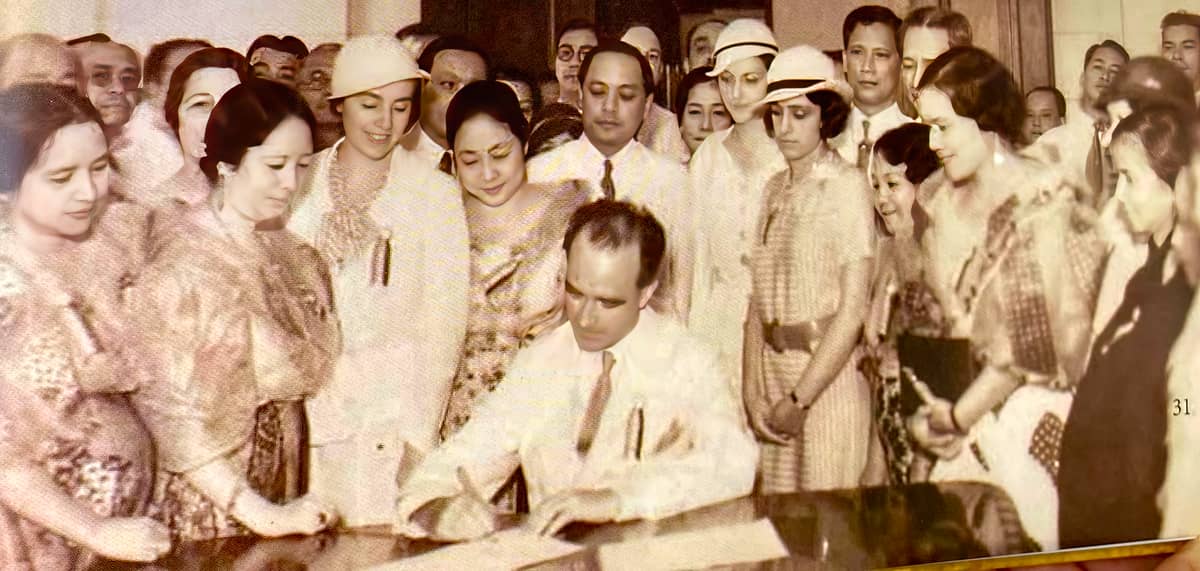
American Governor General Charles Yeater signs Executive Order 33 which declares Mother’s Day in the Philippines as initiated by the Women’s Club of the Province of Ilocos Norte led by Enriqueta de Peralta, who is shown in the photo at rightmost, wearing black.
On the pages leading to 1921 Circular No. 33 that designated the first Monday of every December as Mother’s Day, and which assigned the Bureau of Education in charge of the national celebration, the book also showed the photo of American governor Charles Yeater signing the order, as initiated by the Women’s Club of the Province of Ilocos Norte led by Enriqueta de Peralta.
Commonwealth President Manuel L. Quezon later reiterated the first Monday of December as Mother’s Day and Philippine presidents after him continued to proclaim the day as such. President Corazon Aquino changed the date to the first Sunday of May under Proclamation No. 266 to coincide with the United States’ Mother’s Day. Later, President Joseph Estrada officially moved the date back to December.
Today, the May celebration still continues to be the one observed in the Philippines like many other countries, but there are still elders who fondly remember coming to school with cadena de amor or pink carnations pinned on their chest to honor their mothers. Those with deceased mothers pinned white carnations.
Mover for women’s suffrage
More photos and documents referring to the vital support of women’s suffrage by the Women’s Club of the Province of Ilocos Norte with Enriqueta as president are shown in the book.
The chapter, “The Women’s Suffrage and Movement,” focused on her “vigorous effort” to support the plebiscite on women’s suffrage in the Ilocos Region as well as in Nueva Vizcaya, Isabela, and Cagayan. “Her enthusiasm for organizing parades helped in attracting more women to her campaign,” it is stated.
The involvement of the Ilocos Norte club became pivotal when “the initial efforts for the passage of the women’s suffrage seemed to hit a stalemate in the Philippine legislature” which only caused the advocates to be more determined in their crusade.
At the earlier New York City launch, consul general Senen Mangalila drew three lessons learned from the woman leader’s life.
“First, we learn the power of purpose,” he said, adding that her work was rooted in the conviction that “communities thrive when their women are empowered, heard and celebrated.”
In his keynote message, he said her life also showed that “true leadership comes with willingness to serve” and that it provides a sterling reminder that “creativity and advocacy are powerful allies.”
Enriqueta was the fifth of eight children of Isidoro de Peralta and Monica Guerrero who were known for their patriotism. They were staunch members of the Iglesia Filipina Independiente which has its roots in the resistance movement against Spanish rule and is now also known as Aglipayan Church. She was one of six girls, all of whom were unmarried. She had two brothers, Abraham and Ceferino, whose children Enriqueta doted on.
Her only niece, Filipinas de Peralta Acacio Guerrero, actively followed in her footsteps in civic work, and ensured that her accomplishments were recognized by the NHCP.
Minda, Filipinas’ daughter, also renders civic work as an active member of Soroptomist International of Greater Manila.
Enriqueta also made sure her nephew, Dr. Rizal Guerrero de Peralta, provided medical community work as he grew his own specialization in tuberculosis cure. Dr. De Peralta is one of three awardees of IPAD as 2025 Most Outstanding Professional of Dingras.
Growth of puericulture centers in Ilocos Region
Starting as secretary of the local women’s club in 1918, she became its president a year after. In 1920, she was appointed auditor of the Rural Credit Association (RCA) of Ilocos Norte and had since become a model for women who can have roles in improving the socio-economic conditions of the region. The Philippines Free Press, in April that year, cited members of the RCA as “advanced agents of economic independence… as they are as much patriots… concerned about the welfare of their people.”
Enriqueta’s multi-faceted work with women also gave her more impetus to pioneer the building of puericulture centers in various Ilocos Norte municipalities and all over northern Luzon. She was president of the centers before they were absorbed by the Department of Health.
Instilling the value of community service, she enlisted her doctor nephew to provide free medical service to the Bacarra puericulture center.
In Enriqueta’s report in 1936 which she delivered before stepping down as 13-year president of the Ilocos Norte women’s club, she credited her success in providing maternal and prenatal child care and other health services to the unity and strength of members of the women’s club. Enriqueta died four years after of breast cancer.
She was a woman leader filled with vigor for community work that she was noticed even by marketing people who wanted her to be a model for a promo by a firm selling huge tractors for farmers. The photo used in the book cover was the promo photo which showed her in baro’t saya, maneuvering the tractor with confidence.
Patriotic fervor in poetry
Enriqueta created poems many of which extolled the valor of heroes and brought out the virtues of womanhood. She also translated into Ilocano two poems Jose Rizal wrote in Spanish, one of which was “Mi Ultimo Adios.”
Dr. Marcelino Foronda, Ilocano historian, was cited in the book, noting that she has been consistently represented in anthologies of Ilocano poetry dwelling on patriotic themes. Lilia Quindoza-Santiago, a prominent writer on Ilocanos, was also cited, identifying her poem on the Philippine flag as one of her best works.
Quite fittingly as an intermission number for the Dingras launch, a feisty set of elderly members of IPAD chose to render the poem “Ti Wagaywaytayo.” Translated into English by Cynthia Espejo Fonacier Capunitan, its last stanza cries out questions: “Our beloved, most adored flag, where are you? We’re in search of peace, we’re longing for joy; Emancipated, will we return to your side? Unchain us from bondage, recoup our lost freedom!”