
Microsoft: Filipino workers ready for AI, workplaces must catch up

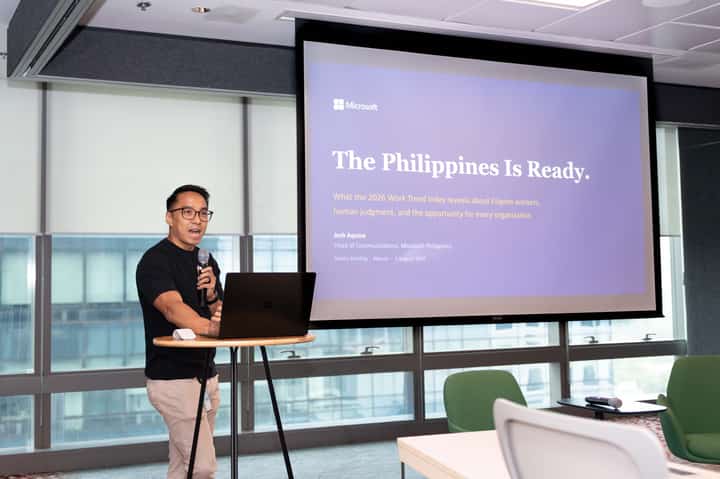
Filipino workers are among the world’s most advanced users of artificial intelligence, but Microsoft says the bigger challenge is getting their organizations to keep up.
Microsoft’s 2026 Work Trend Index found that 25 percent of Filipino AI users qualify as “Frontier Professionals,” compared with 16 percent globally. The company defines them as advanced users who employ AI agents for multi-step work, redesign workflows and set quality standards while retaining human judgment.
MICROSOFT
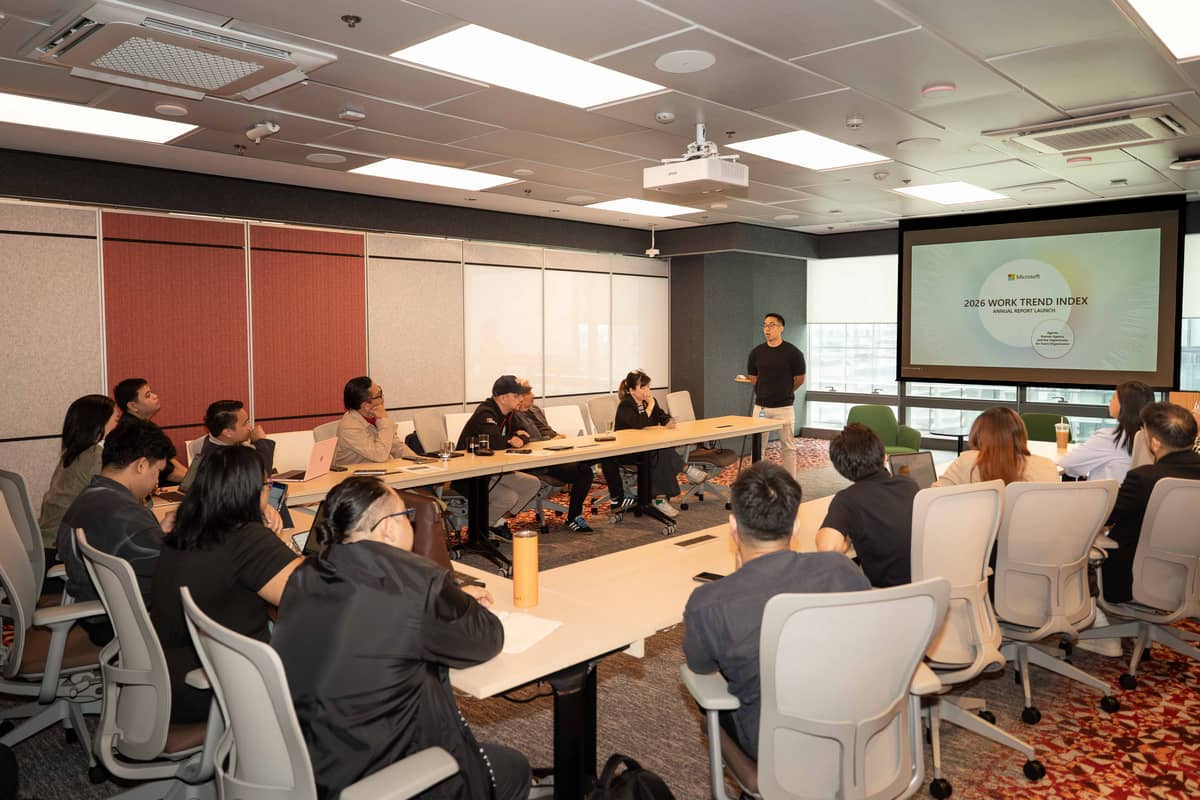
The findings were presented during the launch of the 2026 Work Trend Index Annual Report, titled “Agents, Human Agency, and the Opportunity for Every Organization.”
“Individuals are ready. The systems around them are not,” Josh Aquino, head of communications at Microsoft Philippines, said during the launch.
Microsoft found that organizational factors such as company culture, manager support and talent practices account for 67 percent of AI’s impact at work, compared with 32 percent attributed to individual mindset and behavior.
That creates what Microsoft calls the “Transformation Paradox”: Employees are learning to use AI faster than companies are redesigning work around it.
While 66 percent of Filipino AI users worry about falling behind, 53 percent said sticking to their current priorities feels safer than redesigning their work. Only 35 percent see clear leadership alignment on AI, while just 25 percent said they are rewarded for reinventing how they work.
“Urgency is not missing, permission is,” Aquino said.
Filipinos keep humans in the loop
The findings also suggest Filipino workers are not simply handing their jobs over to machines.
Sixty-five percent identified critical thinking as the most important human skill as AI assumes more work, the highest rate among markets surveyed and above the 46 percent global average.
Meanwhile, 93 percent said they treat AI-generated output as a starting point rather than a finished answer. More than half, or 53 percent, of Filipino Frontier Professionals intentionally perform some tasks without AI to keep their skills sharp.
“Our most advanced users are the most deliberate about staying human,” Aquino said. “This is not hesitancy, it’s discipline.”
Firms put it to work
PLDT and Smart offered a glimpse of what company-wide adoption could look like.
The telcos have deployed 1,000 Microsoft 365 Copilot licenses, with Gilbert Gaw, first vice president and head of information technology and the Transformation Office at PLDT and Smart, saying weekly usage has reached about 90 percent.
Gaw said the deployment saves an employee about 13 hours per month and has generated a return on investment of around 150 percent.
The companies have also used agentic systems to overhaul customer service processes.
Some procedures that previously took 12 hours were cut to five minutes, while another four-hour process was reduced to two minutes, according to Gaw. Across 150 wireless stores and 450 agents, the system has eliminated about 60,000 hours of customer wait time since February.
But Gaw stressed that the technology itself is only part of the equation.
PLDT and Smart's approach centers on governance, adoption and process redesign, including keeping humans involved in reviewing AI-generated work.
“You can’t just put AI in a tool without changing your process,” Gaw said.
For companies unsure where to begin, his advice was simpler: “Start small, but think big.”
Rather than chasing several use cases at once, Gaw recommended identifying one major business problem, measuring how long the existing process takes, deploying AI and then measuring the result before expanding elsewhere.