
Pedestrian priority! Car-free Sundays gain momentum in Metro Manila


Marikina City residents enjoy a vibrant, car-free Gil Fernando Avenue every Sunday, embracing biking, jogging, and community activities in the city’s latest move toward Car-Free Sundays.
Photo Courtesy of Marikina City Public Information Office
More cities across Metro Manila and the country are designating car-free zones on Sundays, promoting sustainable transport, public health, and community engagement.
Marikina City is among the latest to embrace the Car-Free Sunday movement, closing a section of Gil Fernando Avenue every Sunday from 6 AM to 10 AM. The initiative aligns with the city's goal of creating people-friendly, green urban spaces, complementing its 52 kilometers of interconnected bike lanes that encourage cycling and walking as primary modes of transport.
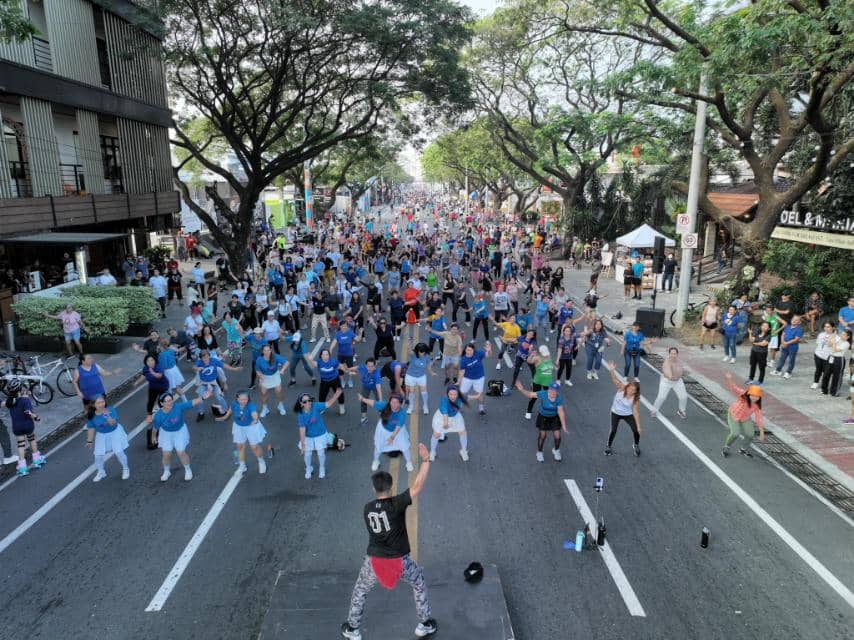
Photo Courtesy of Marikina City Public Information Office
“We are promoting walking and biking to school and work. This is one way of giving residents a safe space so they can bond with their families and friends,” city Mayor Marcelino Teodoro said.
Quezon City has also adopted the movement with its "Car-Free, Carefree Tomas Morato Sundays," where a stretch of Tomas Morato Avenue is closed to motor vehicles every Sunday morning, allowing residents to walk, bike, and use the open space freely.

A QC Zumba session on a carless Sunday
Toto Lozano
In Manila, Roxas Boulevard is designated car-free under Ordinance No. 9047, with dedicated lanes for cyclists and joggers along a 2.3-kilometer stretch from 5 AM to 9 AM every Sunday.
Makati City has also joined the initiative by transforming Ayala Avenue into a pedestrian-friendly zone on Sundays, while Mandaluyong City’s Greenfield District and Taguig City’s Fifth Avenue in Bonifacio Global City offer weekend car-free spaces for recreation and fitness activities.
Other areas implementing similar programs include Pasig City’s People’s Streets program, UP Diliman in Quezon City, and Filinvest City in Muntinlupa City, all of which have long embraced car-free environments to encourage healthier and more sustainable lifestyles.
Expanding beyond Metro Manila
The movement is gaining traction outside Metro Manila, with Davao City launching its Car-Free Sundays along the Coastal Road in December 2024. The initiative, running from 4 AM to 8 AM, provides a safe space for jogging, walking, and cycling, promoting an active lifestyle and community well-being.
Meanwhile, Cebu City, Iloilo City, and Baguio City have also adopted car-free programs, signaling a nationwide shift toward sustainable urban planning and healthier public spaces.
“The Philippines has the potential to become a cleaner, more resilient, and people-first region by prioritizing sustainable mobility,” said Climate Change Commission (CCC) Vice Chairperson and Executive Director Robert E.A. Borje.
“Establishing car-free zones lowers carbon emissions, improves air quality, and encourages active, healthier lifestyles. Beyond reducing traffic congestion, these initiatives reimagine our cities as spaces designed for people," he added.
As more local government units (LGUs) consider expanding car-free initiatives, the growing movement reflects a cultural shift toward prioritizing people over vehicles in urban areas.
With continued public support and sustainable policies, Car-Free Sundays may soon become a nationwide norm, aligning with efforts to create healthier, climate-adaptive communities.
The Climate Change Commission (CCC) supports these initiatives as part of broader strategies to reduce emissions, promote sustainable urban mobility, and enhance urban resilience.