
Love and poetry in Uzbekistan — Last of two parts
One of our fond memories, if not the fondest, was Uzbek food. Everywhere we went, we were invited to share such lavish meals that to this day, I could still see in my mind’s eye the colors, textures, the tantalizing smells, the perfect mingling of the sweet and savory

In Rishton in the Fergana Valley we could not stop exclaiming at the exquisite ceramic potteries that we saw in Mingboshi Ceramics, one of the many artisan shops: bowls, plates, tea sets, even a mural made of ceramic of the old Silk Route. It was a huge compound where artists worked non-stop: preparing the local clay said to be perfect for ceramics, drawing the initial plans for the pottery, painting the finished products from the kiln, etc. Another surprising visit in the Fergana Valley was the archaeological site in Aksikent, a 9th to 12th century BC fortified city by the river Syr Darya. This city was important in the life of Babur, a powerful Mughal ruler.
Samarkand was one unforgettable place that we visited. Having read and seen its monuments in books we were eager to see for ourselves this often-mentioned magical place along the old Silk Route where merchants traded and bartered as early as 130 BCE, riding their horses and camel caravans. The mausoleum of Amir Temur took our breaths away. Simply standing at the portal gate with its azure tiles, majolica ceramic mosaics and muqarnas (three-dimensional helix tiles) was enough to be transported into the world of Scheherazade. Crossing over to the mausoleum itself, we entered and were speechless as we took in the gold filigrees, the onyx walls carved with Arabian sacred scripts, the sunshine that shone through the rosette windows. Temur’s coffin was encased in a solid dark green jade, while beside him were the tombs of his sons, further were his grandson, and one of his most beloved teachers. There were marble ledges where one could sit, and I just sat and sat, not saying a word, absorbing all this beauty.
We, too, were able to read our poetry in Registan Square in Samarkand, walking distance from Temur’s mausoleum. All agog, we stood outside at the gates of the imposing madrassas, also done in blue ceramics and tiles. A’zam took us to one of the marble steps in front of one of the madrassas, and suggested we read our poetry under the blue Samarkand skies. Again, our voices rose and fell, in different languages, but with the same fervor.
In Samarkand, too, we personally met the famous painter Ahmad Umarov, who hosted some of our poet friends in his home. His residence had an art gallery, and we went around exclaiming at the different paintings. Many artists and writers came, too, and were it not for the language barrier we would have interacted with them more. Ahmad also had another art gallery in Samarkand, in the Artists’ Residence, where artists and craftsmen exhibited their works. Here I saw for the first time brush paintings by Ahmad using coffee powder, the artworks done in soft brown, a shade of sepia.
We also had a poetry reading around a bonfire, in the residence of Oygul Mamatova, the first Uzbek female novelist who had published her work. She also hosted some of our poet friends, and we had a delicious feast on our last night in Samarkand in her residence.
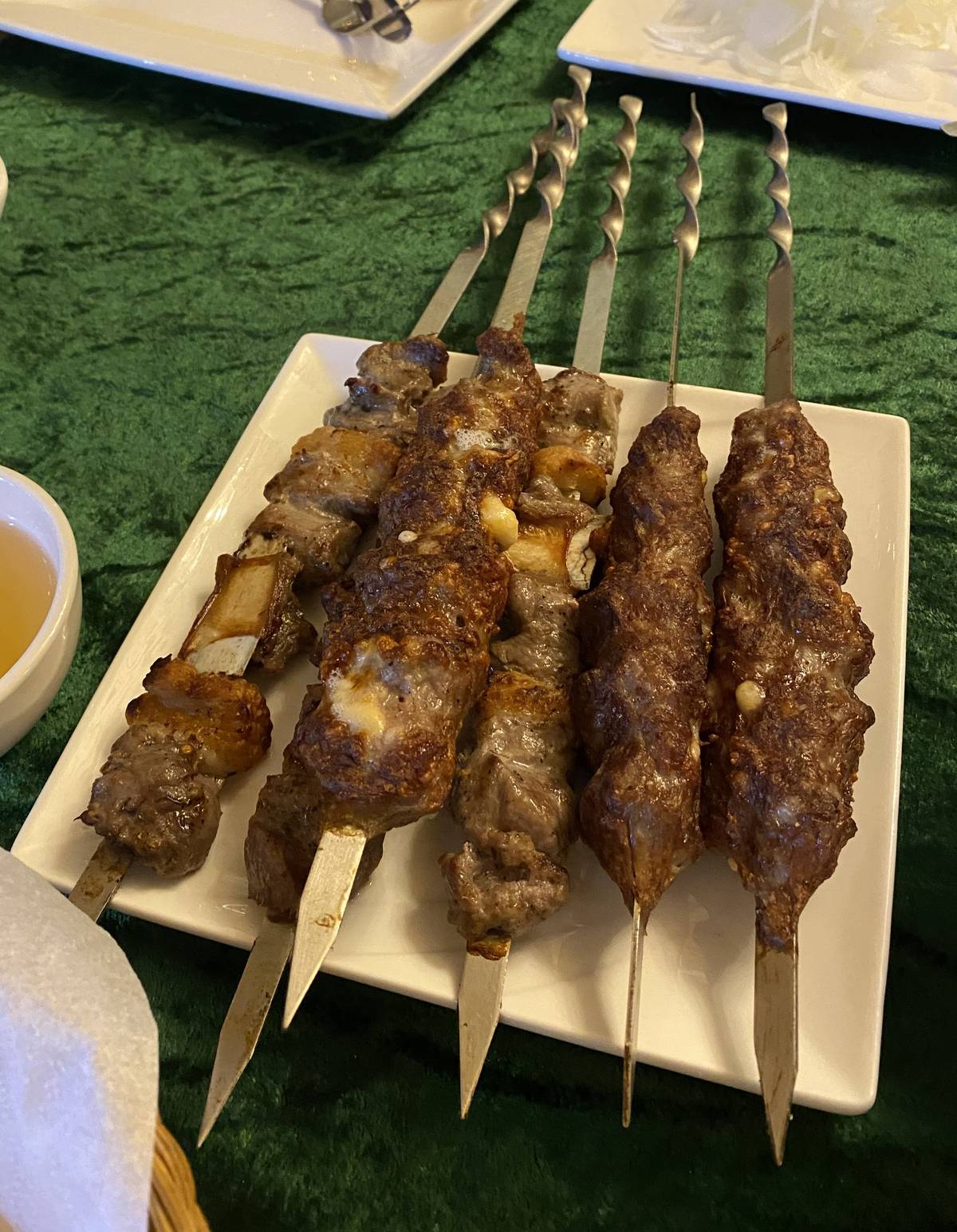
Lamb shashlik.
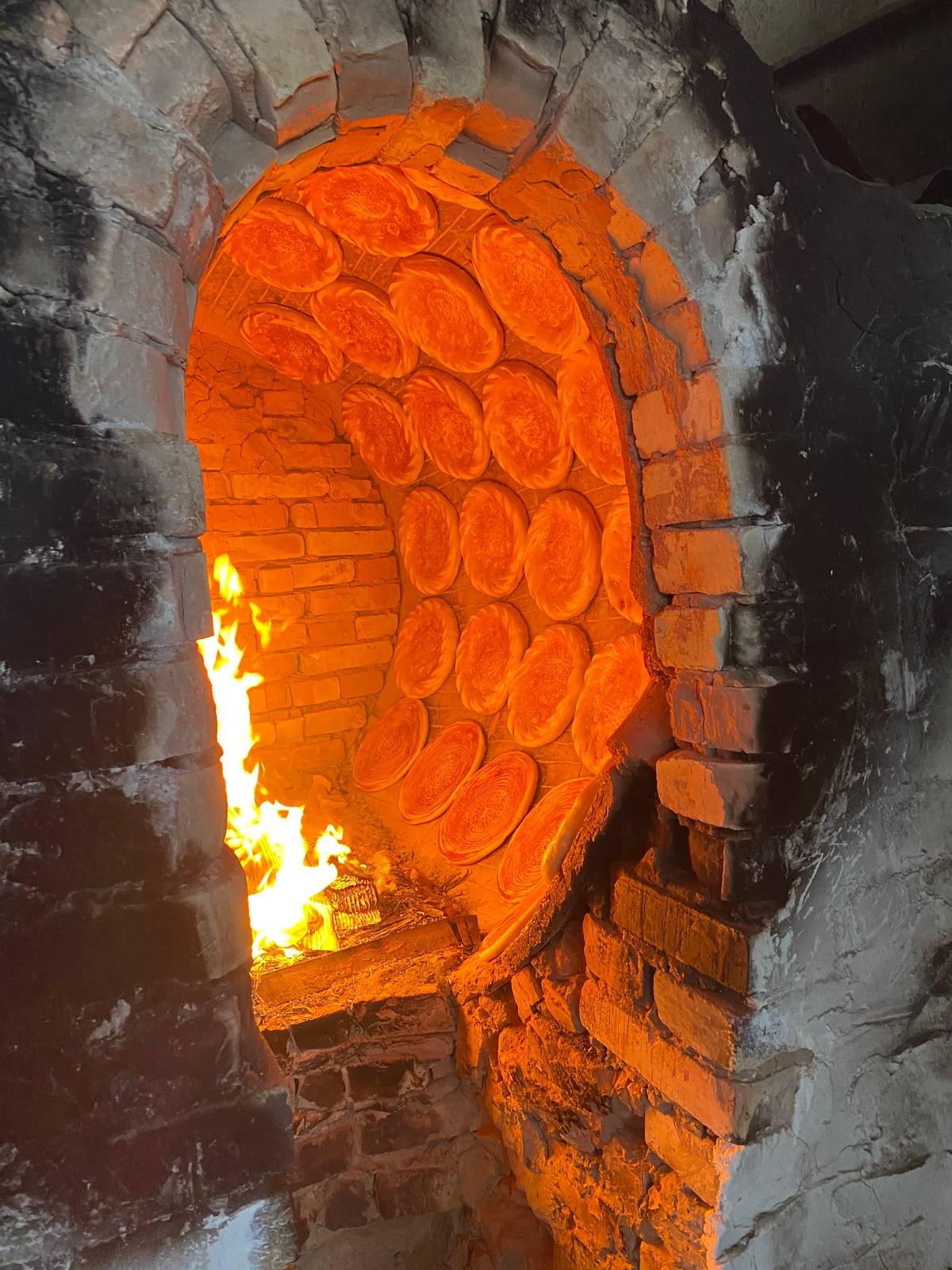
Patir bread baked in a tandoor.
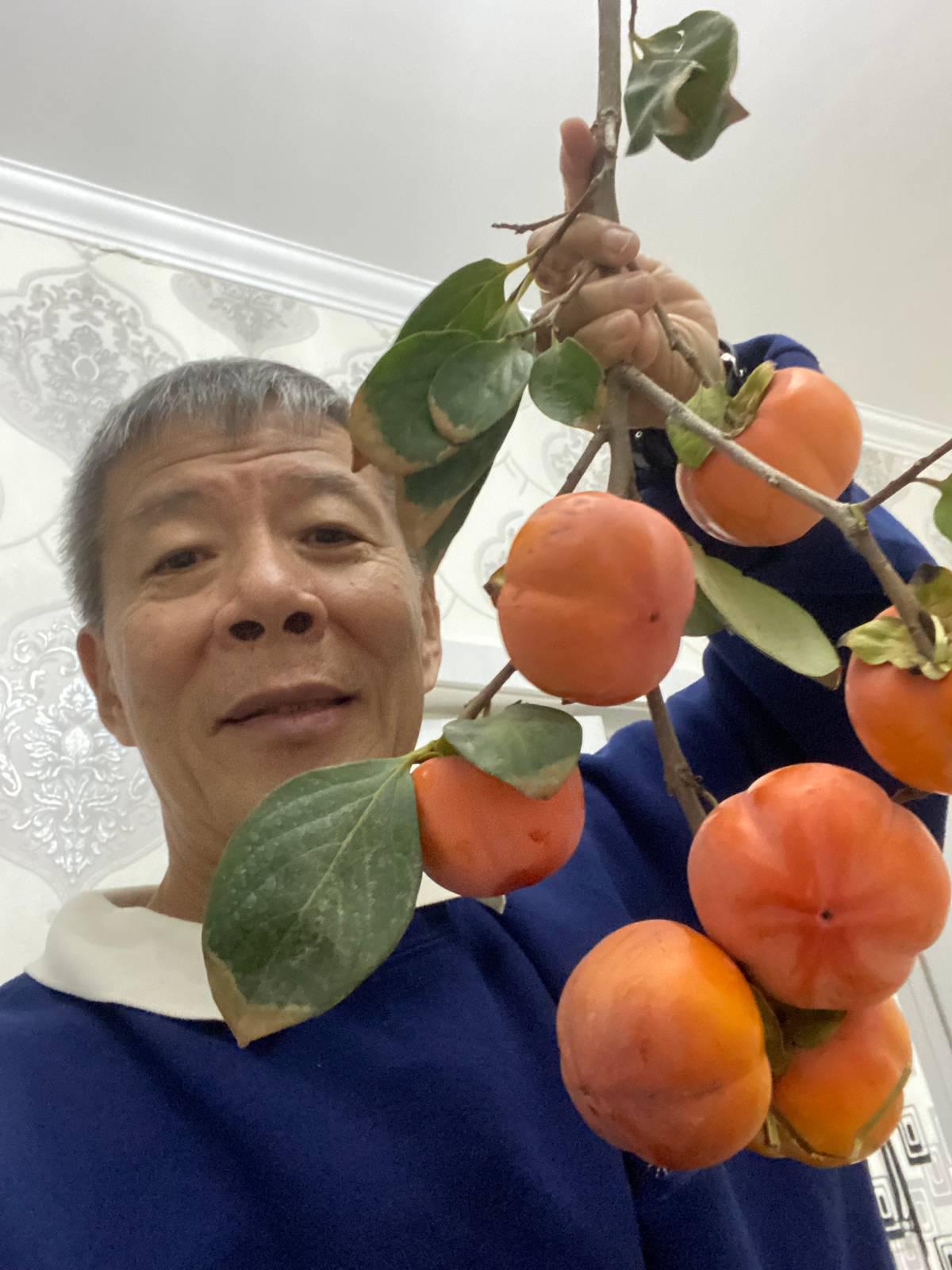
Fresh persimmons were so abundant.
Food, glorious food
One of our fond memories, if not the fondest, was Uzbek food. Everywhere we went, we were invited to share such lavish meals that to this day, I could still see in my mind’s eye the colors, textures, the tantalizing smells, the perfect mingling of the sweet and savory.
On our first Sunday in Tashkent, A’zam treated us to lunch in Kamolon Osh Markazi. This was the first time we were introduced to plov (or pilaf), their native dish. It was similar to fried rice, but somehow the fragrant oil, the vegetables, and the meat combined made for a hearty and delicious dish. I asked for lamb plov, and it came with tender pieces of lamb, previously grilled to perfection. My seven-year abstinence from rice was no match for this dish, as I ate heartily. There were fresh salads too, to accompany the meat, and fruits, and for the first time, I tasted fresh quince. As we went around many places in Uzbekistan, each region had its own version of plov, but no less delicious. I was told that one can make it as elaborate, or as simple, as one wished to. There was even the wedding plov, where distinct condiments and ingredients were added for the very special occasion.
There were meat barbecues as well called shashlik, or kebab: large chunks of chicken, beef, or lamb, grilled over hot coals until their fat comes out and coats the meat with so much tastiness. Even the charred bits were mouth-watering, and the aroma was certainly tantalizing.
Another favorite was the somsa (or samosa, very similar to our own empanada) where again, one had the choice of the filling. One morning our host’s mother-in-law Sharifa served her special lamb somsa, and it was so tasty, fresh from the oven, and smelled so good. The crispiness and flakiness of the pie crust and the tender lamb meat with potatoes, carrots, and some spices made it very delicious. A vegetarian one that we enjoyed was filled with mashed ripe pumpkin. En route to Namangan, we stopped by a wholesale market area in the Angren District, and the temperature was around 40 ° C, with vapor coming out of our mouths as we spoke. Shivering with cold we were so glad to have hot coffee from one of the stands, and lo and behold, A’zam, like a magician, bought us piping hot pumpkin samosas that just came out of the frying pan. A lot of steam was coming out of the pastry as we bit into them hungrily, the ripe pumpkin tasting so sweet, as we held them with almost-frozen hands.
The first and memorable dinner was at A’zam’s house in Namangan. His parents and siblings were all there in their family courtyard to welcome us (yes, with the beautiful bride in her gauzy attire). After washing our hands with water poured by a kind lady in traditional robes, we went up into the dinner hall. We could only gasp at the parade of food already laid out on the long, long table that could sit more than forty people at one time. On the table were many silver trays of all kinds of nuts ―almonds, walnuts, peanuts, pistachios, pecans, sunflower seeds; and on the many glass platters were chocolate candies, open or wrapped gaily in gold foils; large, round patir bread with decorative tracings piled one on top of another; and of course, fruits: apples, pears, oranges, pomegranates and persimmons (in the gardens, trees were heavily laden with them, both were in season!), bananas…; and so many different kinds of non-alcoholic drinks. Green leafy salads with cucumber, bell peppers, tomatoes were in abundance. Tea was served very hot, in small cups, often in small quantities to be refilled, again and again, as a sign of hospitality.
All these were already set on the table and filled our eyes with wonder. Later large plates of plov were served, shasklik, more salads, fruits, candies, tea, and other drinks. The atmosphere was convivial, some poets read their poems, some sung songs in their own languages.
Before we left, A’zam’s son Abdulrashid invited us to a delicious farewell shashlik lunch in Navvat, an art gallery cum restaurant near a law university. He was also kind enough to accompany us to an exhibit of 19th century photographs of Uzbekistan, as suggested by our host Anora, and in the next room, paintings by Sagatov Abdulmajid. After that, we went around the Amir Temur Park and the cool air was so refreshing.
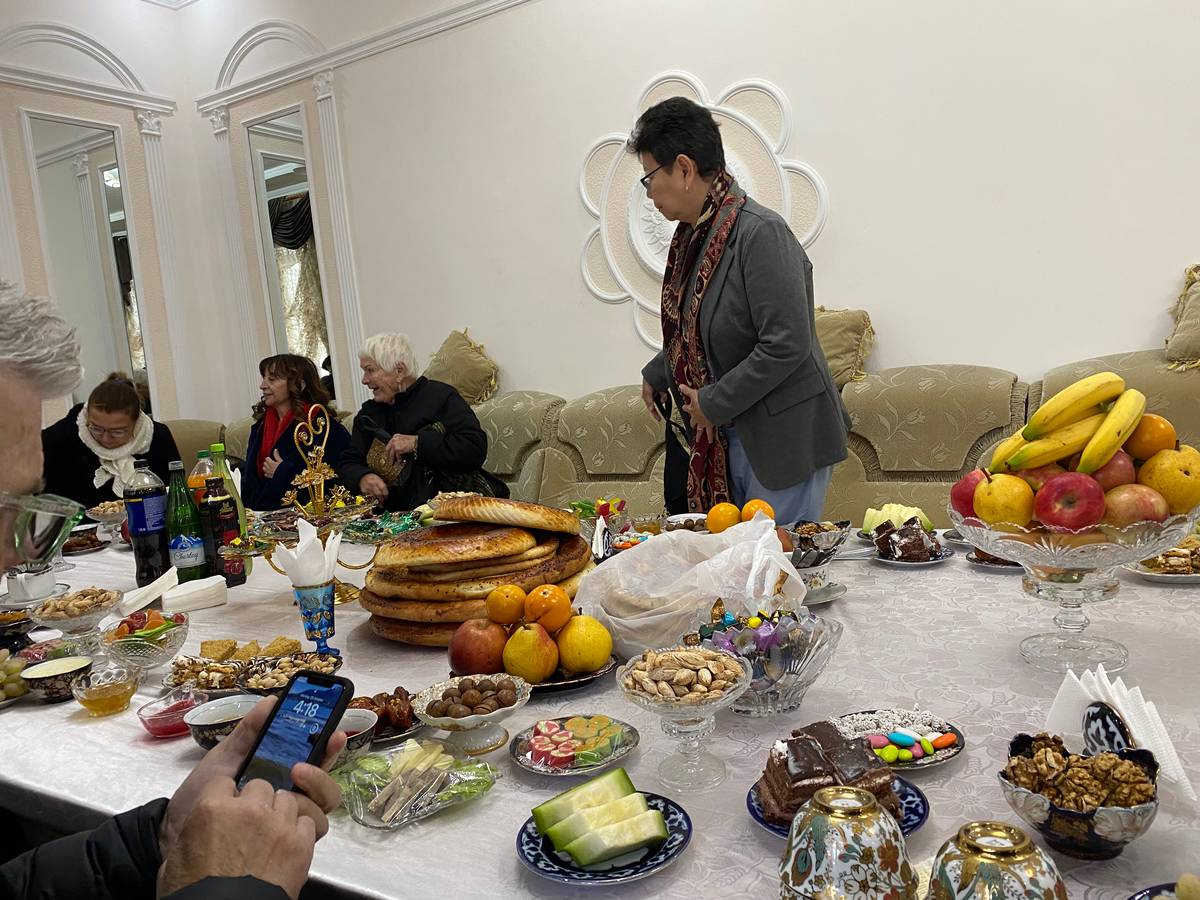
A view of the long dinner table.
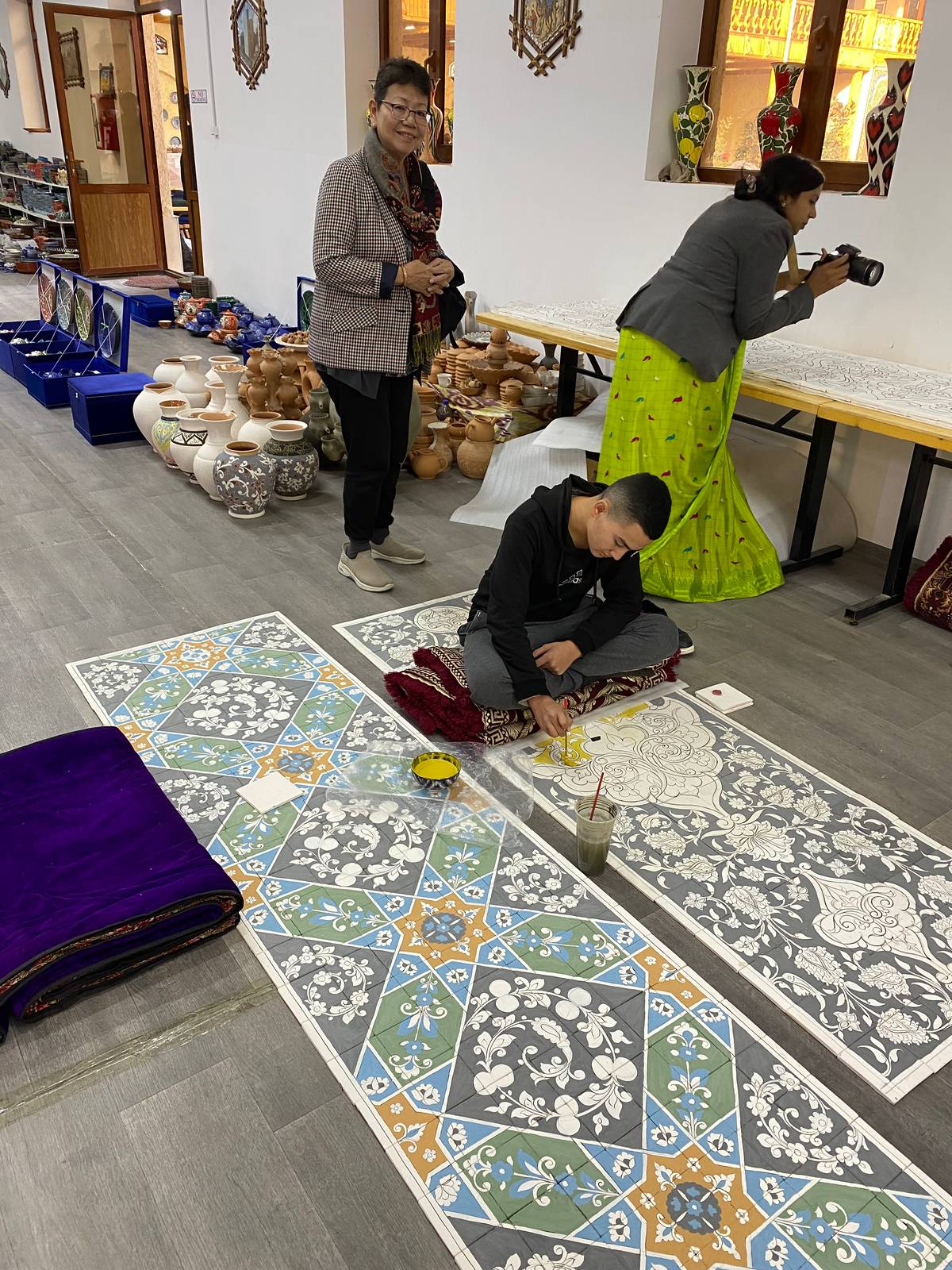
Artists in a ceramic artisan factory.
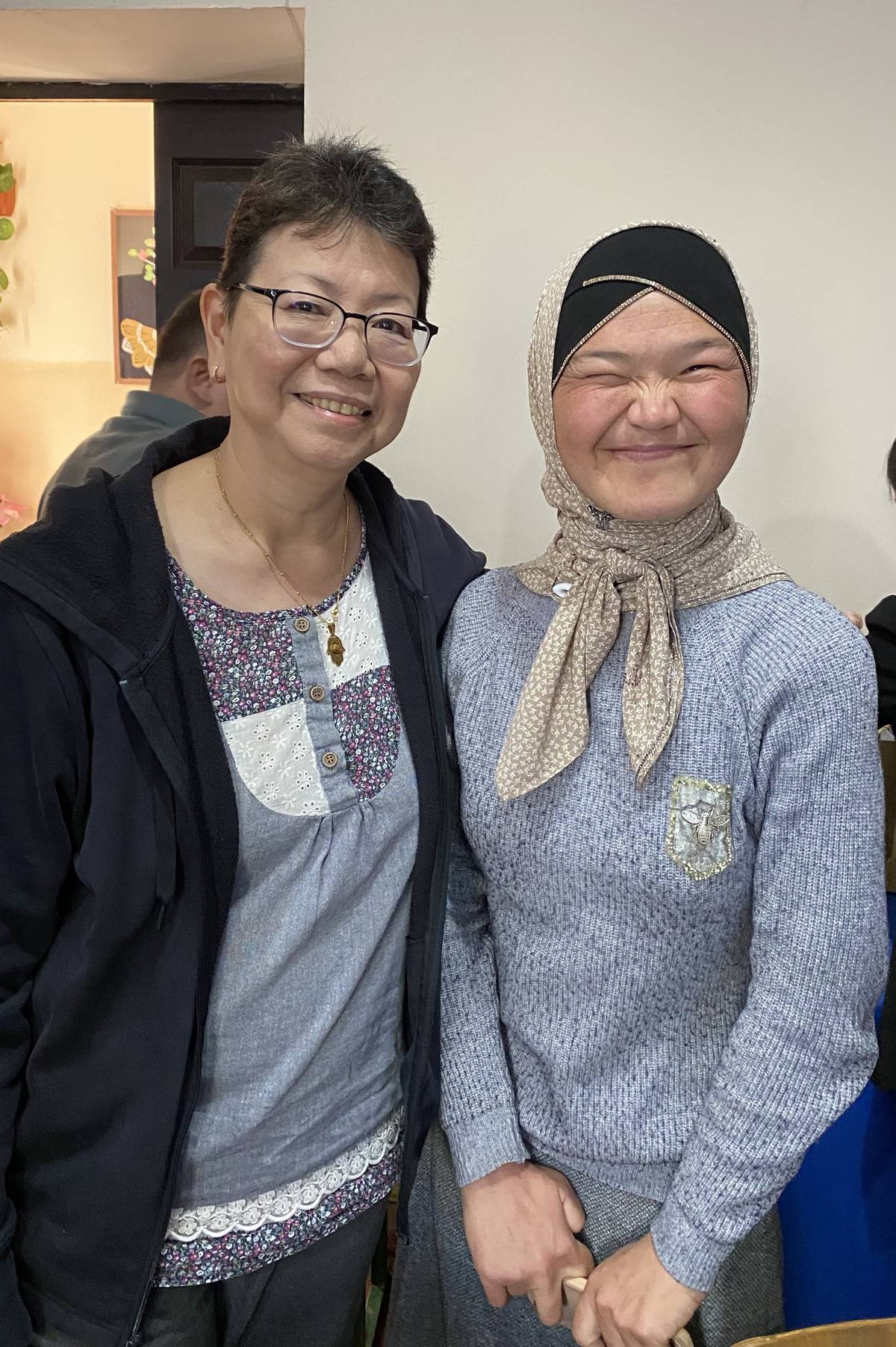
The author with Narquiza the poet at the Ghallaorol District.
Camaraderie and love
Thus we remember our fourteen-day stay in Uzbekistan. The camaraderie between the poets and writers themselves was unmistakable: Yusuke Miyake from Tokyo, and Yasuhiro Yotsumoto who now lives in Munich; Rashida Ismaili Abubakr from Benin now living in Harlem, New York; Patricia Bernard from Sydney and Mark McLeod from Hobart; Kiran Bhat from Mumbai and Reshma Ramesh from Bangalore; Alexis from Languedoc, France; Lana and Sonja from Zagreb, Nurduran Duman from Istanbul, and Neshe from Nicosia. We were also joined by poets, a painter and a sculptor from Kazakhstan and Kyrgyzstan. The local poets, too, extended their hospitality, especially Roxila Siddiq, whom we remember as someone who always gave us warm hugs and recorded all the proceedings, very patiently annotating them simultaneously as she went around with her cellphone.
Recalling all these now and receiving WhatsApp messages from these friends still give me a warm glow. Reshma from India invited all of us to an Indian poetry festival in Assam next year. Another suggested we meet through Zoom after a month. A’zam had also decided to publish an anthology of our essays on the writing residency, and everyone is looking forward to reading it and perhaps meet up again. Inshallah, inshallah!