
Thoughts to live by: The Solemnity of the Epiphany of the Lord
5 January 2025, Sunday
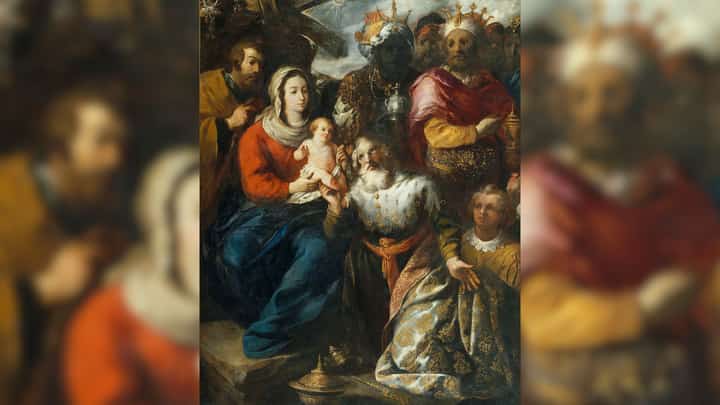
Oil on canvas by Francisco Herrera the Elder (1576–1656). The artwork depicts the moment when the Child Jesus was adored by the three Wise Men in the presence of the Virgin Mary and Saint Joseph.
Wikimedia Commons
Liturgy of the Word
1st Reading: Is. 60:1-6
Responsorial Psalm: Ps. 72:1-2, 7-8, 10-11, 12-13
2nd Reading: Ephes. 3:2-3, 5-6
Gospel: Mt. 2:1-12
Some Notes on the Epiphany —
1. Meaning of Epiphany
The word "Epiphany" comes from the Greek epipháneia, meaning "manifestation." It commemorates the manifestation of Jesus Christ, Son of God, to the Magi. His divinity was later revealed more explicitly at his Baptism in the Jordan River and at the wedding in Cana.
The Magi appear only in Matthew’s Gospel (today’s Gospel). Their names, origins, and exact number are unspecified. In Western Christianity, they are often assumed to be three, symbolizing the three gifts. Tradition gives them the names Gaspar, Melchior, and Baltazar, which first appeared in the 8th century.
An Armenian tradition identifies the Magi as:
Baltazar of Arabia
Melchior of Persia
Gaspar of India
Some Chinese Christians believe one of the Magi came from China.
2. The Gifts of the Magi
Gold symbolizes kingship.
Frankincense symbolizes deity.
Myrrh symbolizes death or mortality.
These gifts are referenced in the Christmas carol, “We Three Kings.”
In Eastern Christianity, the Magi are often numbered 12. Some translations refer to them as astrologers, as they observed the Star of Bethlehem.
By the 3rd century, they were increasingly identified as kings, aligning with Old Testament prophecies (Is. 60:3; Ps. 68:29; Ps. 72:10).
Matthew’s Gospel (2:1-12) presents the Magi as unnamed wise men (magoi) who visit Jesus at a house, not a stable.
3. Epiphany in Christian Tradition
In Eastern Christianity, Epiphany is also called “Theophany”, a term used by St. Gregory of Nazianzus.
Epiphany is one of the three oldest Christian festivals alongside Easter and Christmas.
Origin: Celebrated in the Eastern Church as early as 361 AD, originally including Christ’s birth.
In Rome: By 354 AD, Christmas was celebrated on 25 December, and Epiphany was set on 6 January.
4. Epiphany in Western and Eastern Traditions
In the West, Epiphany focuses on the visit of the Magi, symbolizing Jesus’ revelation to Gentiles.
In the East, it commemorates Jesus’ baptism, highlighting his dual nature as God and Man.
In the West, Epiphany includes the manifestations at:
Baptism
Wedding at Cana
6 January marks 12 Days of Christmas, referenced in the carol “The 12 Days of Christmas.”
Epiphany is traditionally known as a gift-giving day. Since 1970, it has been celebrated on the Sunday after 1 January — this year, 5 January 2025.
In some European countries, it is customary to write GMB (Gaspar, Melchior, Baltazar) above doors for blessings and protection.
Scriptural Reflections
5. 1st Reading — Is. 60:1-6
Highlights the light of God’s glory (v. 1).
Nations and kings are drawn to this light (v. 3).
Gifts of gold and frankincense are brought in honor of the Lord (v. 6).
6. Responsorial Psalm — Ps. 72
Praises a king of justice who defends the poor (vv. 4, 12-13).
Kings offer tribute and gifts, symbolizing the Magi honoring Jesus as King and God (v. 11).
7. 2nd Reading — Ephes. 3:2-6
Focuses on the unity of Jews and Gentiles as co-heirs of Christ’s promise, echoing the Magi’s representation of the nations of the world.
8. Gospel — Mt. 2:1-12
Describes the Magi, guided by a star, honoring Jesus as the “new King of Israel.”
Their gifts of gold, frankincense, and myrrh recognize Jesus as King, God, and Savior.
Key Reflection
9. The Divinity of Jesus
Today’s readings emphasize Jesus’ divinity, royalty, and mortality. He is revealed as both Son of God and Son of Mary.
The Star of Bethlehem symbolizes divine guidance, calling us to conversion and adoration.
Like the Magi, we are called to offer the treasures of our hearts to Christ and commit to acts of charity.
10. Prayer
O God, on this day you revealed your Only Begotten Son to the nations by the guidance of a star.
In your mercy, O Lord, grant that we who know you already by faith may be brought to behold the beauty of your sublime glory
We ask this through Christ, your Son and our Lord. Amen. (Today’s Collect)
Happy Three Kings!
Prayers, best wishes, and blessings!