
New solar dryer boosts Coron seaweed farmers
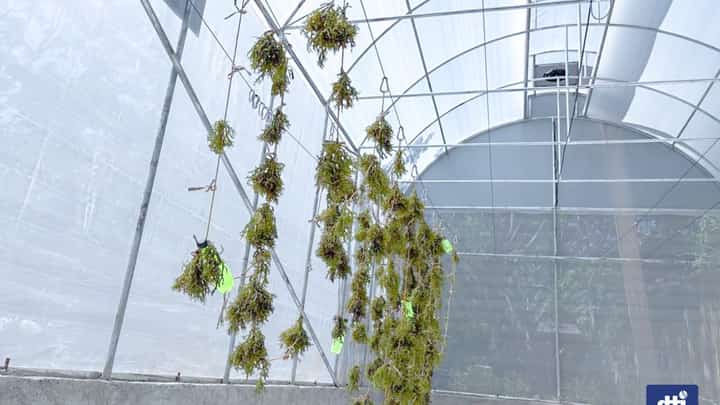
The greenhouse uses solar energy to dry seaweed, paving way for a more efficient, economical, and sustainable process of drying agricultural products.
Photo Courtesy of DTI
The Department of Trade and Industry (DTI) has recently handed over a sustainable drying facility to local seaweed production firms in Coron, Palawan — a move expected to boost the livelihoods of residents and communities in the area.
Awarded by the Korea Invention Promotion Association (KIPA) and the Korean Intellectual Property Office (KIPO), the greenhouse-type solar dryer employs advanced technology to produce higher-quality dried products.
The agency said the innovation aims to improve the standard of seaweed production, providing a reliable source of income for local farmers and contributing to the economic growth of the region.
Designed to cater to the unique needs of the seaweed sector, the facility aims to meet quality standards for both domestic and international markets.
The technology leverages research into greenhouse drying, which has shown that products dried in greenhouse environments are healthier and of superior quality than those dried using traditional methods.
The facility will benefit the Marcilla Seaweed Growers Association and the Calamianes Seaweed Marketing Cooperative.
Additionally, KIPA and KIPO will provide branding assistance to both organizations, including logo design and brand messaging.
“This marks our fourth year of partnership with KIPA and KIPO, and we are extremely grateful to the Korean government and the Korean people for helping MIMAROPA entrepreneurs by promoting innovation through the protection of intellectual property and introducing brand identity to our MSMEs,” said regional director Rodolfo J. Mariposque.
The project is the second solar-powered facility launched by DTI MIMAROPA, following the successful establishment of the fish processing facility in Bogtong, Busuanga, Palawan.