
PHL courts investors for 98-GW energy potential
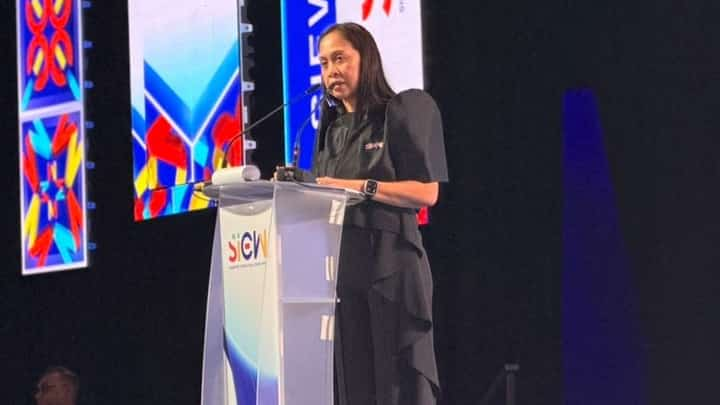
ENERGY Secretary Sharon S. Garin speaks at the 10th Singapore-International Energy Agency Forum, highlighting the Philippines’ push for supply reliability and regional energy security.
Photograph by Maria Romero for DAILY TRIBUNE
Singapore — The Philippines is looking to unlock nearly 98 gigawatts (GW) of untapped renewable energy potential to boost domestic power supply and reduce dependence on volatile global fuel markets, with the government pushing for clearer regulations and faster project approvals to attract investors.
Energy Secretary Sharon S. Garin said the country has around 25 GW of untapped hydropower, two GW of additional geothermal potential and 71.3 GW of offshore wind potential, which provides significant opportunities for new power investments.
Speaking at the 10th Singapore–International Energy Agency (IEA) Forum on Tuesday, Garin said harnessing these resources would help the country meet rising electricity demand while strengthening long-term energy security.
Renewables already account for more than a quarter of Philippine electricity generation, equivalent to about 32 terawatt-hours in 2025.
To sustain the trajectory, the government mapped out a plan to increase its share to 35 percent by 2030 and 50 percent by 2040, supported by investments in hydropower, geothermal, offshore wind, solar and energy storage systems.
However, converting the country’s vast renewable energy potential into operating power plants will require substantial capital and a predictable investment environment.
Garin stressed that power plants, transmission lines, and submarine cables take years to develop and billions of dollars to finance, which makes policy stability critical to securing long-term investments.
“Investors commit to that horizon when they see policy continuity, transparent rules, credible timelines, and a government that understands the realities of project development,” Garin said.
To address these concerns, the Department of Energy is streamlining permitting procedures through the Energy Virtual One-Stop Shop (EVOSS), which aims to provide developers with greater visibility over project approvals and implementation timelines.