
Bangladesh court orders arrest warrant for ex-leader
Sheikh Hasina, 77, has not been seen in public since fleeing Bangladesh

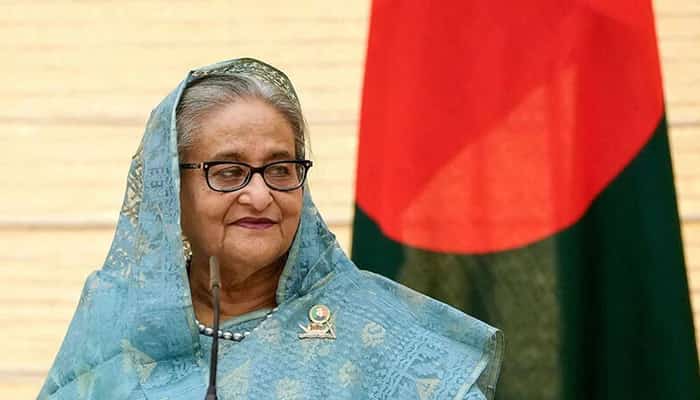
DHAKA (AFP) — A Bangladeshi court on Thursday ordered an arrest warrant for exiled ex-leader Sheikh Hasina, who fled to India in August after she was toppled from power by a student-led revolution.
“The court has... ordered the arrest of former prime minister Sheikh Hasina, and to produce her in court on November 18,” Mohammad Tajul Islam, chief prosecutor of Bangladesh’s International Crimes Tribunal (ICT), told reporters on Thursday.
Hasina’s 15-year rule saw widespread human rights abuses, including the mass detention and extrajudicial killings of her political opponents.
“Sheikh Hasina was at the helm of those who committed massacres, killings and crimes against humanity in July to August”, Islam said, calling it a “remarkable day.”
Hasina, 77, has not been seen in public since fleeing Bangladesh, and her last official whereabouts is a military airbase near India’s capital New Delhi.
Her presence in India has infuriated Bangladesh.
Dhaka has revoked her diplomatic passport, and the countries have a bilateral extradition treaty which would permit her return to face criminal trial.
A clause in the treaty, however, says extradition might be refused if the offense is of a “political character.”
Hasina’s government created the deeply contentious ICT in 2010 to probe atrocities during the 1971 independence war from Pakistan.
The United Nations and rights groups criticized its procedural shortcomings, and it became widely seen as a means for Hasina to eliminate political opponents.
Several cases accusing Hasina of orchestrating the “mass murder” of protesters are being probed by the court.