 Daily Tribune
‘We were advised by the DoH regional office that the vaccines will be available by July at the earliest.’
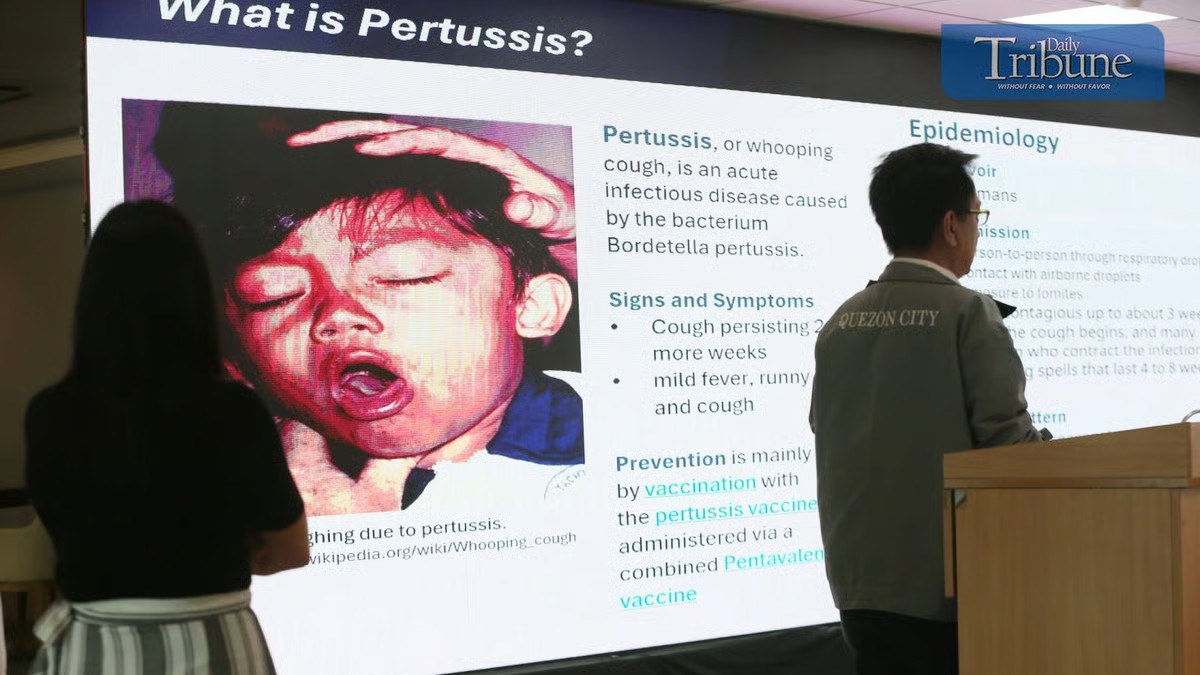
PALO, Leyte — Cases of pertussis or whooping cough continue to rise in Eastern Visayas (EV) amid the problem of shortage of vaccine that would have prevented a critical illness especially among infants.
The Department of Health (DoH) in Eastern Visayas reported on Friday that as of 27 April a total of 102 pertussis cases have been reported in the region where four in every five of the patients are infants below one-year-old.
Jelyn Malibago, DoH-8 regional information officer, said the agency has run out of stocks of pentavalent vaccine, a five-in-one combination vaccine that protects against diphtheria, tetanus, whooping cough, hepatitis B, and Haemophilus influenzae type B, since February and expects replenishment by July.
“There may be some rural health units that haven’t used up all their vaccines but as far as the DoH regional office is concerned, we haven’t been able to provide the vaccines for two months now,” she said.
Earlier, Health Secretary Ted Herbosa confirmed the shortage of supply of pentavalent vaccine in the hands of the government but said that it remains available in the market. He said the government has already ordered three million doses from its suppliers but the vaccines are expected to arrive in June.
In Tacloban, City Health Officer Dr. Danilo Ecarma confirmed that there are no more available pentavalent vaccines in all the health centers run by the city government.
“We were advised by the DoH regional office that the vaccines will be available by July at the earliest,” he said.
For the meantime, he added, the city government is closely monitoring the situation and advised the public to bring children that show symptoms of pertussis to the nearest health facility.
He said Tacloban City already recorded eight cases of pertussis, two of them are confirmed cases based on laboratory tests.
“This can be treated with antibiotics. As long as it is treated early, patients will have faster recovery,” he said. “The best prevention could have been vaccines. The best that we can do at present is to educate the public, especially the parents.”
Based on the latest report of DoH-8, of the 102 pertussis cases in the region since January, 79 of them are infants one-year-old and below. Two deaths have been recorded, one each in Leyte and Northern Samar.
Data from DoH-8 also shows that of the 102 patients, only 22 are fully immunized with three doses, eight were not able to complete the three doses and 72 were not immunized.


