
Net the big fish
Somebody has to be held accountable for the SEA Games scandal. Yes, Suzara would be a suspect, but he was clearly taking orders from someone higher up.
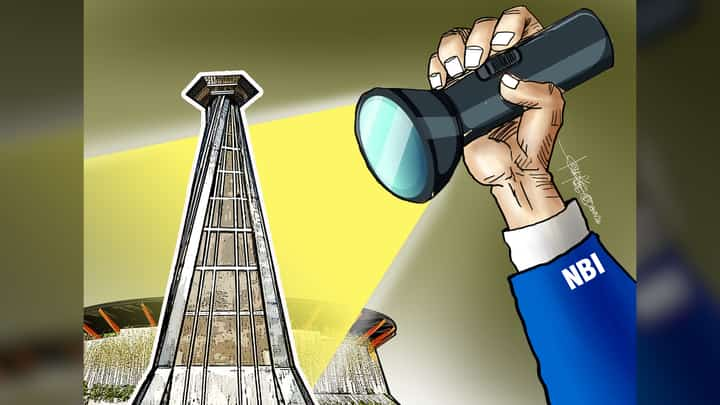
Philippine sports celebrated when the National Bureau of Investigation (NBI) announced that it would look into the financial mess during the country’s hosting of the 30th Southeast Asian (SEA) Games in 2019.
The amount was staggering. A total of P10 billion in public and private funds is said to remain unliquidated, easily making it one of the biggest scandals in the country in the past 10 years.
Fittingly branded as “Task Force Cash Cow,” the investigating team started its probe at the mothballed SEA Games cauldron at New Clark City in Tarlac. The structure is a 50-meter symbol of the lavishness, impunity and lack of accountability of the Philippine Southeast Asian Games Organizing Committee (Phisgoc) — the body tasked with organizing the country’s hosting of the SEA Games.
Official documents showed that the cauldron designed by the late National Artist for Architecture Francisco Mañosa cost P55 million, with P4.4 million going to his family for the design, P13.4 million for the foundation and P32 million for the actual construction.
But the NBI disagreed. Based on its investigation, the cauldron actually cost only P5 million, which meant it was overpriced by 1,000 percent. Wow!
The alleged overpricing wasn’t the only red flag. The NBI said there was also a case of “double payment” for the cauldron, as undisclosed documents revealed that certain companies and personalities were paid twice for their participation in the construction of the cauldron that turned into a white elephant.
Aside from the cauldron, there were also reports of overpriced sports facilities, equipment and apparel, while the proceeds from ticket sales, sponsorships, broadcast rights and other revenue remained murky.
With that, the NBI decided to defer the release of its probe results and the filing of criminal charges until “before Christmas” to make sure all the evidence and testimonies had been taken into account.
At the heart of the investigation is Ramon “Tats” Suzara, a former physical education teacher and Philippine Sports Commission employee who rose to become the top volleyball executive in Asia.
Suzara was appointed president and chief executive officer of Phisgoc. He was the chief implementer who had the final say on almost everything related to the SEA Games, from the logo design to the caterers and entertainers, up to who got to sit in the VIP box.
But was Suzara really the only one responsible for the SEA Games mess? Did he have the clout to mount this billion-peso endeavor all by his lonesome? Definitely not.
Enter Alan Peter Cayetano. The Speaker of the House of Representatives at the time, Cayetano styled himself as the chairman of Phisgoc in front of the national government, sponsors and key stakeholders like the Philippine Olympic Committee and various national sports associations.
In fact, it was Cayetano who went to Malacañang to solicit the government guarantee — an official document that signified the country’s willingness to host the SEA Games — from former President Rodrigo Duterte with the backing of then Executive Secretary Salvador Medialdea.
Selling the idea of hosting the SEA Games wasn’t easy. First, the country didn’t have many resources and couldn’t afford to throw a lavish party for sports officials and foreign dignitaries and, second, it had just come from an all-out war in Marawi City, where the government reportedly spent close to P1 billion.
But Cayetano wielded serious clout at the Palace. After all, when Duterte ran for president in 2016, Cayetano was his running mate, who lost to Leni Robredo.
Still, Cayetano was careful. Although he branded himself as the chairman of Phisgoc, he didn’t sign any official documents that would establish his role.
Even NBI director Melvin Matibag appeared to have been outsmarted by Cayetano, admitting that he couldn’t directly link him to the Phisgoc issue, as he couldn’t find his name on any official corporate document. It was a masterclass in clearing one’s tracks, ensuring that investigators would find nothing on paper when accountability came knocking.
Somebody has to be held accountable for the SEA Games scandal. Yes, Suzara would be a suspect, but he was clearly taking orders from someone higher up. He couldn’t mount this massive endeavor alone. He didn’t have the clout to create a SEA Games organizing body that could easily walk into Malacañang to solicit the support of the chief executive.
Task Force Cash Cow must climb up the organizational ladder and follow the chain of command to its highest rung. The legitimacy of this probe hinges entirely on the NBI’s courage to follow the evidence wherever it may lead, regardless of how politically connected or influential the target may be.
If the NBI truly intends to come up with a credible investigation, it must prove that no one of any political stature is grand enough to be granted immunity.
The public is not interested in seeing foot soldiers like Suzara being paraded in handcuffs while the ranking general remains untouched. It is time to net the big fish.