
Buck stops at Palace
The racket began with Unprogrammed Appropriations, which are lump-sum funds with no line items.
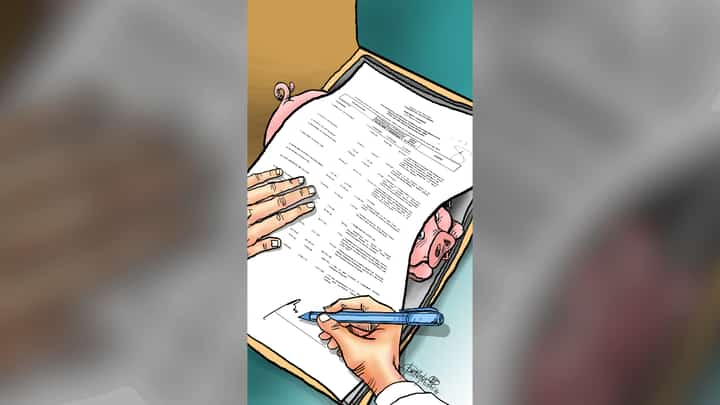
The House designed the 2024 and 2025 national budgets to make the system work exactly as the thieves in government meant it to.
The Supreme Court (SC), with its recent ruling invalidating the 2024 and 2025 budgets while voiding portions of the 2026 budget, has lent weight to the argument, making the question not what the House did but what President Ferdinand Marcos Jr. did at the time.
The racket began with Unprogrammed Appropriations (UA), which are lump-sum funds with no line items. Because no contractor can buy a project from a fund like that, the scheme moved things in the other direction.
Foreign-assisted projects, such as the subway, were shifted into the unprogrammed funds, since the government must pay its foreign lenders anyway.
That freed up room in the regular budget, and the created gap was filled with projects that could be sold to contractors.
Recently, Navotas Representative Toby Tiangco, in a Straight Talk interview, gave an example in which P100 billion is moved, and the projects are sold, so that a 20-percent cut brings in P20 billion, or P25 billion at the 25 percent rate he says was allegedly asked of contractors.
This, he said, resulted in the UA continuing to grow. The Supreme Court ruling has found that the budgets lacked transparency and accountability, and that finding fits Tiangco’s account.
The first point is that the budget starts in the Executive. Agencies in the Executive branch prepare the proposal, so the President’s people first wrote an unprogrammed fund that grew year after year.
Either the President’s team saw it and let it pass, or they didn’t look, and neither answer is comforting.
The second point is that the President holds the pen at the end. Before any budget becomes law, he can strike out items he finds improper, one item at a time.
While nobody could say who voted for the final version in the House because the vote was by voice and no names were recorded, Marcos signed his name to the exploited budget laws, and he knew, or should have known, what he was signing.
The President’s allies ran the House, the former Speaker is his cousin, and a grand plan of manipulation could not have moved through both branches unless someone at the top agreed to allow it.
While nothing proves that he agreed, the plan moved with his signature, and the people who gain from the racket are often the ones closest to power.
Neglect would be the kinder offense. It holds that the President did not know. If that is so, then a leader who signed a budget worth trillions of pesos never asked why a lump-sum fund kept swelling, never asked who would spend it, and never used his veto where it was most needed.
Neglecting that kind of duty is still a failure, because the Constitution gives the President the power to check the budget.
The President did tell lawmakers they should be ashamed, but it came after the fact.
It does not answer why the warning came only once the scandal over flood control projects had become too large to ignore.
Also, the government, through the Solicitor General, plans to appeal the ruling, as it has a right to do.
Yet, the 2027 budget is already moving through Congress, and the House version repeated what the SC had disallowed while skipping the proper committee process.
The landmark SC ruling held that authors or proponents of unconstitutional budget provisions could be held liable unless a tribunal finds that they acted in good faith.
Against this backdrop, the President now faces a clear choice. He can use his office to open the books, release the records and support the cases against those who profited from the scheme.
Such action would show that while he may have been neglectful, he is now willing to correct the wrong.
Or he can defend the old process and appeal the ruling, leaving the public to draw its own conclusion about complicity.
The greatest responsibility for the budget rests with the one official who proposed it, signed it, and had the power to stop it, but did not.