
SC suspends lawyer for backdating candidate's campaign expense report
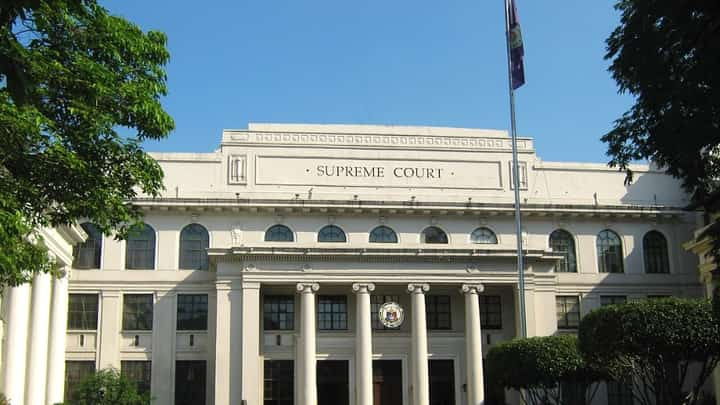
The Supreme Court has suspended lawyer Paisal Padate from practicing law for one year after finding him guilty of notarizing backdated campaign finance documents submitted to the Commission on Elections (Comelec).
In an en banc decision dated 26 August 2026 and made public recently, the high court also revoked Padate's existing notarial commission and disqualified him from serving as a notary public for two years.
The administrative case stemmed from a complaint filed by the Comelec Campaign Finance Office involving the Statement of Contributions and Expenditures (SOCE) and Schedule of Expenditures submitted for candidate Amer-Ali Mangandog.
The documents bore Padate's notarial seal and were dated June 2010, suggesting compliance with the filing requirements.
However, Comelec discovered that the official forms used for the submissions were not manufactured or issued until 2013, three years after the purported notarization.
Comelec argued that the documents had been deliberately backdated to create the appearance of compliance with election requirements.
Padate denied the allegations, claiming that unidentified individuals had forged his signature, duplicated his notarial seal and used his credentials without authorization.
He also maintained that his experience as a former provincial election supervisor made it unlikely that he would knowingly notarize falsified documents.
The Supreme Court rejected his defense, ruling that he failed to substantiate his claims of forgery.
“His uncorroborated assertions do not overcome the evidentiary weight of the documents bearing his commission details and signature as notary public,” the Court said.
“Thus, the Court finds that the existence and presentation of these notarized documents constitute substantial evidence sufficient to support the conclusion that respondent, in fact, notarized the same,” it added.
The justices said the discrepancy between the documents' purported 2010 notarization and the 2013 issuance of the forms constituted deliberate misrepresentation.
The Court also found irregularities in the notarial certificates, including the absence of competent evidence establishing the identity of the person who appeared before the notary.
It described the omission as a “substantive lapse.”
The Court further questioned inconsistencies in the docket numbers of the SOCE and Schedule of Expenditures, raising concerns about the reliability of Padate's notarial records.
According to the decision, Padate demonstrated a “marked indifference” to the requirements governing notarial practice.
“His actuations are precisely the kind of irregularities that the Rules on Notarial Practice were designed to prevent, as they undermine the integrity, authenticity, and reliability of notarized instruments,” the Court said.
“His failure to comply with the requirements also erodes public confidence in the notarial system and defeats the very purpose of the notarization requirement,” it added.