
Zalameda: Officials presumed in good faith in budget controversy
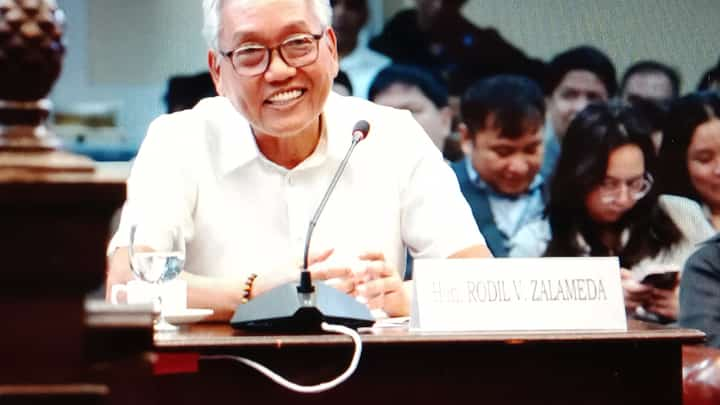
Supreme Court Associate Justice Rodil Zalameda said public officials involved in increasing unprogrammed appropriations should be presumed to have acted in good faith unless evidence establishes otherwise.
During his interview before the Judicial and Bar Council (JBC) on Monday, Zalameda, an applicant for chief justice, emphasized that unprogrammed appropriations remain constitutional as a budget mechanism.
“When you say it is constitutional, I don’t think the public officers may be held liable for such act, for act which is declared constitutional,” he said.
Zalameda also cited the presumption that public officials regularly perform their duties.
“Aside from that, there is presumption of regularity on the part of these public officials and all their acts are considered valid until such acts are declared invalid,” he said.
However, he clarified that the Supreme Court did not determine the potential liability of individual officials in Lagman v. Congress, as the issue was not among the questions raised before the tribunal.
The consolidated ruling involved provisions of the 2024, 2025 and 2026 national budgets.
The Court struck down Congress' P449.5-billion increase in unprogrammed appropriations under the 2024 General Appropriations Act (GAA) and a P17.99-billion increase in the Special Road Fund under the 2025 GAA.
It also invalidated certain conditions governing the release of unprogrammed funds in the 2026 budget.
Nevertheless, the High Court upheld the constitutionality of unprogrammed appropriations as a funding mechanism, subject to safeguards.
Zalameda dissented from the majority's finding that Congress' 2024 increase was unconstitutional.
In his separate opinion, he argued that the constitutional prohibition against Congress increasing the President's proposed appropriations applies to regular spending backed by identified funding sources, rather than contingent or standby funds.
He maintained that unprogrammed appropriations are fundamentally different because they may be released only when specific financing conditions are satisfied.
Zalameda also stressed the importance of respecting the constitutional boundaries separating the judiciary, Congress and the executive branch.
“Each branch of government is bound by its own constitutional mandate. Respect for these boundaries is one of the foundations of a constitutional government,” he said.
He added that courts must distinguish unconstitutional acts from disagreements over policy or governance decisions.
Zalameda was among five justices interviewed by the JBC for the chief justice position, alongside Senior Associate Justice Marvic Leonen and Associate Justices Alfredo Benjamin Caguioa, Japar Dimaampao and Jose Midas Marquez.
The next chief justice will succeed Alexander Gesmundo, who is scheduled to retire on 6 November.