
Unaffected budget provisions remain workable — DBM
‘The DBM will observe the applicable Supreme Court directives concerning these provisions, without prejudice to the government’s right to seek reconsideration through appropriate judicial processes.’
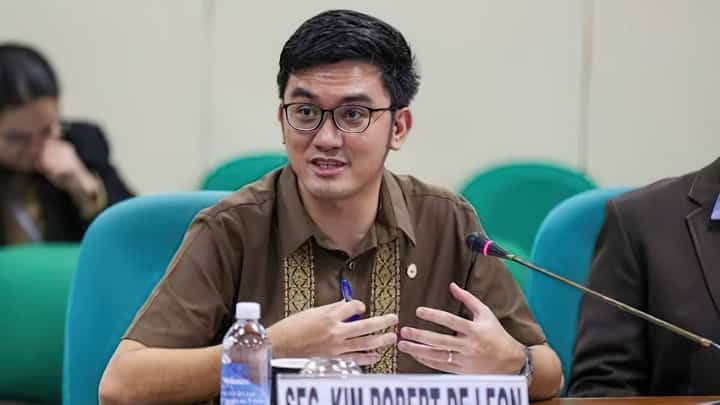
BUDGET Secretary Kim Robert de Leon said his department is inclined to follow the Supreme Court ruling regarding Unprogrammed Appropriations, but maintained commitment to implementing the FY 2026 General Appropriations Act projects despite the encouragement of the Office of the Solicitor General to temporarily halt their implementation sans SC’s decision on SolGen’s Motion for Reconsideration.
Photograph courtesy of DBM
The Department of Budget and Management (DBM) said they remain committed to implementing the 2026 General Appropriations Act (GAA) in accordance with the Constitution, applicable laws, and the Supreme Court’s (SC) directives on Unprogrammed Appropriations (UA).
During the Senate Committee on Finance hearing on 22 October, Budget Secretary Kim Robert de Leon confirmed that releases charged against the FY 2026 UA as of that date were limited to foreign-assisted projects, which are subject to a separate funding condition not invalidated by the Court.
“The DBM will observe the applicable Supreme Court directives concerning these provisions, without prejudice to the government’s right to seek reconsideration through appropriate judicial processes,” the DBM said in a statement on Sunday.
Last week, Solicitor General Darlene Marie Berberabe advised the DBM to begin halting some projects that are not yet started to halt them while a Motion for Reconsideration remains pending at the SC.
“Unaffected provisions remain implementable, subject to their respective legal bases, funding conditions, and established budgetary procedures,” the DBM added.
In coordination with the Office of the Solicitor General and other concerned government offices, the DBM said they will continue to assess the decision’s legal, fiscal, technical, and operational implications to determine the appropriate next steps, while safeguarding fiscal stability and the continued delivery of government services authorized by law.
The OSG last week said they welcome the SC ruling, affirming that UA are not unconstitutional in themselves, recognizing their legitimacy as a mechanism in the government's national budgeting process.
Berberabe said the decision provides an important clarification on the constitutional status of unprogrammed appropriations under the 2024, 2025 and 2026 national budgets.
Berberabe emphasized that the government respects the High Court's decision despite its plan to seek clarification and reconsideration of certain provisions.
She explained that UAs serve an important purpose in fiscal management by providing flexibility in government spending when additional funding sources become available, subject to legal requirements.
Berberabe noted that the preparation of the national budget involves complex economic considerations, including fiscal space, deficit targets, and cash management policies determined by the government's economic managers.
The Solicitor General also welcomed the safeguards imposed by the SC to promote transparency, accountability, and prudent spending of public funds, although the OSG would seek clarification on their constitutional basis.
She stressed that the Executive Branch and Congress must be allowed to exercise their respective constitutional mandates in budget preparation, legislation and implementation while complying with the Court's ruling.
Berberabe said the OSG has until 4 November to file its motion for reconsideration as it continues reviewing the decision to ensure that the implementation of government programs and projects remains consistent with the Constitution.