
Certified Heavy Equipment Operator Shortage Threatens Construction Sector
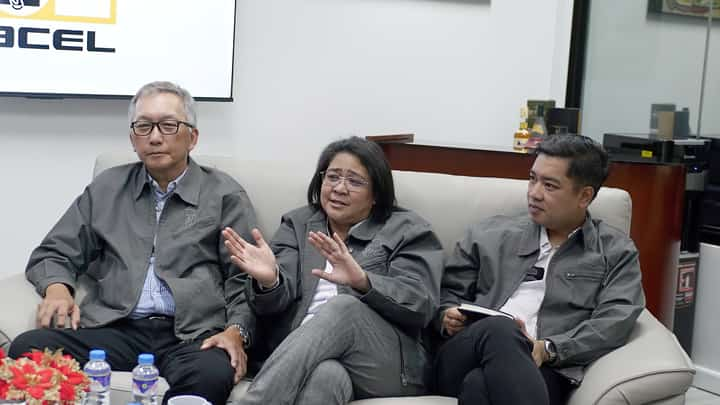
Association of Carriers & Equipment Lessors Inc. officers (from left): First vice president Sixto Benedicto, president Abi Mancilla, and Director and Manpower Development and Certification chairman Dio Agoncillo discuss the pressing problems plaguing their sector, particularly the shortage of certified workers, the dearth of accredited assessors, the high cost of equipment, and the paucity of projects since the start of the Middle East conflict in February this year.
DAILY TRIBUNE IMAGES
The Philippine construction industry is facing a shortage of certified heavy equipment operators, with hundreds of workers awaiting assessment and trained personnel continuing to leave for better-paying jobs abroad, an industry group warned.
The Association of Carriers & Equipment Lessors Inc. (ACEL) said the shortage could become a challenge as the country expands infrastructure development and adopts more specialized construction equipment, including machinery used in tunneling, mining and port operations.
ACEL president Abi Mancilla, first vice president Sixto Benedicto, and Director and Manpower Development and Certification chairman Dio Agoncillo raised the concern during DAILY TRIBUNE’s Straight Talk, which examined the construction industry’s role in supporting national infrastructure development.
Major obstacles
The three identified low local wages, the high cost of training, and a lack of accredited assessors as major obstacles to producing enough qualified workers.
They also noted that the construction industry is struggling to attract younger workers, many of whom prefer office-based employment over fieldwork.
One of the organization’s biggest concerns is the loss of trained workers to overseas employers, particularly in the Middle East, where compensation is generally more competitive.
ACEL said companies often shoulder the cost of training operators, only to lose them to foreign employers after they acquire the necessary skills.
The industry group also pointed to the limited number of Technical Education and Skills Development Authority (TESDA)-accredited assessors who can evaluate workers and issue national competency certifications.
While equipment suppliers provide training to operators who will handle newly purchased machinery, the group stressed that this does not replace the formal assessment required for national certification.
To address the shortage and reduce training costs, ACEL has partnered with TESDA and some of its member companies to explore simulator-based training. The technology currently supports the renewal assessment of existing operators, while its use for new certifications remains under study.
The group is also working with TESDA to modernize training regulations and competency standards, some of which it said have remained largely unchanged for 30 to 40 years.
Among the areas being addressed are lifting and rigging, earthmoving, tunneling and mining operations.