
AuroraPH: Bringing light and learning
AboitizPower helps illuminate remote education through electricity and connectivity

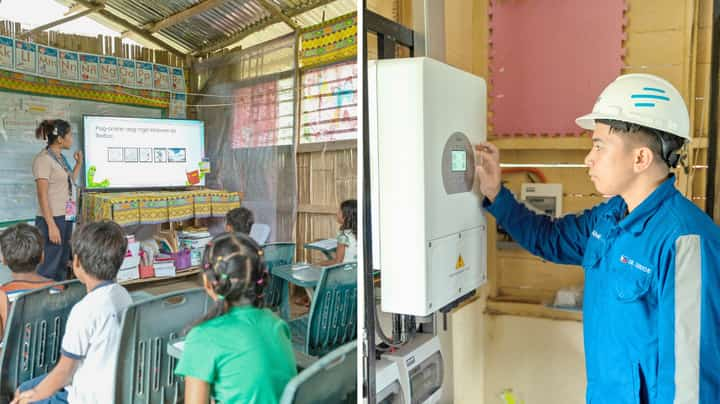
SINCE AuroraPH provided access to electricity, the students of Kabangbang and Lapinig are more excited to learn and go to school, thanks to new television sets (left) and a newly installed solar PV system with an off-grid inverter (right).
Aurora means “daybreak” in Latin — and, true to its root, AuroraPH brings that first appearance of light to last-mile schools in the Philippines.
Last-mile schools are under-resourced learning facilities, often geographically isolated and lacking basic utilities. While almost 99 percent of public schools already have access to power, more than a million Filipino students still go through the day-to-day without it, widening the digital divide in education.
To help reach the last 1 percent, AuroraPH, the Aboitiz Foundation’s flagship education and connectivity initiative in partnership with the Department of Education, aims to support 300 last-mile schools with solar power, internet systems, digital learning tools and capacity building.
With the support of Aboitiz Power Corporation (AboitizPower) and its local partners, AuroraPH has already reached remote schools in Nasipit, Mariveles and Davao, serving as a signal of hope.
The Matigsalug people in Davao City
Elementary schools in Sitios Kabangbang and Lapinig in the Marilog District of Davao City previously relied on gas lamps. Students from the Matigsalug tribe were used to living and studying without electricity.
“One of the biggest challenges is technology... how we can more effectively explain so that students can understand better,” said Lapinig Elementary School head Judy R. Patac. Teacher Marima Guillen of Kabangbang Elementary added that laptops and cellphones could not be used because they could not be charged.
To help, the Aboitiz Foundation and Davao Light and Power Co. provided 5-kilowatt solar panels with battery storage through AuroraPH in November 2025, alongside internet connectivity and digital tools.
“Our children have long endured the hardship of studying in the dark. Now, they can really focus,” shared Matigsalug Datu Ariston Mabayao.
Patac noted the direct impact on teaching: “They no longer have to make and color their visual aids because the actual pictures are much more colorful. It brings more life to what we teach.”
The Higaonon community in Nasipit
For years, the faint glow of kerosene lamps lit sitios Baboy-Baboy and Mangumihay in Nasipit, Agusan del Norte. The lack of reliable electricity severely limited classrooms serving the indigenous Higaonon community, which takes an hour to reach via habal-habal through dirt roads.
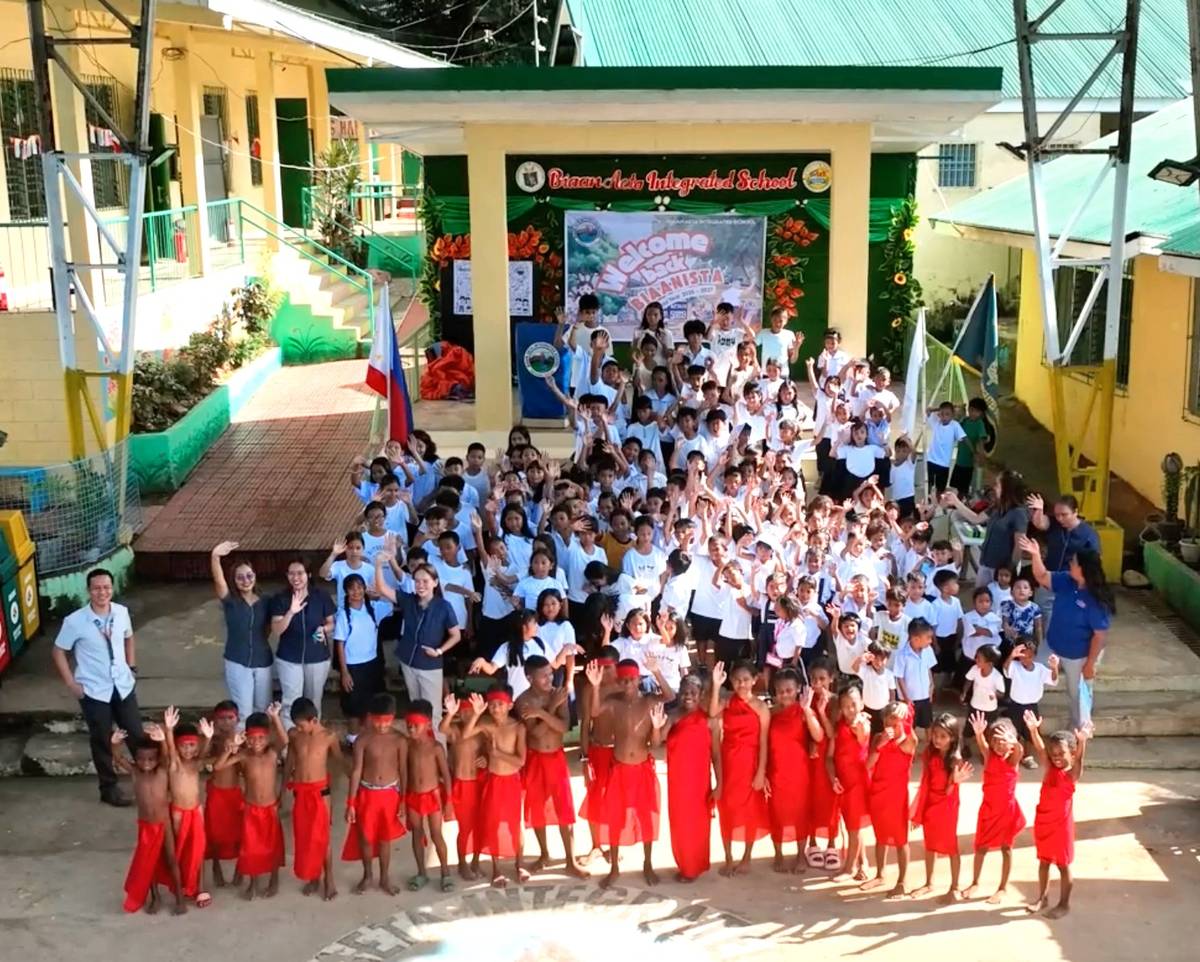
THROUGH AuroraPH, solar PV systems, a battery and satellite internet connectivity equip educators and young learners at Baboy-Baboy and Mangumihay elementary schools in Nasipit, Agusan del Norte with the tools they need to stay connected.
THROUGH AuroraPH, solar PV systems, a battery and satellite internet connectivity equip educators and young learners at Baboy-Baboy and Mangumihay elementary schools in Nasipit, Agusan del Norte with the tools they need to stay connected.
“We relied on basic tools like chalk, blackboards and books. We had to go down to the town just to access the internet,” recalled Higaonon native and licensed teacher Jimboy Mandolihay.
This year, Mandolihay’s hopes for his students were realized. Satellite internet connectivity was facilitated by Therma Marine Inc. and the Aboitiz Foundation, while Aboitiz Construction Inc. provided a 5.49-kilowatt peak solar PV system. Local stakeholders donated additional digital learning tools.
Agusan del Norte Gov. Angelica Rosedell Amante noted that around 90 percent of the inhabitants are indigenous. “We are giving equal opportunities to the children living in far-flung areas,” she explained. “This is already a technology-driven era, so they will not be left behind.”
The Aeta Magbukún tribes in Mariveles, Bataan
In Mariveles, Bataan, a school that began outdoors under trees was equipped to meet the evolving needs of the indigenous Aeta Magbukún tribes. In the early 2000s, almost 99 percent of the natives couldn’t read or write; today, the Biaan Aeta Integrated School is fighting to close the gap.
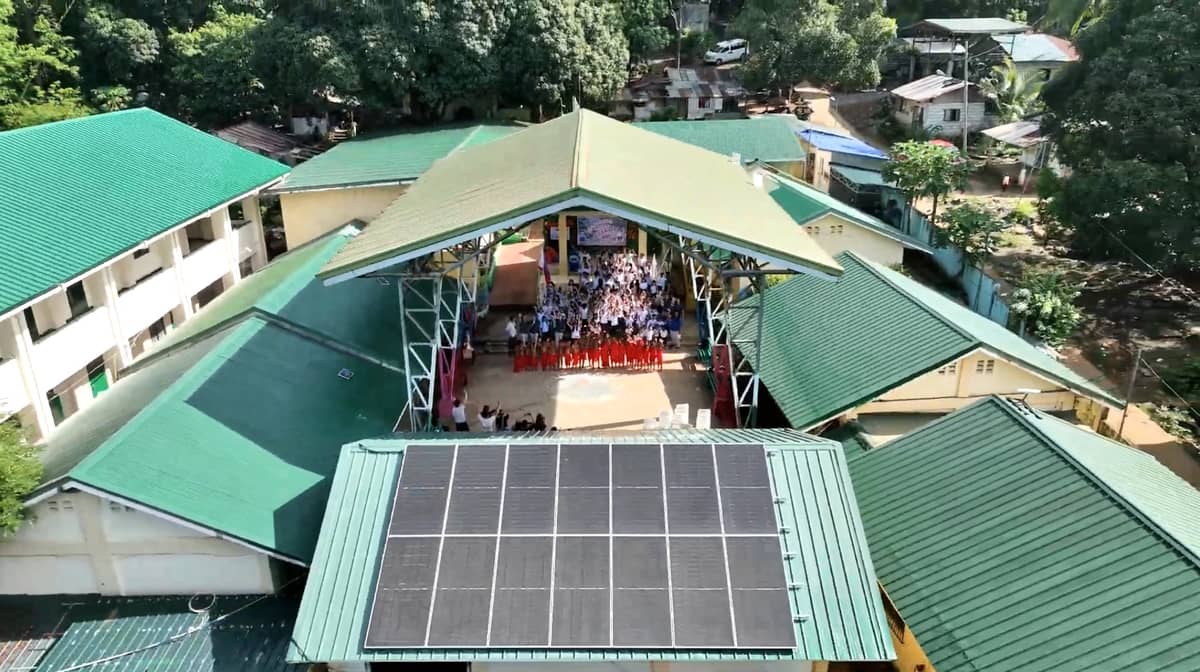
SINCE the arrival of sustainable power and WiFi, the Biaan Aeta Integrated School has experienced reduced electricity costs and vastly improved online connectivity. With such improvements, teachers and students no longer need to go down to the town for internet access.
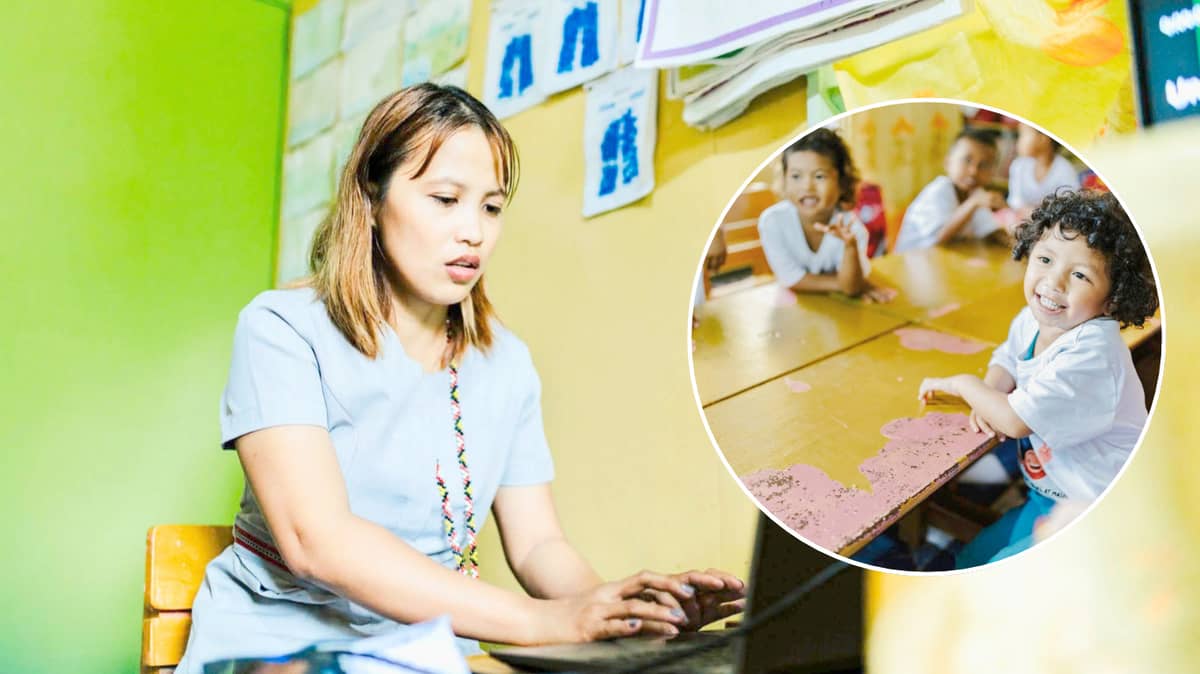
“It’s really difficult for us because there is absolutely no signal. The students were struggling, especially with their research,” said senior high school teacher Laarnie P. Oliveros.
In July 2025, AuroraPH powered 12 classrooms with solar PVs and provided WiFi connected to Low Earth Orbit satellites, bypassing the need for traditional cables. Partnering with GNPower Mariveles Energy Center and GNPower Dinginin, it became the first on-grid school to benefit from AuroraPH, reducing electricity costs and improving connectivity.
“When it comes to studying, I can say that I am 100 percent hardworking,” shared Aeta student Arianne Khaye G. Perio. “What I’m grateful to AboitizPower for is that they transformed our lives as students and made studying much easier.”
Since it began, AuroraPH has completed over 85 schools and benefited more than 9,000 students across the country. It aligns with both national developmental goals and the United Nations’ Sustainable Development Goal 4, ensuring inclusive and equitable quality education for all.