
First No-El
No-El is definitely a no-go. Not even the use — or abuse — by the President of his martial law powers can stop national elections.

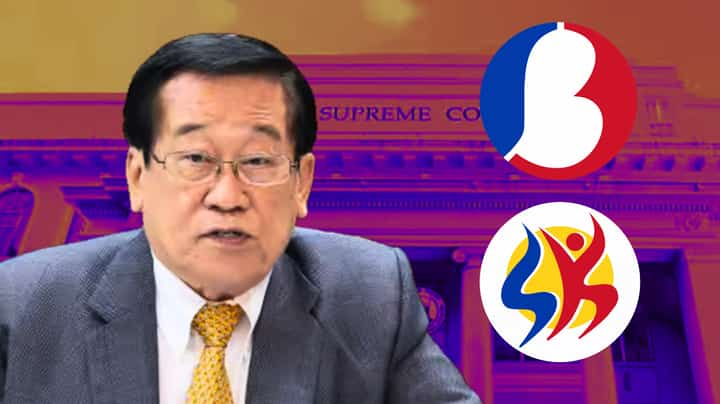
Fears of No-El (No Elections) in 2028 have been raised in the wake of the postponement of the Barangay and Sangguniang Kabataan Elections (BSKE) through legislation.
Opponents of the move not only decry it because it impinges on the doctrine of self-renewal that is the essence of every democratic government, but they claim that it is a portent of a bigger constitutional disaster: the postponement of national and local elections in 2028.
A serious challenge to the BSKE postponement has already been lodged before the Supreme Court by election law icon Romulo Macalintal, and therefore I can say no more. But as to the 2028 No-El issue, I can still give my two depreciated centavos’ worth (which is around US$0.00032 at the current exchange rate). So, is it legally possible?
Unlike the date for the BSKE, which is fixed by ordinary legislation (read: Act of Congress), the schedule for national elections (President, Vice President, senators and representatives) is strictly fixed by the Constitution, under Article VII, Section 4 and Article VI, Sections 2 and 5.
Congress thus cannot, even with a supermajority (or even Superman as a senator or representative), postpone the elections by the mere expedient of enacting a law. To so postpone or set aside would require no less than a constitutional amendment under any of the three modes provided therefor. And then there’s the ratification process. With 2028 just around the corner, there is no way this can be done by then.
How about the local elections? The answer is also one big NO! Because the elections for national officials is fixed by the Constitution — with the further requirement that the elections must be SYNCHRONIZED — the elections for governors, mayors, and other local positions cannot be scheduled separately by ordinary legislation.
Add to that the fact that Article X, Section 8 of the Constitution specifically states that the term of office of elective local officials (except barangay officials) shall be three years, then the legal impossibility becomes apparently insurmountable.
Who can postpone local elections then? Only the Commission on Elections (Comelec) can. And only on a case-to-case basis and not to a wholesale (or nationwide) degree. And only under a narrowly defined set of circumstances: violence, terrorism, force majeure, and others, but not including bribery of the chairman.
And even then, the Comelec is mandated to hold elections as soon as the reason for the postponement disappears, and in no case shall the postponement be used to extend the terms of the local officials in a holdover capacity.
So there you have it, folks! No-El is definitely a no-go. Not even the use — or abuse — by the President of his martial law powers can stop national elections.
But why the fear and chill going through the population that there may be a No-El? It is due to a crisis of confidence that the Marcos government would adhere to the law.
When “bend the law” has become the coin of the realm, and the Senate has violated the rules on majority, quorum and even the constitutional threshold on impeachment conviction, and the Executive Department has weaponized the law against its political opponents, the people are apprehensive that the government may come up with “creative” solutions to prevent the 2028 elections from happening, even fomenting civil strife or a shooting war, to cling to power.
Of course, post-EDSA, that would be the first No-El.