
Next phase of energy compacts need scale, speed
Some 308 million people have improved access to electricity.
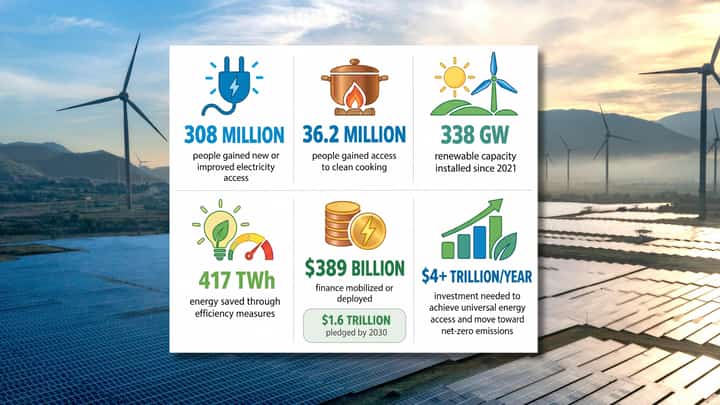
The 2026 UN Energy Compacts Annual Progress Report by United Nations Energy is out. It marks five years of voluntary commitments by governments, businesses and other organizations to accelerate Sustainable Development Goal 7: affordable, reliable, sustainable and modern energy for all.
The report shows substantial progress, but also makes clear that the pace remains too slow to meet the 2030 targets. Key highlights are as follows.
Since 2021, Energy Compact actions have provided new or improved electricity access to 308 million people. However, 655 million people still live without electricity, showing that the remaining gap is still enormous.
With 36.2 million people gaining access to clean cooking, more households are moving away from polluting cooking fuels. But this is still a small step toward helping the two billion people who continue to rely on harmful cooking fuels.
Energy Compact actions have supported 338 gigawatts of new renewable capacity since 2021.
The report notes, however, that much of this growth has occurred in wealthier countries, leaving developing countries behind.
Some 417 Terawatt-hour of energy was saved through efficiency measures. This means using less energy to provide the same services, although the report cautions that global energy-efficiency progress remains behind what is needed.
Financing connected to Energy Compact actions has nearly doubled in two years, reaching $389 billion. But that is still well below the $1.6 trillion pledged for 2030.
The world needs more than $4 trillion every year to achieve universal energy access while moving toward net-zero emissions.
Clean energy is creating wider social benefits. Energy Compact actions have helped improve electricity access at 17,217 health facilities serving about 43 million people, supported deployment of 2.9 million electric vehicles and 379,000 charging stations, and contributed to 1.66 million green jobs and training for more than 837,000 people.
The report’s message is essentially “progress is real, but the scale and speed must increase.” Energy Compacts are producing measurable results in electricity access, renewables, efficiency, clean cooking, jobs and investment. But with hundreds of millions still without electricity, billions still using polluting cooking fuels, and trillions more dollars required, the UN says the next phase needs greater investment, stronger partnerships and faster implementation.