
clean energy era has begun
The clean energy transition will move faster if countries work together to build open, resilient and diversified supply chains.

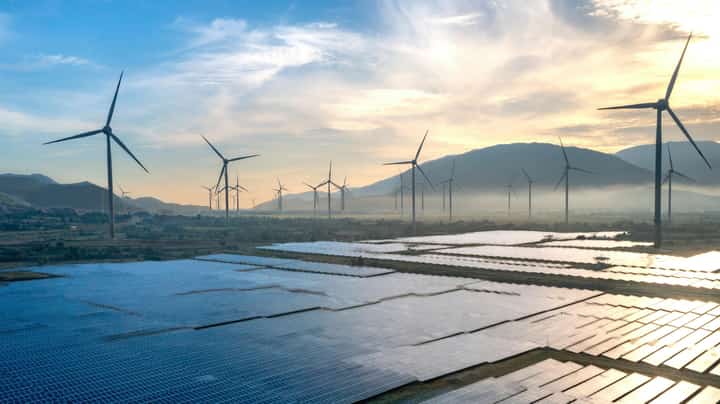
Renewables are now the cheapest, fastest, and most scalable source of new electricity in most of the world. Last year, over 90 percent of new renewable power projects delivered clean electricity at a lower cost than fossil fuels.
Wind and solar are now leading all new electricity demand growth worldwide.
When I became Secretary-General, less than one in 100 cars sold worldwide were electric.
Today, [it] is one in three.
Clean energy investment is now double that of fossil fuels.
And global investment in battery storage is expected to exceed 100 billion US dollars in 2026.
The evidence is clear: the clean energy era has begun.
But it is not moving fast enough — and many developing countries are being left behind.
To supercharge a truly global clean energy transition, we must act on three fronts.
First, build 21st century energy systems.
Without modern, resilient, and interconnected grids and storage, the transition will stall. Across the world, projects are ready, but stuck waiting to connect to transmission and distribution networks.
The International Energy Agency tells us that by 2040 the world will need to add or refurbish more than 80 million kilometers of grids. That is equivalent to rebuilding the entire global grid network. It requires annual global investment in grids and flexibility to reach at least $670 billion by 2030 — more than one and half times current levels.
Governments, MDBs and the private sector must invest in grids and storage as strategic infrastructure and strengthen the backbone of a clean energy future. This is how we unlock the full promise of renewables — and build energy systems that are clean, secure and fit for purpose.
Second, we must mobilize finance at scale.
Developing countries, rich in renewable potential, are starved of investment. Look no further than Africa — home to 60 percent of the world’s best solar resources. But nearly 600 million people without electricity. And the continent receives just two percent of global clean energy investment.
In the last decade, only one in every five clean energy dollars went to emerging and developing countries outside China. These countries represent two-thirds of the world’s population. To deliver on global net zero emissions by 2050, annual clean energy investment in those countries must rise more than fivefold and reach 2 trillion US dollars by 2035. That demands bold national policies and concrete international action to reform the global financial architecture.
Credit ratings agencies and investors must modernize the way they calculate risk. And we need innovative financial solutions that reduce genuine risk, lower the cost of capital and crowd in private investment. And we need to drastically increase the lending capacity of multilateral development banks — making them bigger, bolder, and better able to leverage massive amounts of private finance at reasonable costs.
Which brings me to my final point — strengthening international cooperation.
And here I am totally in line with Ed Miliband. We need new models of cooperation that break barriers and accelerate delivery. That cooperation must also extend to trade. Fragmentation and protectionism will only slow progress, deepen inequalities, and prolong dependence on fossil fuels.
The clean energy transition will move faster if countries work together to build open, resilient and diversified supply chains. The transition must deliver for all — creating opportunity, dignity and sustainable development. We need a boost in support for low-income countries that are struggling to make the shift. The UN will do its part — supporting developing countries to build modern, resilient, and interconnected grids. And the UN Task Force on Critical Energy Transition Minerals is working with resource-rich developing countries to embed justice and equity across the mineral value chains. This must be an opportunity to reject old models of resource exploitation and replace them with high value-added processing and manufacturing in countries endowed with these resources. No more extraction without development.
The age of clean electrification is here. The question is whether we can build the grids and storage, mobilize the investment, and deliver the infrastructure at the speed and scale required.
Let us seize this moment — for energy security, economic stability, and a liveable future for all.
(Excerpts of UN Secretary-General António Guterres’ remarks at the Global Energy Transition and Electrification Summit in London, United Kingdom and Northern Ireland on 23 June 2026.)