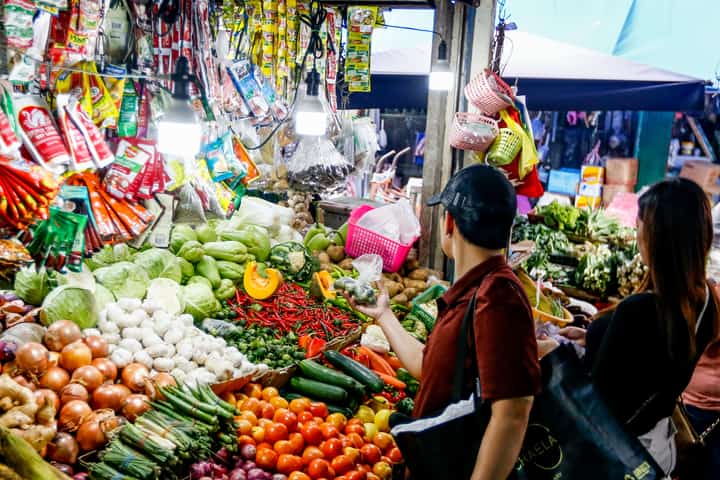
Food drove most of the increase in inflation
“Food drove most of the increase. Habagat-driven monsoon rains and flooding disrupted the supply and transport of perishables, lifting prices of vegetables, fruits, and fish. Rice prices also remained firm, while transport costs added to the pressure as fuel relief proved short-lived,” he said.
On Wednesday, the Bangko Sentral ng Pilipinas (BSP) said it expects headline inflation for September to rise within the range of 6.4 to 7.4 percent for reasons similarly cited by Neri. The September forecast range marks a stark upward revision from its 5.5 to 6.5 percent forecast for August.
“Increased domestic petroleum prices and depreciation of the peso could likewise contribute to higher inflation. These pressures could be partially offset by lower prices of meat and electricity rates,” the BSP said.
Meanwhile, Philippine National Bank economist Alvin Arogo estimated that the headline print rose to at least 6.4 percent in September — the bottom threshold of the central bank’s projection — “mainly due to higher oil prices and the adverse impact of the persistent heavy rains on the retail cost of key food items.”
Rizal Commercial Banking Corp. chief economist Michael Ricafort, meanwhile, estimated September’s headline print at 6.7 percent, also within the BSP’s projected range.
“The net increase in global energy prices and higher US dollar/peso exchange rate in recent months also led to higher energy/electricity/utility rates,” he said.
September saw renewed tensions between the US, Israel and Iran in the Gulf, sending local pump prices back into the triple-digit-per-liter range as the peso sank to six record lows within the first half of the month alone.
Neri and Ricafort cautioned that inflation may continue to rise in the months ahead as the expected onset of a severe El Niño event combines with lingering spillover effects from the Gulf shock.