
Economists see September inflation rising within BSP forecast
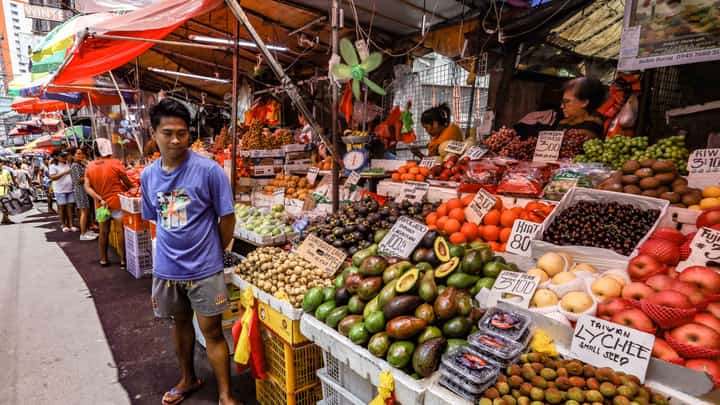
THE central bank released its September inflation forecast on Wednesday, expecting inflation to rise, driven in part by elevated food prices, adding to investor concerns in the local equity market.
DAILY TRIBUNE images
September inflation likely rebounded from August’s 6.1 percent headline print as higher food prices, adverse weather effects and lingering consequences of the Middle East conflict’s disruption of global oil supplies continued to cloud the country’s outlook.
In a 1 October commentary, Bank of the Philippine Islands Lead Economist Emilio Neri Jr. said inflation likely accelerated to 6.9 percent, up 0.8 percentage points month-on-month, ending four consecutive months of easing in the headline rate.
“Food drove most of the increase. Habagat-driven monsoon rains and flooding disrupted the supply and transport of perishables, lifting prices of vegetables, fruits, and fish. Rice prices also remained firm, while transport costs added to the pressure as fuel relief proved short-lived,” he said.
On Wednesday, the Bangko Sentral ng Pilipinas (BSP) said it expects headline inflation for September to rise within the range of 6.4 to 7.4 percent for reasons similarly cited by Neri. The September forecast range marks a stark upward revision from its 5.5 to 6.5 percent forecast for August.
“Increased domestic petroleum prices and depreciation of the peso could likewise contribute to higher inflation. These pressures could be partially offset by lower prices of meat and electricity rates,” the BSP said.
Meanwhile, Philippine National Bank economist Alvin Arogo estimated that the headline print rose to at least 6.4 percent in September — the bottom threshold of the central bank’s projection — “mainly due to higher oil prices and the adverse impact of the persistent heavy rains on the retail cost of key food items.”
Rizal Commercial Banking Corp. Chief Economist Michael Ricafort, meanwhile, estimated September’s headline print at 6.7 percent, also within the BSP’s projected range.
“The net increase in global energy prices and higher US dollar/peso exchange rate in recent months also led to higher energy/electricity/utility rates,” he said.
September saw renewed tensions between the US, Israel and Iran in the Gulf, sending local pump prices back into the triple-digit-per-liter range as the peso sank to six record lows within the first half of the month alone.
Neri and Ricafort cautioned that inflation may continue to rise in the months ahead as the expected onset of a severe El Niño event combines with lingering spillover effects from the Gulf shock.
“September’s rebound could mark the start of a second inflation peak, with inflation potentially breaching 7% in the coming months. Unlike April’s fuel-driven spike, the second wave is likely broader and stickier, driven by food, labor costs and more,” said Neri.
“There is a risk that inflation could pick up further in the coming months in view of second-round inflation effects, or higher prices of other affected goods and services, or pass-through effects, especially due to higher minimum wages by +P60 or +8.6% for Metro Manila, as well as the net increase in crude oil/fuel/petroleum prices due to the war [in the] Middle East,” added Ricafort.
The Philippine Statistics Authority is set to announce the September inflation print on Tuesday, 6 October.