
Threshold shift risks mistrial

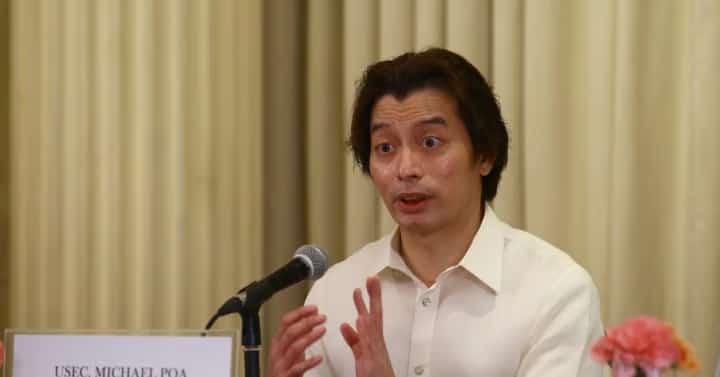
Vice President Sara Duterte’s defense team on Wednesday warned the Senate impeachment court that reopening its 6 July ruling on the conviction threshold could make other rulings issued during the trial vulnerable to challenge.
Defense counsel Michael Poa said the court had already ruled on the first day of trial that 16 votes were needed to convict Duterte. He said no senator-judge objected or sought a reconsideration of the ruling at the time.
More than two months later, the court is reconsidering the threshold after questions arose over whether absent or nonparticipating senator-judges should remain part of the base count.
“Nothing in the rules suggests the ruling of the presiding officer may be challenged indefinitely or modified arbitrarily,” Poa said. “If you reopen this and vote on it, then every ruling of the presiding officer becomes fair game.”
The defense said changing the conviction threshold after the parties had already presented evidence could raise concerns about due process, particularly because both sides had been conducting the trial under the assumption that 16 votes would be required for conviction.
“The parties must be able to rely on the rulings of the presiding officer,” Poa said, warning that changing the threshold in the middle of the trial could raise due process concerns.
‘No supervening event’
Poa argued that the rules governing impeachment proceedings do not set a specific period for seeking a reconsideration of the presiding officer’s ruling. But he pointed to other procedural rules that impose deadlines for challenging decisions, including the Senate rules and the Rules of Court.
Under the Senate rules, a senator generally has two session days to seek reconsideration of a measure, while the Rules of Court generally provides 15 days for motions for reconsideration.
Even if the 6 July ruling were treated as an interlocutory order that could be modified during the trial, Poa said the defense saw no basis for doing so.
“There was no sufficient ground, there was no supervening event,” he said.
He said the senator-judges who are unable to participate in the proceedings were unable to do so when Escudero issued the 6 July ruling, except for Senator Loren Legarda.
“So one thing is clear. Nothing in the rules suggests that the ruling of the presiding officer may be challenged indefinitely,” Poa said.
The defense maintained that even on the merits, the threshold remains 16 votes to convict.
Article XI, Section 3(6) of the Constitution requires the concurrence of “two-thirds of all the Members of the Senate” to convict an impeached official.
Poa said the phrase refers to the full 24-member Senate, not only the members present or participating. “Absence does not create a vacancy. Non-participation does not create a vacancy,” he said.
Cayetano warns of mistrial
Senator-judge Alan Peter Cayetano, who raised the threshold issue during the proceedings, said the question should have been settled before the trial or brought to the Supreme Court because he considered it jurisdictional.
“Timing is essential,” Cayetano said. He warned that changing the denominator — and therefore changing the number of votes needed to convict or acquit — while the trial was underway could result in a mistrial.
Cayetano then named the four senators who have missed the trial in full or in part: Jinggoy Estrada, Rodante Marcoleta, Ronald “Bato” dela Rosa and Loren Legarda.
“It’s not an accident that it’s members of the opposition that are not here,” Cayetano said.
“There is realpolitik happening here.”
He said that if the threshold question remained unresolved, it should be brought before the Supreme Court rather than repeatedly revised as the number of participating senator-judges changed.
“If there is a question on the threshold, the question [should] be brought before the Supreme Court,” he said.