
DMW, OWWA strengthen seafarer repatriation, reintegration — BBM
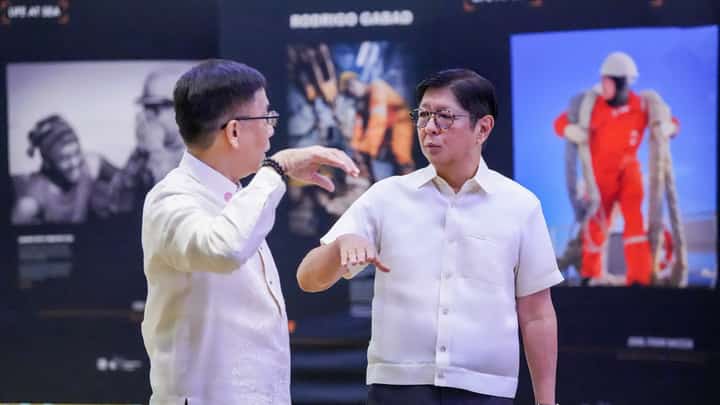
PRESIDENT Ferdinand Marcos Jr. (right) and Department of Migrant Workers Secretary Hans Leo Cacdac at the Philippine Maritime Convention 2026 at The Manila Hotel on 23 September 2026.
DAILY TRIBUNE IMAGE
The preparation and protection of Filipino seafarers has evolved as they face armed conflicts, geopolitical tensions, attacks and other security incidents, President Ferdinand R. Marcos Jr. said Wednesday at the Philippine Maritime Convention (PhilMarCon) 2026 at The Manila Hotel.
“Our seafarers have found themselves caught in armed conflicts, geopolitical tensions, attacks, and other security incidents they did not create and in which they had no part,” Marcos said. “Some seafarers have been injured while others have lost their lives in the line of duty.”
As security risks intensify in war-risk areas, the Department of Migrant Workers and Overseas Workers Welfare Administration have strengthened emergency repatriation capabilities, Marcos said.
He added that the government’s Full-Cycle National Reintegration Program continues to support seafarers after they return to the country, by providing them with livelihood, wellness, financial literacy, and other assistance based on their needs and skills.
Marcos added that the government has been strengthening the manning industry’s compliance with the Standards of Training, Certification and Watchkeeping (STCW) for Seafarers Convention and Code.
Meanwhile, Maritime Industry Administration (Marina) chief Sonia B. Malaluan highlighted key reforms in maritime regulation and certification, digitalization and service modernization, maritime education and training, and workforce development, alongside initiatives on decarbonization, emerging technologies, and the comprehensive review of the STCW Convention and Code.
“Behind every ship that sails across the world’s oceans is a seafarer. Behind every successful maritime operation is a workforce whose competence, welfare, safety, and well-being must remain at the center of our policies and reforms,” Malaluan told PhilMarCon participants on the first day of the two-day event.
Marina acting deputy administrator for education, training and certification Presca Lee B. Lugo emphasized the importance of quality education, training, assessment, and certification in preparing Filipino seafarers for the changing demands of the global maritime industry.
The convention held from 22 to 23 September brought together government officials, maritime industry stakeholders, labor organizations, maritime education and training institutions, international partners, and other maritime stakeholders to discuss the future of Philippine maritime development under the theme, “Sailing Forward: The Philippines as the Global Leader in Seafarer Welfare, Protection and Maritime Excellence.”