
Let creativity flourish
Government support comes with a responsibility that goes beyond announcing programs, holding expos and producing development plans. It must earn the confidence of the very people it seeks to help.

“It’s not just culture anymore.”
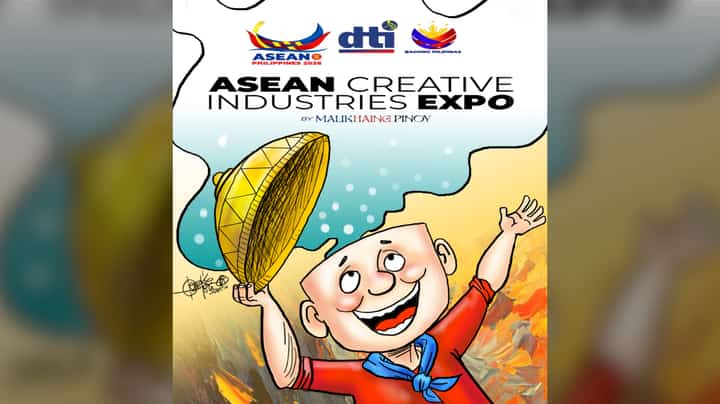
There was something encouraging about walking through the ASEAN Creative Industries Expo by Malikhaing Pinoy last week: Filipinos are not short of ideas.
Coconut, cacao and piña were not the only stars of the show. From crafts and design to digital work, food, entertainment and other creative enterprises, the expo offered a glimpse of an economy built not merely on what Filipinos can make with their hands, but on what they can imagine.
The government, to its credit, appears to be paying attention.
And why not? In 2025, the creative economy accounted for about 7.6 percent of GDP, or P2.12 trillion, according to Philippine Statistics Authority (PSA) data cited by the Department of Trade and Industry (DTI).
PSA, DTI, the World Intellectual Property Organization (WIPO) and the Intellectual Property Office of the Philippines (IPOPHIL) recently collaborated to launch the first Creative Economy Data Model (CEDM) National Diagnostic Report for the Philippines in June 2026.
The landmark report, titled “The Creative Ecosystem of the Philippines: National Diagnostic Report,” establishes a data-driven framework to measure how creative assets convert into intellectual property (IP), economic value and national growth.
The sector, they concluded, is globally competitive but needs stronger Filipino-owned IP and commercialization.
Finally, the creative economy is getting the support it has long needed.
The timing is unusually good. The Philippines has a law specifically supporting creative industries, including a Creative Industry Development Fund, and the government adopted a 2025–2034 development plan aimed at making the country Asia’s premier creative hub by 2030.
Meanwhile, ASEAN is treating the creative economy as a serious regional economic opportunity, with the proposed ASEAN Center of Excellence for Creative Industries identified as a priority deliverable under the Philippines’ 2026 ASEAN chairship.
Can government nurture this sector fairly?
Government support comes with a responsibility that goes beyond announcing programs, holding expos and producing development plans. It must earn the confidence of the very people it seeks to help.
The Philippines has just endured a corruption scandal serious enough to disrupt government spending and contribute to a downgrade in the country’s 2026 growth outlook.
Another ambitious development program these days tends to make people ask whether the money, opportunities and access will actually reach the people they’re intended to help.
And creative industries are particularly vulnerable to perceptions of favoritism because who gets a grant, who gets exhibited, who gets sent abroad, who gets government contracts and who gets access to decision-makers can make an enormous difference to a small creative enterprise.
The Philippines has the talent. It has the stories, the imagination and increasingly, the markets. What it needs now is something less glamorous but equally important: institutions worthy of that talent.
DTI lines, reiterated Secretary Cristina Roque, are always open for creative enterprises. The agency is pulling all stops to help grow these industries, and people will no doubt be convinced when they see the ecosystem in which they can thrive.
You cannot build a vibrant creative economy if creators believe that success depends on knowing the right official, getting the right endorsement or navigating a system where decisions aren’t transparent.
If government can provide that — transparently, consistently and without favoritism — the creative economy may indeed become one of the country’s greatest strengths.