
Inside the Architecture of National Artist Gabriel Formoso

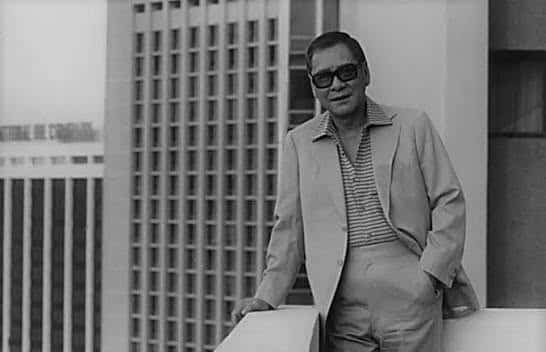
ARCHITECT Gabriel ‘Gabby’ Formoso, whose decades-long practice helped shape the modern architectural character of postwar Metro Manila.
Photo courtesy of NCCA
Long after the architect has left the drawing board, a building can continue to tell his story.
For Gabriel “Gabby” Formoso, that story is spread across Metro Manila — in offices, hotels, institutions and residences that became part of the city’s transformation during the decades after World War II.
Formoso was posthumously named National Artist for Architecture and Allied Arts as part of the 2025 class of National Artists announced in September 2026.
The recognition came decades after his death in 1996, placing his work among the country’s most significant contributions to Philippine architecture.
But Formoso’s legacy is perhaps best understood not through the award itself, but through the buildings that remain part of everyday life.
Building a modern Manila
Formoso graduated from the University of Santo Tomas in 1937 and became a licensed architect in 1939. Early in his career, he worked with architects Andres Luna de San Pedro and Pablo Antonio, experiences that preceded the establishment of his own practice.
His professional life coincided with a period when the Philippines was rebuilding and rapidly changing its urban landscape. Manila and its surrounding cities were developing new commercial districts, institutions and residential communities, creating a demand for architecture that could accommodate a changing way of life.
Formoso answered that moment with buildings that generally placed clarity and function ahead of elaborate decoration. His practice became associated with strong geometric forms and an architectural language that could feel distinctly modern without being disconnected from the Philippine setting.
Among the structures associated with his work are the Asian Institute of Management, the Bangko Sentral ng Pilipinas complex, the Bank of America–Lepanto Building, The Peninsula Manila and the former Manila Garden Hotel, now Dusit Thani Manila.
Different idea of modern
Modern architecture can sometimes be associated with cold surfaces, imposing forms and an emphasis on appearance. Formoso's work offers another way to look at it.
His approach gave considerable attention to how buildings functioned and how people experienced them. His practice incorporated elements suited to the Philippine climate, while his preference for restrained forms gave his buildings a visual clarity that allowed their structure and materials to speak for themselves.
GFP Architects, the firm that grew from Formoso's practice, describes his architectural vocabulary through elements such as simplicity, rigid geometry, exposed concrete and a restrained palette.
Beyond individual buildings
Formoso's influence was not limited to the structures bearing his architectural signature.
His practice also became a professional legacy. In 1973, he transformed his individual practice into Gabriel Formoso and Partners, bringing together architects who would continue developing the firm after his retirement and death. The organization eventually became GF & Partners Architects.
UST describes Formoso as the fifth Thomasian architect to receive the National Artist distinction and the seventh architect in the field to be given the honor.
For a university that has produced generations of architects, his recognition also places his career within a longer history of Philippine architectural education and practice.