
Let them swim wild and free
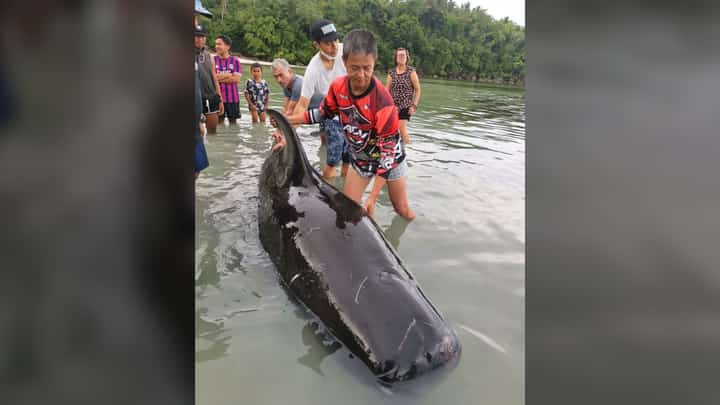
DURING the Taiji dolphin hunts, bottlenose dolphins are among the primary species targeted for live capture, driven largely by demand from dolphinariums and entertainment facilities around the world. The remaining dolphins may be killed for meat.
PHOTOGRAPH COURTESY OF Carlito Flores
CONCLUSION
The Philippine connection to Taiji
Dolphin conservation organizations have documented facilities in China, the Middle East, Europe and Southeast Asia that have acquired dolphins from Taiji. The Philippines is also heavily involved in the international trade.
According to Cetabase, Ocean Adventure in Subic imported bottlenose dolphins (Tursiops truncatus) from the Japanese fishery system in 2004, 2007, and 2009. This makes us part of the problem.
Earlier, in 2001, the facility imported six false killer whales (Pseudorca crassidens) from Taiji. Studies show that false killer whales have an average lifespan of 58 years for males and 63 years for females. However, all six died without reaching maturity. Sunny died en route to the Philippines. After only seven months at Ocean Adventure, Deuce, a juvenile male, died in July 2001. Eight-year-old Coral followed in January 2004. Hook died in July 2005, Pounder in 2010, and Tonka was the last to perish in 2014 at just 18 years old.
Moreover, one sea lion and five bottlenose dolphins have also died at the facility. The park has been plagued by these deaths, raising serious concerns among environmental advocates about the survival of marine mammals in captivity.
Life in captivity
Atty. Cabrera argues that the welfare question goes beyond whether an animal is physically fed and housed. Dolphins have complex social lives and natural behaviors that simply cannot be replicated in a performance tank.
“Captivity strips dolphins of their natural behaviors, confining animals built to swim up to 100 kilometers a day to small concrete pools,” she explained. “This extreme restriction of space and social structures frequently results in ‘zoochosis’ — abnormal, repetitive and self-injurious behaviors like banging their heads against tank walls.”
To survive in this artificial environment, dolphins are subjected to intensive human interventions, including food-conditioned training (starvation), artificial insemination and hydration through stomach tubes, as their diet of dead, frozen fish lacks the natural water content of live prey.
Concepcion also challenges the idea that dolphin shows constitute meaningful conservation education. The performance of trained flips and spins, she noted, does not teach audiences how dolphins naturally hunt, communicate, or interact with marine ecosystems.
“Rather than educating the public, these shows can normalize human domination over marine life, contrasting sharply with genuine conservation that focuses on protecting wild oceans and coastal habitats,” she said.
The dolphin freedom campaign continues
For nearly three decades, EII-AP and PAWS have served as vigilant watchdogs against the international trade in live marine mammals, preventing the Philippines from becoming a convenient transit pathway for wild-caught dolphins. They have campaigned against captivity and pushed for Ocean Adventure’s shutdown through public demonstrations, legal actions, signature campaigns, policy lobbying and educational activities.
One early major campaign involved a traveling dolphin show at the Araneta Center in Cubao. PAWS and EII-AP organized a boycott and filed complaints against the show’s organizers, arguing that traveling shows subject dolphins to immense stress and unnatural conditions.
In 2012, EII-AP and PAWS filed a legal petition to block the export of 25 wild-caught dolphins from Ocean Adventure to Singapore’s Resorts World Sentosa. Although the dolphins were eventually flown out and a Strategic Lawsuit Against Public Participation (SLAPP) was filed against the advocates, the fierce pushback severely damaged the public image of such wildlife transfers, forcing international facilities to reconsider sourcing through the Philippines.
While legal actions bring critical attention to these issues, EII-AP acknowledges the need to engage young people—the very audience most frequently targeted by marine parks through school field trips. The Dolphin Freedom Roadshow offers an education-centered approach, bringing discussions on dolphin captivity, the Taiji hunts, ethical tourism and conservation directly to schools.
Milestones and positive outputs
While the hunts in Taiji unfortunately continue due to support from the Japanese government, the global movement has achieved significant milestones over the years. The international outcry sparked by Japan Dolphin Day has drastically choked the demand for live captures.
In 2015, the World Association of Zoos and Aquariums (WAZA) unanimously voted to suspend the membership of the Japanese Association of Zoos and Aquariums (JAZA) after JAZA repeatedly ignored directives to stop acquiring Taiji dolphins.
Multiple countries have legally banned the importation of Taiji-sourced dolphins, with South Korea instituting a complete ban in 2018. Canada’s 2019 legislation prohibits the capture of wild cetaceans and restricts their breeding and use for entertainment. France is also phasing out dolphin captivity, with a ban on shows and captive breeding scheduled to take effect in December 2026.
(First part appeared on 9 September)