
Native leaf, ancient chew, new nicotine
The choice, then, is not old versus new. It is one set of risks against another. And for nga-nga, science has not yet supplied a neat answer to the comparison.


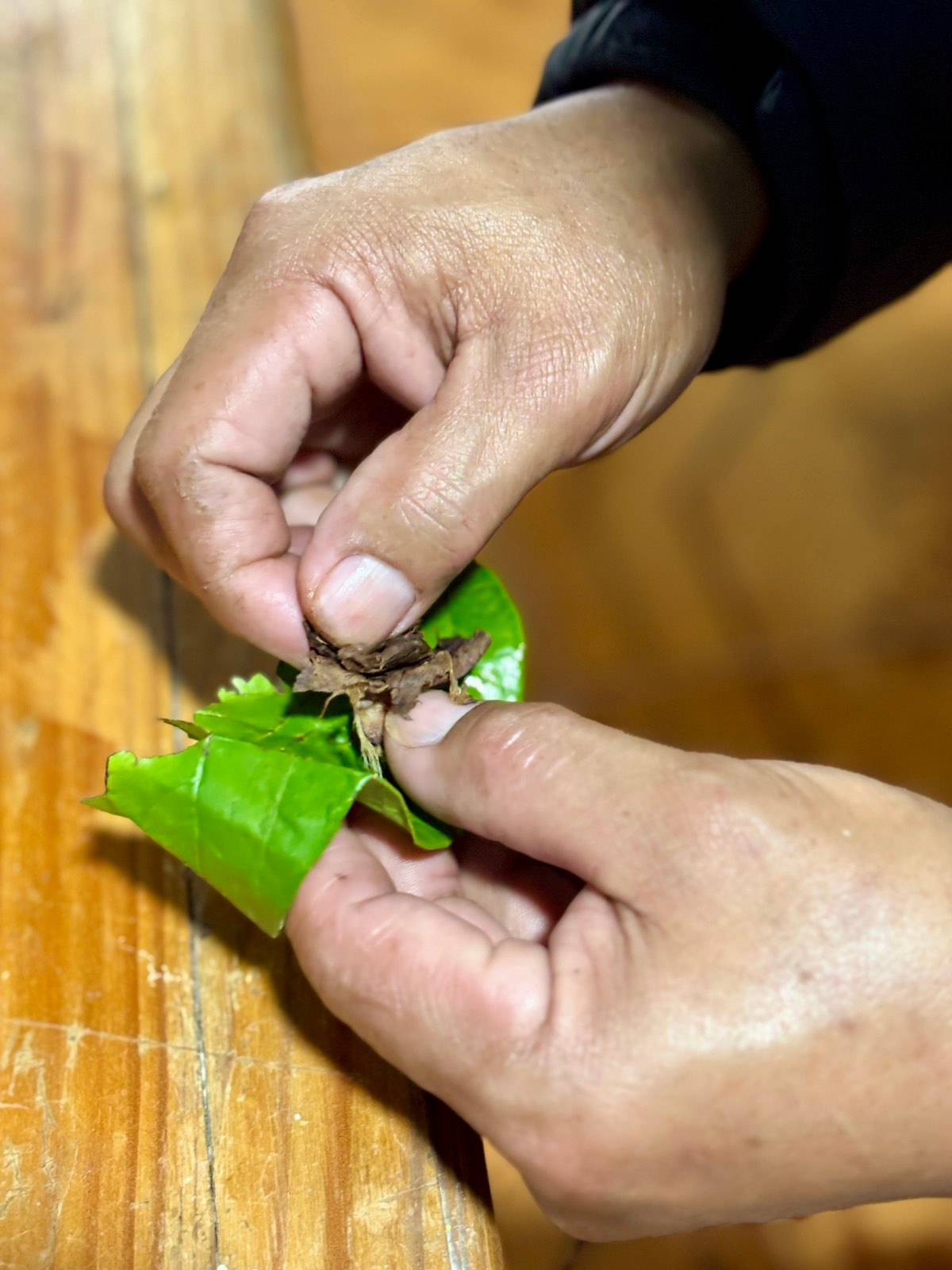
GUINDALOS Paycowan prepares nga-nga by placing tobacco with ikmo or buyo.
Photograph by Jason Mago for DAILY TRIBUNE
BAGUIO CITY — By the time Guindalos Paycowan starts his day, the familiar ingredients of nga-nga are already within reach.
Betel nut. Lime. Leaf. Tobacco.
For nearly 25 years, he has chewed at least 10 pieces a day, spending about P60 on a habit that has become part of the ordinary machinery of his life.
“Tobacco leaves are added to add flavor and a little bit of sweetness,” Paycowan told DAILY TRIBUNE on 23 August.
He was 45. He had started as a student at Benguet State University in La Trinidad, after a friend introduced him to the chew.
Nearly three decades later, he does not expect it to disappear.
Asked whether people would still be chewing nga-nga 10 years from now, he answered:
“Yes. There will still be.”
His answer is simple. The future of the habit is not.
The nicotine market is changing, creating products that deliver nicotine without the tobacco leaf in the finished product.
The old habit
A complete nga-nga, also called moma, can cost about P60 to P180.
The ingredients are familiar in the Cordillera: bunga, apog, ikmo or buyo, with mascada, a small piece of tobacco.
For Paycowan, P60 a day can mean roughly P1,800 a month.
The larger cost is less visible.
The International Agency for Research on Cancer, a World Health Organization agency, classifies areca nut and betel quid, with or without tobacco, as carcinogenic to humans.
The danger, then, is not only in the tobacco. It is in the nut.
Removing mascada does not remove the central cancer concern surrounding the traditional chew.
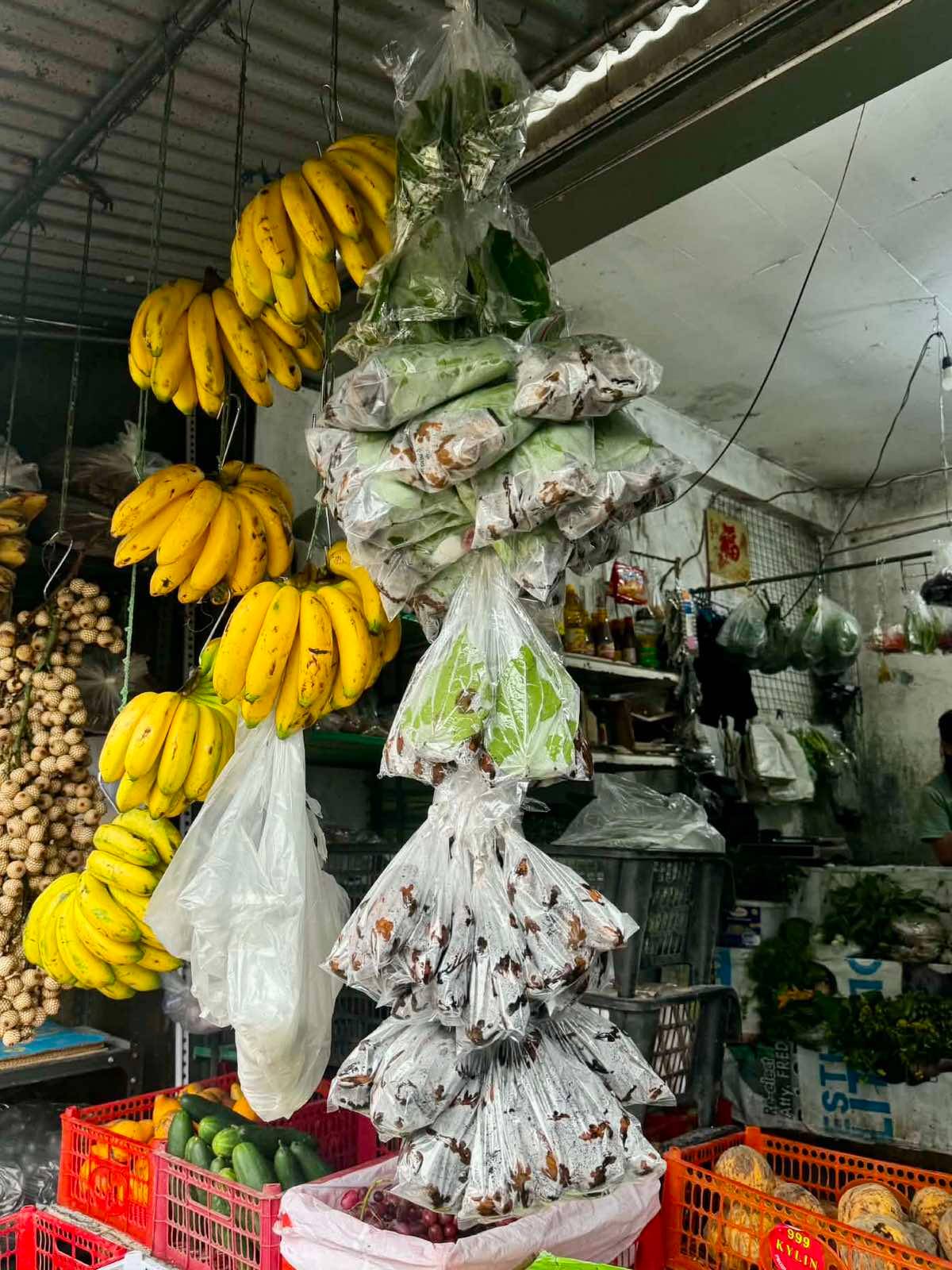
A SARI-SARI store in Baguio City sells nga-nga, with packets of betel leaves and other ingredients displayed alongside fruits and vegetables.
Photograph by Jason Mago for DAILY TRIBUNE
And yet the chew persists.
Because nga-nga was never only about nicotine.
The social chew
A 2023 ethnographic study of young farmers in Natubleng, Buguias, Benguet, found betel nut chewing woven into agricultural work and social relationships.
A chew could be shared. A conversation could begin around it.
Among some young farmers, the practice was associated with masculinity and taraki — being perceived as cool or attractive.
This is the part that does not appear on a label.
Nga-nga is a habit, but it is also a social practice. It belongs to workdays and conversations, to people who learned it from other people.
Paycowan learned it from a friend. He expects someone else will learn it from someone else.
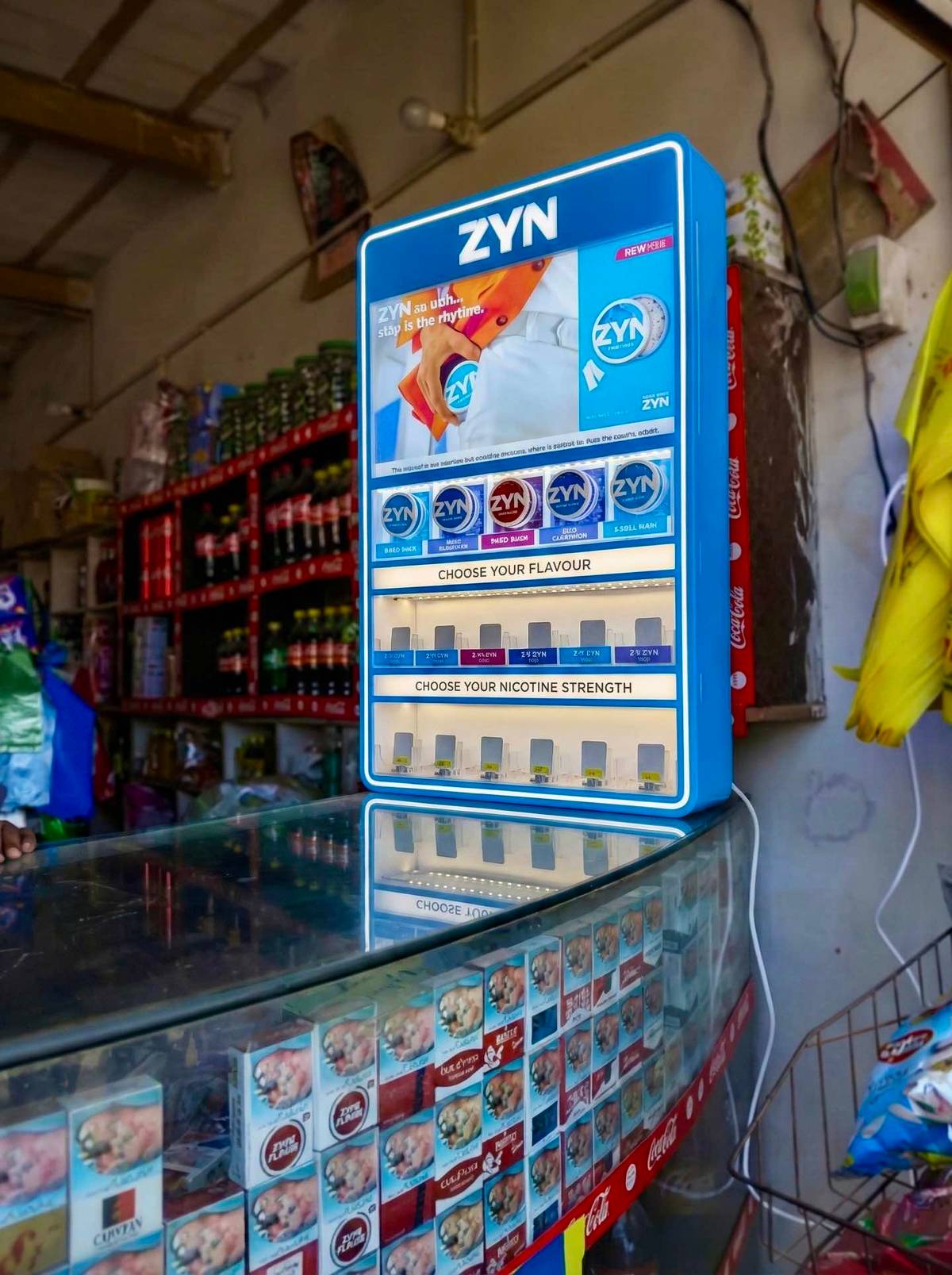
A ZYN nicotine pouch display stands on the counter of a sari-sari store.
Photograph courtesy of Yellow Corporation
The new nicotine
The modern alternative is smaller.
There is no nut to crack. No lime to measure. No leaf to fold.
A nicotine pouch goes between the gum and lip.
In the United States, the market is moving quickly. On 21 August, the US Food and Drug Administration authorized 11 ZYN ULTRA nicotine pouches, a newer, higher-moisture version of ZYN.
The products are no longer confined to the American market. ZYN is also sold in the Philippines, where nicotine pouches have begun to occupy space alongside more familiar tobacco and nicotine products.
Unlike mascada, the pouch contains no tobacco leaf.
That is the important distinction.
Not because nicotine has become harmless. It has not.
But because nicotine can now be delivered without tobacco leaf in the finished product.
Safer than what?
The question sounds simple until the comparisons begin.
The FDA’s review found lower levels of many harmful and potentially harmful constituents in the newly authorized ZYN products than in other oral and smokeless tobacco products.
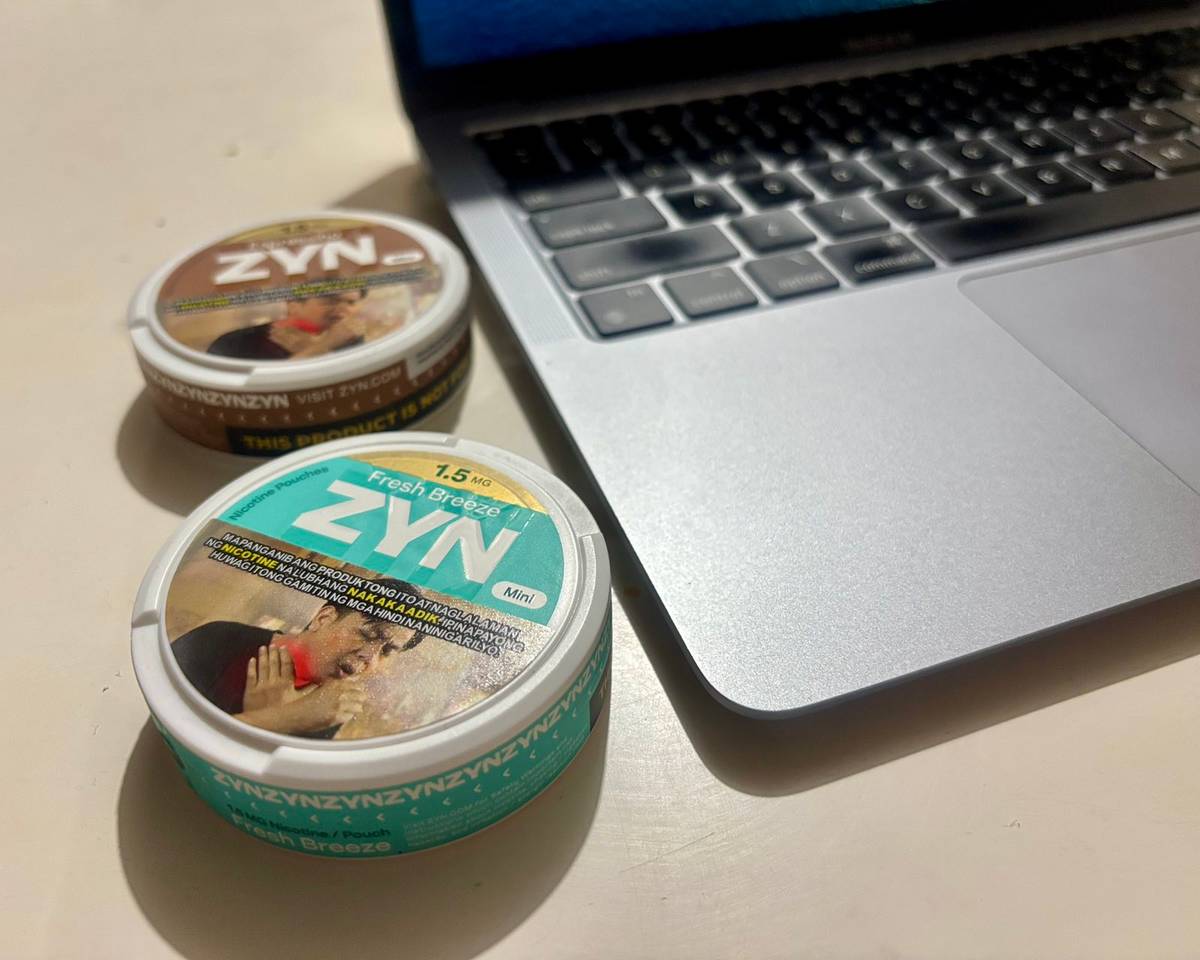
ZYN nicotine pouches sit beside a laptop.
Photograph by Jason Mago for DAILY TRIBUNE
For adults who already smoke or use smokeless tobacco, the agency says completely switching to authorized nicotine pouches may reduce exposure to many harmful chemicals.
But the FDA has not established that ZYN is safer than nga-nga.
There is no equivalent head-to-head evidence. The risks are different.
Nga-nga brings with it areca nut, a known carcinogen. Tobacco, when added, brings additional tobacco-related risks.
A nicotine pouch contains neither areca nut nor tobacco leaf.
It still delivers nicotine. Nicotine is addictive. It is not harmless. The FDA itself says authorization does not mean these products are safe or “FDA approved.”
The choice, then, is not old versus new. It is one set of risks against another.
And for nga-nga, science has not yet supplied a neat answer to the comparison.
The leaf behind the habit
Then there is the leaf itself.
The National Tobacco Administration (NTA) identifies Native Batek as a chewing-tobacco type.
In 2024, NTA-registered trading centers accepted 24.62 million kilograms of Native/Dark Leaf tobacco worth P4.55 billion at farmgate.
The crop accounted for 50.2 percent of tobacco accepted by those centers and involved 22,707 registered farmers cultivating 13,095 hectares.
One of them is Juan Dumpit, 70, of Bauang, La Union. He has grown Native Batek since 1984.
For Dumpit, tobacco is not a chemical delivery system. It is a crop. A price. A harvest. A livelihood.
The possibility that nicotine can increasingly be delivered without the leaf raises a question that begins in the mouth but ends in the field.
What happens to the farmer when nicotine no longer needs the tobacco leaf in the finished product?
What remains
Paycowan has heard the warnings.
“I heard that some people say that it causes cancer in the gums,” he said.
He continues to chew. At least 10 times a day. Each chew can last about an hour.
The habit has survived because it is familiar. Because it is social. Because it belongs to him.
A nicotine pouch cannot offer that history.
But it does not contain the areca nut at the center of the traditional chew’s cancer risk.
Neither choice is harmless.
One is old enough to have become a culture.
The other is new enough to still be defining its place.
And somewhere between them is the tobacco leaf — grown by farmers, used by consumers and facing a market that is beginning to change around it.