
Journalism in its light and darkness
The core beauty of journalism lies in its unwavering pursuit of truth and authenticity.
In a world crowded with chaos, a well-reported story brings clarity and keeps the public informed.
But as the old saying goes, beauty often comes with pain—and in the realm of journalism, that pain takes the form of constant danger, intimidation, and looming threats.
To write the news is to accept a quiet reality that the truth may not always be comforting, but it remains the truth.
Every verified detail serves an essential purpose of safeguarding a free society. Yet, history repeatedly proves that those who hold power rarely appreciate a spotlight on their missteps.
When truth threatens authority, the danger escalates.
People in power routinely attempt to control the narrative—demanding favorable coverage, tampering with critical reports, or even shutting down media outlets entirely to enforce silence.
The Philippines knows this dark pattern all too well.
When the late ousted dictator Ferdinand Marcos Sr. imposed Martial Law on 21 September, 1972, via Proclamation 1081, press freedom became its first casualty.
By seizing control of media outlets and restricting public access to information, Marcos sought to ensure his administration had the final say on what equated to "the truth."
Journalists who refused to bow were silenced, jailed, or killed.
Even decades after democracy was restored, the shadows of state intimidation linger.
Under the presidency of Rodrigo Duterte, tactics like red-tagging intensified, putting local reporters directly in harm's way simply for asking difficult questions.
The consequences of this hostile climate remain starkly visible today.
Justice for those who speak out
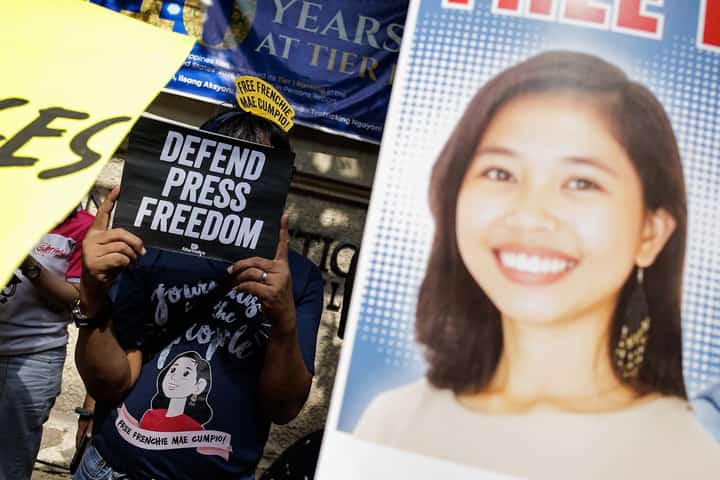
In 2020, community journalist Frenchie Mae Cumpio was arrested on trumped-up charges, including illegal possession of firearms and explosives, along with terrorism financing.
Years later, Cumpio remains detained, serving as a living reminder of the heavy cost exacted on those who dare to report from the margins.
A journalist sits at the intersection of public trust and private coercion.
They operate as the frontline archivist of reality, trained to observe the raw facts of human ambition, corruption, and resilience.
Yet, the work rarely exists in a vacuum of absolute freedom.
Behind every published story lies an unwritten ledger of silenced sources, self-censorship enforced by institutional connections, and the lingering shadow of physical, legal, or financial threats.
On National Press Freedom Day, defending the press is not merely an industry concern—it is a fundamental imperative for every citizen.
The brave individuals who risk their liberty and lives to report facts ensure that power remains checked and the public stays informed. And those who serve as a voice for those who cannot speak a word.
When a journalist is silenced, society loses a vital defense against tyranny. Protecting the truth requires standing up for those who write it, ensuring that the light of truthful reporting is never extinguished.