
DA admits: El Niño threatens Phl food supply
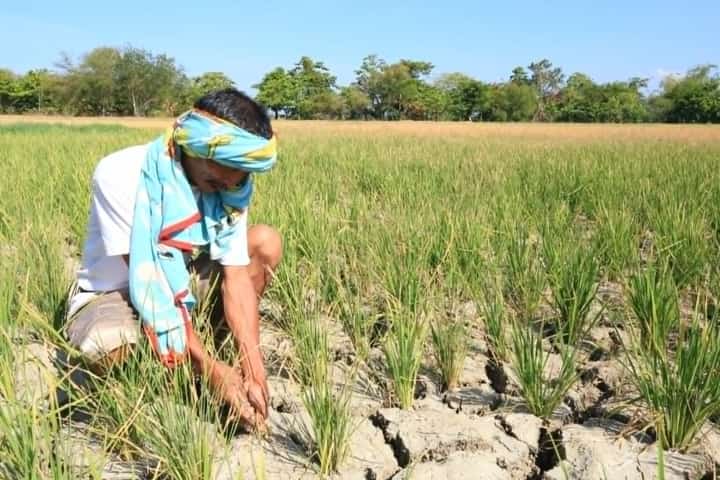
The Department of Agriculture (DA) is racing against time on the impact of the Super El Niño phenomenon, admitting that food supply will be in peril in the coming months if they do not work double time.
This was after the Bangko Sentral ng Pilipinas (BSP) warned that El Niño could fuel inflation, making prices of commodities, particularly food, spike, putting another challenge on the DA’s plate as drought threatens domestic production even as global rice output and trade policies add uncertainty to food supplies.
Despite this, Agriculture Secretary Francisco Tiu Laurel Jr. has directed DA agencies to continuously revise their El Niño response plans as fresher weather, crop, water, and market data come in, seeking to minimize the drought’s impact on food security, supply, and prices.
“The lessons we learned from the powerful El Niño episode that ended in mid-2024 should help us respond better to the climate challenge we now face,” Tiu Laurel said.
He said the DA is working on both immediate assistance to local producers and preemptive measures to secure food supplies before weather disruptions translate into shortages and higher prices.
Last week, the BSP raised its key interest rate by 25 basis points in a preemptive move against stubborn inflation and did not rule out further monetary action if price pressures persist.
The concern is not theoretical, as during the previous El Niño episode, global rice prices surged as weather concerns collided with India’s export restrictions.
The Food and Agriculture Organization, a specialized agency of the United Nations that leads international efforts to defeat world hunger, improve nutrition, and promote sustainable agriculture, said its All Rice Price Index rose 21 percent in 2023, largely because of concerns over El Niño’s impact on production and India’s restrictions.
India imposed restrictions on the export of non-basmati white rice in July 2023, while also imposing other restrictions, demonstrating how quickly decisions by a major exporter can tighten global supplies and reverberate through import-dependent markets.
The Philippines also entered the challenge after agriculture contracted in 2024, when adverse weather caused rice production to drop 4.85 percent year-on-year.
A fresh drought could therefore squeeze domestic supply just as global markets remain vulnerable to weather and trade disruptions.
Preparation in place
For the DA, preparation means more than distributing assistance after crops are damaged.
It means strengthening irrigation, adjusting planting schedules, securing inputs, monitoring inventories, and preparing import and market interventions where necessary.
Tiu Laurel said the strategy involves shifting production to less affected regions, expanding cloud seeding and solar-powered irrigation, and maximizing water efficiency.
It also encompasses distributing drought-tolerant seed varieties, providing crop insurance indemnification, and extending emergency financial support to vulnerable farmers.
“We have to produce more where the impact of El Niño will be less severe, increase the water available to farmers, and use every drop wisely through practices such as alternate wetting and drying and planting crops that require less water,” he said.
The strong to very strong El Niño is expected to be felt across the Philippines starting around
October 2026, with its peak intensity and severe dry conditions occurring toward the final quarter of 2026 and persisting through the first half of 2027.