
Artificial intelligence guides surgeons during brain tumor operation

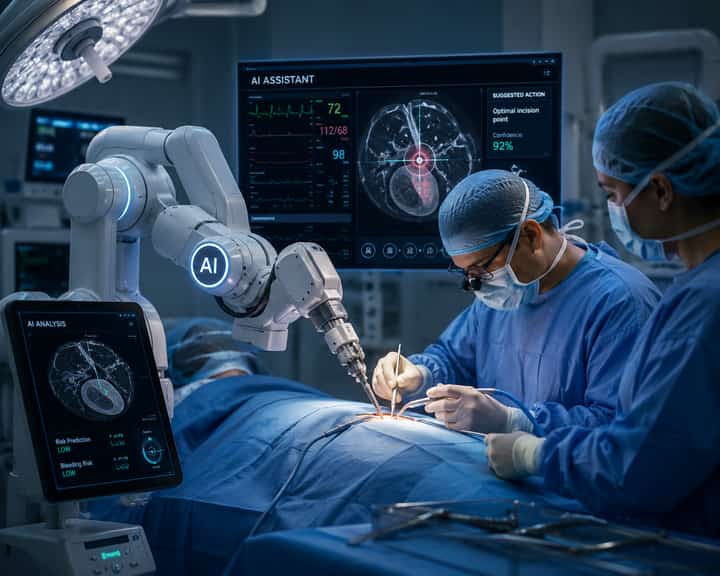
Artificial intelligence has been used to analyze a live surgical feed and guide doctors during a delicate brain tumor operation, helping surgeons remove a growth that threatened a patient's eyesight.
Neurosurgeons at the National Hospital for Neurology and Neurosurgery in London used an AI system developed by University College London (UCL) while operating on 48-year-old Rhys Hibbert, who had a tumor on his pituitary gland.
UCL described the procedure as the first use of AI to support a neurosurgeon through real-time analysis during live surgery. The operation was performed in May, with details announced on 26 August 2026 after Hibbert's recovery.
Unlike systems that rely primarily on scans taken before an operation, the UCL technology analyzed video from the surgical camera as the procedure was taking place.
The AI highlighted critical anatomical structures at the base of the brain, helping surgeons distinguish areas they could safely operate on from blood vessels, nerves and other structures that needed to be avoided.
The location made the procedure particularly delicate. The pituitary gland sits close to blood vessels supplying the brain and nerves controlling vision, meaning an error of only a few millimeters could potentially cause blindness, stroke or other serious complications.
The surgical team remained in control throughout the operation, with the AI serving as a real-time decision-support tool rather than an autonomous surgeon.