
Las Piñas–Parañaque Wetland Park: Protecting Nature, Safeguarding the Future
Metro Manila’s last frontal wetland stands as a natural shield for storm surges, a haven for wildlife and a legacy for future generations

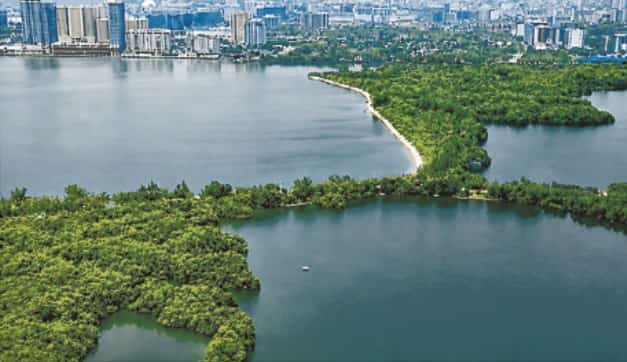
A natural treasure in the south of Metro Manila, the Las Pifias-Parafiaque Wetland Park (LPPWP) is home to rich mangrove forests and dfrerse wildlife, providing vital ecosystem services to communities and the environme/11.
SPANNING 181.63 hectares along the coast of Las Piñas and Parañaque, the Las Piñas–Parañaque Wetland Park (LPPWP) is Metro Manila’s last remaining coastal wetland and one of the country’s most important protected areas. Within it lies a 40-hectare mangrove forest, spread across Freedom Island and Long Island, where mangroves thrive on the mix of saltwater from Manila Bay and freshwater flowing from the river, forming a vital ecosystem that benefits both people and wildlife.

-F/SENATOR CYNTHIA VILLAR Managing Diretor, Villar Foundation
Recognizing its exceptional ecological value, the wetland was designated a Wetland of International Importance under the Ramsar Convention, placing it among the world’s most significant wetlands. It also serves as a crucial stopover along the East Asian-Australasian Flyway, providing a safe haven for migratory birds traveling thousands of kilometers each year.
Former Senator Cynthia Villar championed the park’s long-term protection through Republic Act No. 11038, or the Expanded National Integrated Protected Areas System (E-NIPAS) Act, helping ensure that the Las Piñas–Parañaque Wetland Park remains permanently protected as part of the country’s network of protected areas.
PARK FACILITIES AND INFRASTRUCTURE
Wetland Center
Visitor's Center
Auditorium
Wetland Museum
Boardwalk
Boardwalk
Composting Facility
Mangrovetum and Watchtower (for construction)
The law strengthened the park’s status and provided a stronger framework for its conservation and management.
For Villar, environmental protection has long been linked to action. The Villar Foundation’s programs, including river rehabilitation, urban agriculture, composting, plastic recycling, and environmental education, reflect the principle that conservation becomes more sustainable when communities are directly involved.
A Long-Standing Commitment to the Environment
The protection of the LPPWP is part of a broader environmental effort that has been pursued for decades by the Villar Foundation.
Through its environmental programs, the Foundation has worked to rehabilitate waterways, promote responsible waste management, restore ecosystems, and mobilize communities to become active partners in environmental protection.
One of its flagship initiatives is the Las Piñas-Zapote River Rehabilitation Program, or Sagip Ilog, which began in 2002. The program focuses on cleaning and rehabilitating waterways, removing waste, maintaining river channels, and encouraging communities to take responsibility for protecting their local environment.
The Foundation’s work complements the broader conservation efforts surrounding the LPPWP, recognizing that the health of the wetland is closely connected to the condition of the rivers and waterways that flow toward Manila Bay.
NATURE DEFENSE TO CALAMITIES
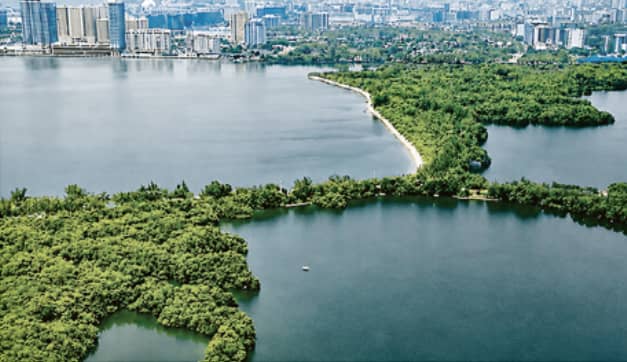
Mangrove forests serve as a natural barrier that helps protect coastal communities from storm surges.
HAVEN FOR WILDLIFE
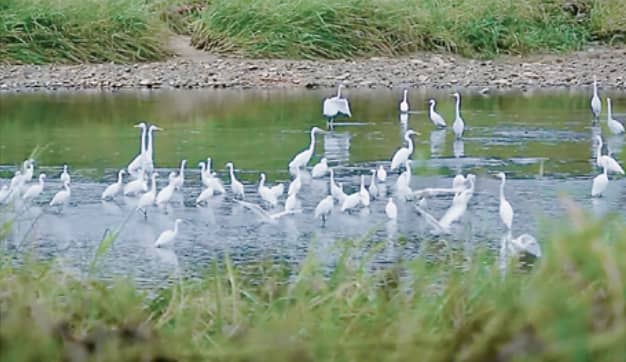
LPPWP provides habitat for resident and migratory birds
CHALLENGES AND FUTURE OUTLOOK
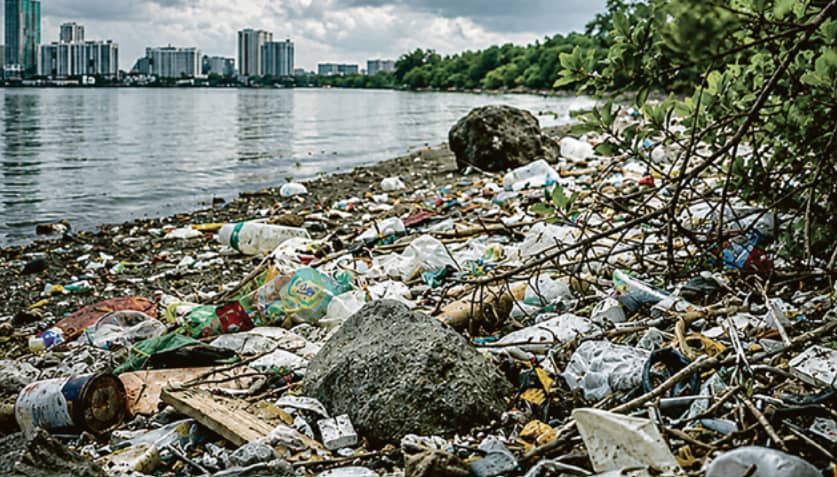
The accumulation of garbage along the wetland's shoreline remains one of the common challenges facing the protected area
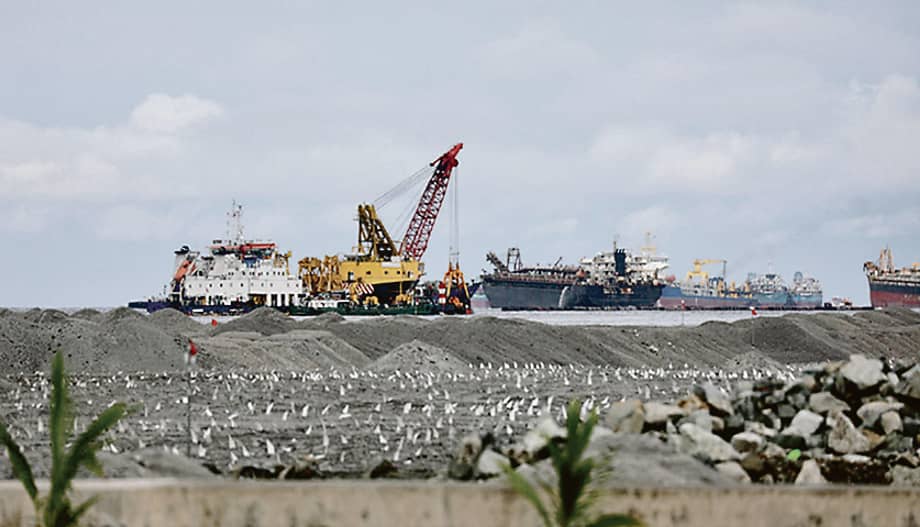
Thecontinuing threat of reclamation along Manila Bay posessignificant risks to the wetland'secosystem,biodiversity, and long-term protection.
Building a Center for Conservation and Learning
To support conservation, research, eco-tourism, and community engagement, the LPPWP houses various existing and planned facilities across its grounds:
VISITOR AREA/THE WAVE: Serves as the primary welcoming hub for guests, providing essential orientation and park information.
WETLAND CENTER: is a dedicated facility for environmental education, research, conservation, and community engagement. It houses the first Wetland Museum, featuring exhibits that showcase the rich history, biodiversity, and ecological significance of wetlands and the Las Piñas-Parañaque Wetland Park (LPPWP).
The center also includes an Auditorium and Audio-Visual Center, which serve as venues for lectures, presentations, seminars, workshops, and other educational activities that promote greater awareness and appreciation of wetland conservation.
It also provides space for government offices and partner agencies, including the Department of Environment and Natural Resources (DENR) and the Bureau of Fisheries and Aquatic Resources (BFAR), strengthening coordination in wetland management, fisheries conservation, environmental protection, research, and community programs.
BAMBUSETUM: A specialized botanical garden section highlighting various bamboo species.
BOARDWALK: Elevated boardwalk pathways that allow visitors to tour and experience the mangrove forest up close without disturbing the ground ecosystem.
BIRD WATCHING AREA: Designated vantage points positioned around key habitats to offer optimal views of resident and migratory bird species.
MANGROVETUM AND WATCH TOWER: In December 2025, Former Senator Cynthia Villar led the groundbreaking ceremony at the Las Piñas-Parañaque Wetland Park (LPPWP), marking the start of construction of the Fisheries Learning Hub cum Mangrovetum and Watchtower.
The facility will serve as a center for fisheries education, mangrove conservation, environmental awareness, and research, while providing visitors with opportunities to learn more about the importance of wetlands and the protection of aquatic resources.
Ecological Impact and Community Defense
For communities surrounding Manila Bay, the wetland provides benefits that extend beyond its role as a wildlife sanctuary.
Its mangrove forests help reduce coastal erosion, buffer storm surges, lessen flooding, improve water quality and store carbon, making the ecosystem an important natural ally in addressing climate change.
The wetlands also help regulate water and provide breeding and feeding grounds for aquatic species, supporting both biodiversity and fisheries.
Today, the park is home to 23 species of true and associated mangroves, making it one of the richest mangrove ecosystems in Metro Manila.
LPPWP provides habitat for more than 159 species of birds, including around 5,000 resident and migratory birds each year. Among these are globally threatened species such as the Philippine Duck, Chinese Egret, and Black-winged Stilt, underscoring the park’s importance to global biodiversity conservation.
Challenges and Future Outlook
Despite its ecological significance, the LPPWP faces serious and continuing threats that could undermine its delicate ecosystem. Illegal dumping of solid waste and plastic pollution can degrade habitats and harm wildlife, while water contamination threatens the wetland’s water quality and the aquatic species that depend on it.
Illegal fishing and habitat disturbance can further disrupt breeding and feeding grounds, while invasive species may compete with native plants and wildlife.
The wetland also faces pressure from proposed reclamation and coastal development projects in surrounding areas. Environmental concerns center on their potential effects on tidal flows, water quality, sediment movement, and wildlife habitats.
The LPPWP has also been linked to bird-strike concerns at nearby Ninoy Aquino International Airport. However, during the July 2, 2026 Senate hearing, DENR proved that LPPWP birds are not responsible for bird strikes. DENR-Biodiversity Management Bureau reported that its study found that bird-strike incidents were associated mainly with racing pigeons. Airport authorities have likewise identified these birds, including flocks of racing pigeons crossing flight paths, as a potential bird-strike risk.
For conservation advocates, these challenges highlight the need for science-based planning, strict enforcement of environmental laws, and sustained rehabilitation. The need to protect the wetland’s natural functions while ensuring that development and other human activities are carried out responsibly.