
Tipping point
Each week the Court stays silent is a week the UA hardens into place, unquestioned, on its way to becoming law.

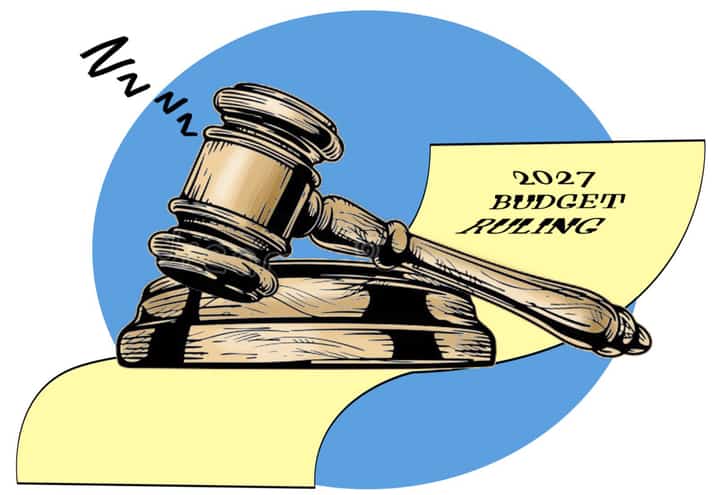
Strip away the legal language, and the question before the Supreme Court on the constitutionality of Unprogrammed Appropriations (UA) is fundamental.
The ruling will determine whether the 2027 national budget stays clean. Its timing is also essential to stop Congress and the Executive from tapping into the budget for the 2028 national elections.
Budget watchers believe the upcoming SC verdict will be as crucial as the landmark decisions in 2013 on the Priority Development Assistance Fund (PDAF) and the Disbursement Acceleration Program (DAP).
Former Senate President Frank Drilon said as much on DAILY TRIBUNE’s online program Straight Talk, in his own careful way.
He was at the SC’s oral arguments on the UA as an amicus curiae, a friend of the court, alongside former National Economic and Development Authority Secretary Winnie Monsod and budget secretaries Butch Abad and Ben Diokno, advising the tribunal on whether UAs, as currently written into the national budget, are constitutional.
Drilon urged the magistrates to rule fast because Congress has started deliberating on the 2027 National Expenditure Program.
Each week the Court stays silent is a week the UA hardens into place, unquestioned, on its way to becoming law.
UAs were designed to be a contingency fund, money released only if specific revenue conditions were met, but cycle after cycle they transformed into a pork-barrel receptacle that skipped the scrutiny every other budget item had to hurdle.
The SC junked the PDAF because it let legislators direct public funds with almost no oversight, and it struck down parts of the DAP because it allowed the executive to move money outside the appropriations Congress had actually passed.
Both rulings drew the same line: Money spent outside the ordinary process, however it’s labeled, is discretionary funds without real accountability.
A budget passed with an unresolved constitutional question is not a neutral budget waiting for later clarification, but it inherits, by default, every abuse the UA mechanism has enabled.
The list of opportunistic moves includes funds moved without the revenue triggers being met, allocations that function as discretionary pork under a technical name, and disbursements that outrun the audit trail.
If the Supreme Court stays silent throughout the 2027 budget process, it risks making a decision by omission — allowing the pork-riddled version of the budget to prevail by default because nothing stood in its way.
A ruling delivered now, while the budget is still in committee deliberations in both the Senate and the House of Representatives, can force Congress to rewrite the unprogrammed items, tighten the triggers, or strip the provision altogether, before third reading, before the bicameral conference committee.
A ruling delivered after it becomes the 2027 General Appropriations Act will be a postmortem, freeing the budget for misuse in the 2028 elections.
Drilon’s warning describes a fork in the road. One path is a 2027 budget built on a mechanism the Court has certified, or forced Congress to fix, before the bill becomes final.
The other is a budget that has the same unresolved defect that produced the PDAF and DAP, passed anyway because the institution the nation depends on to end the budget manipulation was still deliberating when the situation became moot.
The Court told the country to expect a ruling in August, and the month is nearly over. The magistrates face a narrow but real window in which a decision can bring change rather than just talk.
Past that 2027 window, the eventual answer, however correct, will arrive too late to be anything more than a lesson for 2028.