
Cakes, doles, disconnect
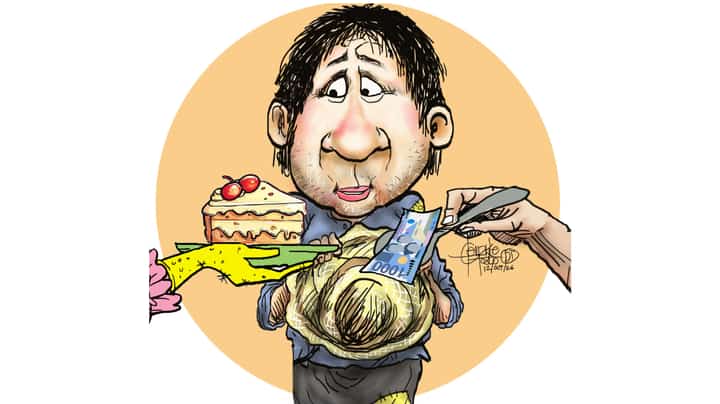
Like the supposed response of French aristocracy to a hungry populace, the criticism is that cash handouts highlight the disconnect between those in power and people struggling to make ends meet.

In 1789, as France was gripped by economic hardship, bread shortages and soaring food prices, public anger toward the monarchy reached a boiling point.
According to a famous, likely apocryphal anecdote, Queen Marie Antoinette, when told the people had no bread, supposedly replied, “Let them eat cake.” That story carries an unsettling resonance today.
Instead of lifting Filipinos out of poverty through jobs, productivity and sustained economic growth, the Marcos administration appears to be leaning increasingly on cash doles, risking the creation of a generation conditioned to depend on ayuda rather than one empowered to escape poverty.
The ayuda programs, through which the government channels budgetary funds to Filipinos struggling with high prices and shrinking livelihood opportunities, invite an uncomfortable comparison with the famous “let them eat cake” anecdote.
Like the supposed response of French aristocracy to a hungry populace, the criticism is that cash handouts highlight the disconnect between those in power and people struggling to make ends meet, offering temporary relief instead of addressing the deeper problems of jobs, incomes and economic opportunity.
Independent think tank IBON Foundation estimated 21.4 million poor, low-income and lower-middle-class families, with over 96 million Filipinos badly hit by rising prices.
The government responded by providing ayuda under the Unified Package for Livelihoods, Industry, Food and Transport (UPLIFT), giving one-time assistance of P1,500 to P5,000 to around 2.7 million beneficiaries.
The expanded UPLIFT, in turn, has given one-off and, in some cases, monthly grants of P2,000 to just 5.8 million beneficiaries.
The Department of Economy, Planning and Development (DepDev) also claimed the government is introducing effective interventions, particularly amid the looming Super El Niño. Philippine Statistics Authority data, however, showed that Filipinos relying on agriculture, which constituted the majority of the population, are falling further into poverty.
Crop production volume fell 5.5 percent from a year ago, even as fisheries production rose 2 percent over the period.
Mainly due to a backlash from oil price shocks, the agricultural sector reported a deeper trade deficit from March to August of $4.5 billion, or 23.8 percent higher than the same period last year.
IBON said this reflected agriculture’s chronic weakness, with its share of the economy now at its lowest in history.
Taken together, the data point to greater dependence on food imports, which, along with the depreciating peso, pushes commodity prices higher.
One-time ayuda payments that foster dependence on those who distribute them are inadequate for millions of Filipinos who lack sufficient income or livelihoods to cope with soaring prices.
Even with the minimum wage raised to P750 a day and P718 for farm workers, these rates remain well below the estimated P1,319 average daily income needed to meet the basic requirements of a family of five.
Nearly four out of five, or 77 percent, of employed Filipinos are in informal work that is poor-quality, low-paying and insecure.
Marcos’ economic managers failed to implement measures to protect Filipinos from the ongoing price crisis, such as suspending or removing the excise and value-added taxes on oil prices under the National Energy Emergency.
The government also failed to impose controls on basic necessities while providing social protection, including fuel and other subsidies.
IBON said protecting Filipinos from inflation cannot be reduced to temporary dole-outs or selective interventions; instead, President Ferdinand Marcos Jr. must direct his government to directly confront profiteering and structural weaknesses driving prices up.
An economy that produces decent jobs, affordable food and essential services for the majority must also be in place. Needed actions require political will and compassion, both of which are absent in the current dispensation.