
Smart about safety
The most immediate common thread, however, that emerged in the two recent shootings was actually not digital. It was physical access to firearms.
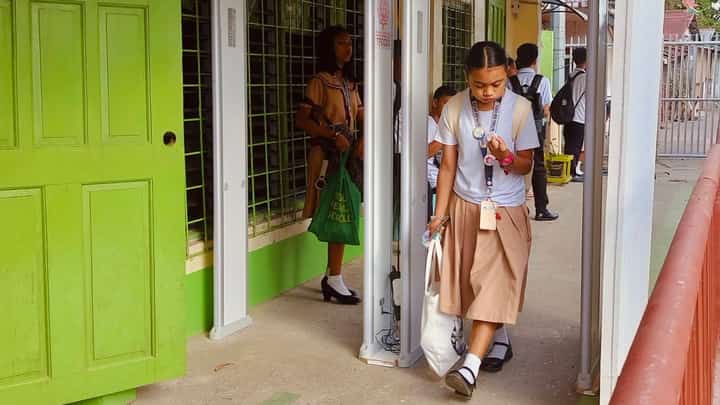
SECURITY personnel are on high alert at the San Jose National High School on Tuesday after school administrators suspended classes due to a viral social media shooting threat. The suspension comes just one week after classes resumed following a fatal mass shooting on the campus.
PHOTOGRAPH courtesy of San Jose National High School
Two school shootings in less than two months should be enough to jolt us into action.
In June, three students were killed at San Jose National High School in Tacloban City. Last week, a student was killed in the Ateneo de Zamboanga University high school campus before the young shooter took his own life. This raises an urgent question: What do we do to keep this from happening again?
One thing should be beyond debate. The safety of our children must be a national priority. Schools should be havens, sanctuaries parents can entrust their children to without fearing they might not come home alive.
The bigger question is, of course, what policies will actually make them safer.
After tragedies like this, there is always the temptation to reach for the quick, visible solutions. Ban violent video games. Lower the age of criminal responsibility. Install metal detectors in every school.
Some of these ideas sound reassuring because they look tough. But looking tough and being effective are two very different things.
Take online games. There is little basis for the sweeping claim that violent games, in themselves, turn children into killers. Millions play them without becoming violent. But this does not mean that we should dismiss the online gaming environment altogether.
Recent Senate hearings and law enforcement reports have raised a more specific concern: Gaming platforms, chat groups and related online communities can be exploited by bad actors to groom, manipulate and radicalize young users toward violent extremism.
That is the real threat worth addressing. But the answer is smarter platform regulation, age and safety safeguards, better monitoring, parental awareness and ways to flag predatory and extremist behavior. It is not simply to impose a sweeping ban on any and all games that feature guns.
The most immediate common thread, however, that emerged in the two recent shootings was actually not digital. It was physical access to firearms.
In Zamboanga, the guns apparently belonged to the shooter’s father. In Tacloban, one weapon was a police-issued pistol belonging to a suspect’s aunt, while another was registered to a security agency.
In both cases, the guns originated in the lawful adult world. This suggests where we should start.
Congress should strengthen our current gun law, RA 10591, with genuine child-access prevention rules, including criminal liability for negligent firearm storage and a much shorter period, perhaps 24 or 48 hours, for reporting lost or stolen guns. Service firearms for government personnel and weapons issued through security agencies should face stricter safekeeping and accountability rules.
Meanwhile, the DepEd should establish multidisciplinary behavioral threat-assessment teams capable of identifying students moving toward violence and intervening early. We might even look into establishing a 24/7 anonymous tip line for schools so classmates, teachers and parents can report worrying behavior.
Government should fully fund and accelerate the implementation of RA 12080, the Basic Education Mental Health and Well-Being Promotion Act, particularly its mandate for more school counselors and care centers.
Physical security still matters, of course. Schools should conduct risk assessments, improve access control where necessary and train teachers and students for emergencies. But security should be targeted and sensible, not an excuse to turn every high school into a fortress, every classroom into a bunker.
The goal is not to create an oppressive school system built around fear. It is to make it harder for a child in crisis to obtain a gun while making it easier for adults to notice the danger before any violence erupts.
That is less dramatic than sweeping bans and armed campuses. It is also far more likely to work.