
Our cities need more places to sit
A walkway succeeds when people can pass through it safely. A public space succeeds when people are comfortable enough to stay.


The lack of seating along Metro Manila’s urban fabric makes everyday travel more tiring, especially for those who have nowhere else to rest.
Photograph by RAFFY AYENG FOR DAILY TRIBUNE
A bench is hardly the sort of infrastructure that appears at a ribbon-cutting ceremony, unlike a new bridge or railway. But the humble public seat performs a surprisingly important job. Some of the most memorable public spaces in the world are successful precisely because they allow people to do something wonderfully ordinary: stay and rest for a while.
The World Health Organization (WHO) considers the need for seating significant enough to include public seating in its criteria for age-friendly cities. In related research, the WHO describes benches and sitting places as “staging posts” that allow older people to break longer journeys into manageable distances. That changes the way we should think about seating — not as a luxury, but as a necessity. The availability of seating can greatly improve a city’s pedestrian network when it is properly located, as it has a considerable impact on health and well-being.
When there is nowhere to sit in, older people and those with limited mobility may shorten their trips or avoid walking altogether. Commuters are left standing in the heat and rain, while casual social life is pushed indoors into cafés, malls and other places where staying often requires spending money. Over time, a city without places to pause can become a city designed mainly for those who can keep moving — and a miserable one for those who need to stay for a while.
Fortunately, we do not have to travel very far to see the idea of public seating working effectively.
The Iloilo River Esplanade may be one of the clearest local examples of what happens when infrastructure is designed not only to move people but also to accommodate daily public life. Walkways are accompanied by landscaping and trees that provide shade, while benches and viewing decks were deliberately added to create social spaces for visitors. The results show that public seating can be successful in controlled and well-planned environments.
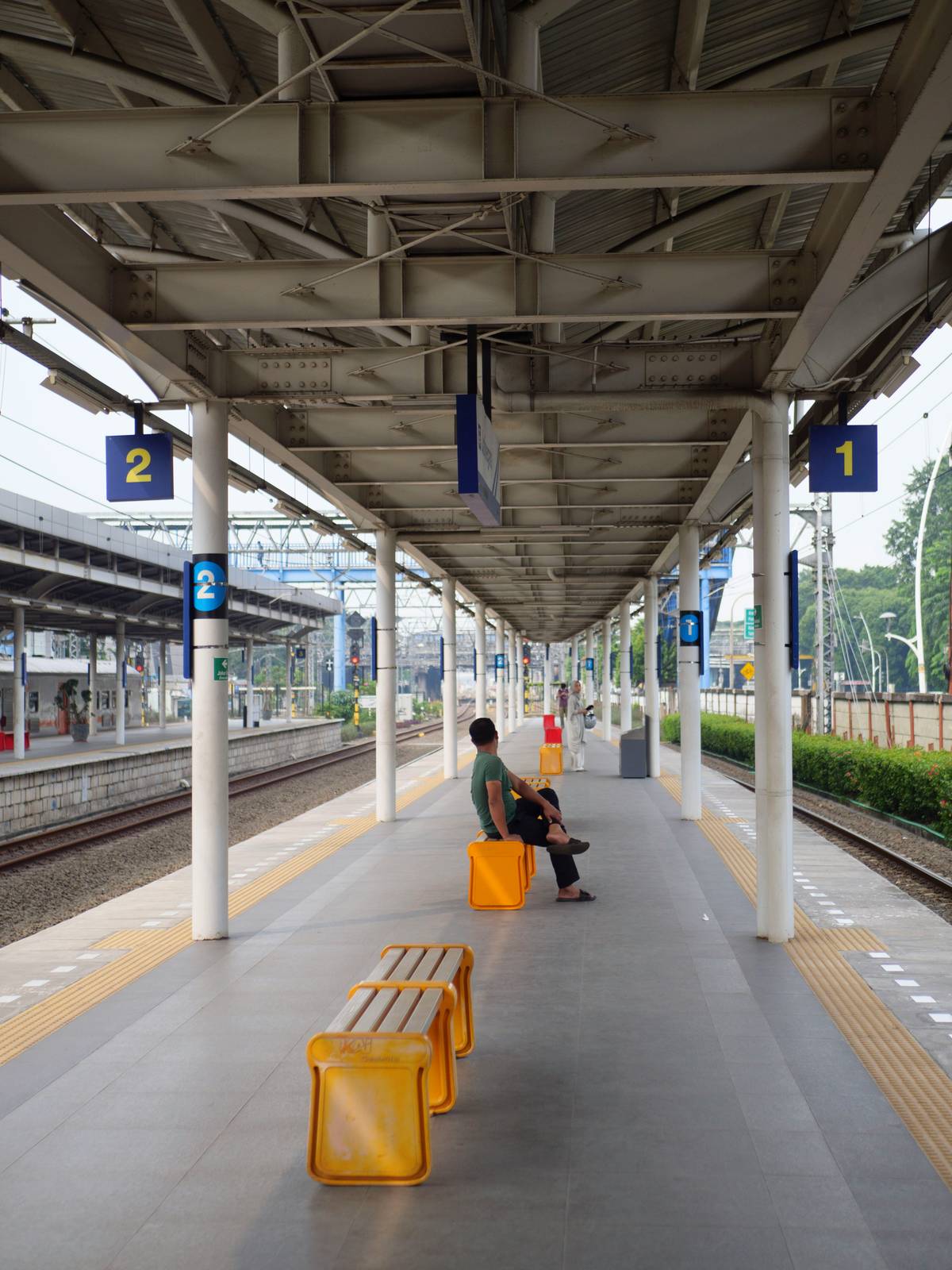
Proper seating at transport terminals can make the everyday wait safer, easier and far more comfortable for commuters.
PHOTOGRAPH COURTESY OF UNSPLASH
That distinction is worth dwelling on. A walkway succeeds when people can pass through it safely. A public space succeeds when people are comfortable enough to stay.
In a 2024 study published in The Journal of Public Space, Ferdinand Isla III and Sandra Samantela surveyed 40 young people using Taal Park in Batangas. When participants were asked what the park’s built environment allowed them to do, 30 identified unwinding and relaxation, while 27 said it was suitable for socializing and group games. When asked which physical features contributed most to the park’s attractiveness, 37 identified its open spaces and 26 identified its resting areas.
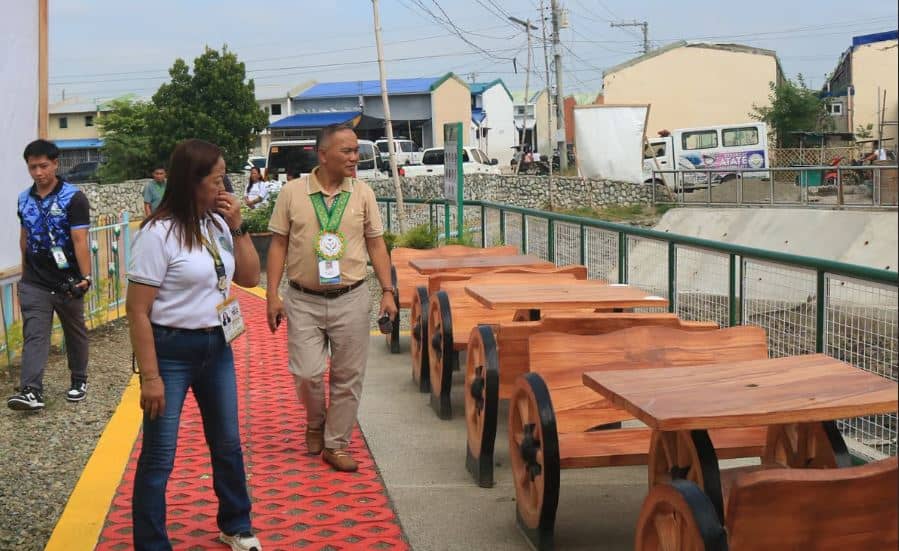
Palayan City Linear Park pairs waterway rehabilitation with welcoming public seating for the community.
PHOTOGRAPH COURTESY OF DENR
The point is not that the availability of benches alone will make people sit on them. The same study found that respondents rated the park’s natural and green features particularly highly. The successful formula appears to be a combination of open space, vegetation, places to rest and activities that give people a reason to be there.
That is especially important in the Philippine climate. Putting a bench in the middle of an exposed concrete plaza at noon technically provides seating, but perhaps only for people determined to test their heat tolerance. Shade, trees, orientation and materials all matter as ingredients for a pleasant user experience.
The seats themselves must also be placed intelligently. They can be incorporated into wider sidewalks, transport stops, plazas, pocket parks, building setbacks and landscaped areas where people naturally pause.
There are many potentially cost-effective ways to introduce public seating into our existing urban fabric. A planter can have a ledge wide enough for sitting. A waiting shed can include proper seating designed to discourage sleeping or misuse. A large shade tree can be surrounded by a seat wall around its roots. Government buildings can incorporate pocket parks where people have somewhere to wait outside instead of remaining cramped indoors.
Small design decisions, such as providing places to sit in repeated hundreds of times across a city can collectively change how hospitable its public realm feels.