
Japan’s quiet lessons
In Nagaoka, even a short drive became a moment of reflection — an opportunity to appreciate the simplicity and beauty of rural Japan.

Rice fields. Light traffic. A slower, gentler rhythm of life.
That, more or less, summed up my latest trip to Japan last week, where I traveled to Nagaoka City in Niigata Prefecture to cover the Yonex International Junior Golf Championships.
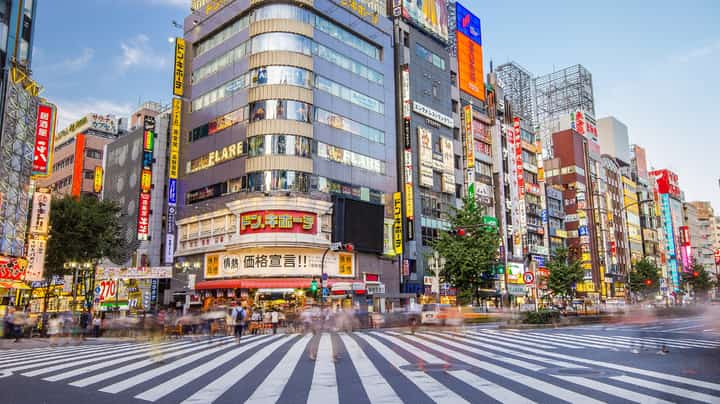
Far from Tokyo’s crowded streets and neon-lit rush, Nagaoka revealed a different side of Japan — vast stretches of farmland, quiet roads, and communities moving at their own unhurried pace.
The journey from the airport to the city itself became a reminder that Japan is not only about towering skyscrapers, bullet trains, and bustling intersections.
Beyond the urban centers lies a countryside of rice paddies stretching to the horizon, mountains framing the view, and everyday life unfolding with remarkable calm and order.
For a journalist accustomed to the constant rhythm of deadlines, traffic, and city noise, the experience was a refreshing change. In Nagaoka, even a short drive became a moment of reflection — an opportunity to appreciate the simplicity and beauty of rural Japan.
But one thing remains constant wherever you go in Japan: its people.
They may not display the same warmth and outward friendliness that Filipinos are known for, but the Japanese are deeply grounded in values of discipline, respect and honesty.
One of the reasons I returned to Japan was to recover the backpack I accidentally left at JR Chiba Station last May. The fact that it was still there, safely kept and waiting to be claimed, was striking. It was another powerful reflection of a culture where integrity and responsibility are woven into everyday life.
Everything inside the backpack was intact — the laptop, iPhone, chargers, mouse, medicine box and even a pair of 3-in-1 coffee mix sachets. They had also carefully placed the Philippine coins I carried inside a separate plastic bag, a small but meaningful gesture that showed their attention to detail and respect for another person’s belongings.
But retrieving it was not without challenges.
As always, communication proved to be the biggest hurdle. I initially went to the wrong police station in Chiba. I spent valuable time explaining my situation, only to discover that my belongings were actually being held at the central police building about four kilometers away.
The clock was against me.
It was already 3:54 p.m., and the lost-and-found office was scheduled to close at 4 p.m. Panic started to set in. My next Shinkansen train to Nagaoka was already booked, and missing the deadline meant losing my only chance to recover the backpack.
The Japanese are known for their strict adherence to time, but with only minutes remaining, I decided to take my chance and politely ask for consideration.
The young policeman, whom I estimated to be in his early 30s, immediately understood my predicament. He called his colleague at the main police station and explained the urgency of my situation. Fortunately, an exception was made, allowing me to retrieve my backpack even after the official closing time.
But his kindness did not end there.
After sharing the good news, he went beyond his duty by accompanying me to the taxi stand and personally explaining to the driver where I needed to go.
That exception, however, did not extend to the golf tournament I had come to cover.
The three-day event followed a strict set of rules: no gallery was allowed, including members of the media. My coverage was limited to taking photos and videos only from designated areas — the first and 10th tee mounds and the ninth and 18th greens. No more, no less.
The players, meanwhile, were left to manage the course on their own. There were no caddies. Every young golfer was responsible not only for their shots but also for the condition of the course, repairing their own divots and raking bunkers after every shot.
It was a level of discipline and self-responsibility rarely seen in junior tournaments back home. In the Philippines, where spectators, parents and coaches often play a bigger role in events, such a setup would be almost unheard of.
But in Japan, it was simply part of the game — another reflection of a culture that values independence, respect for the course, and personal accountability. In Nagaoka, even the rules seemed to move at a slower, gentler rhythm, trusting each player to do what was right.