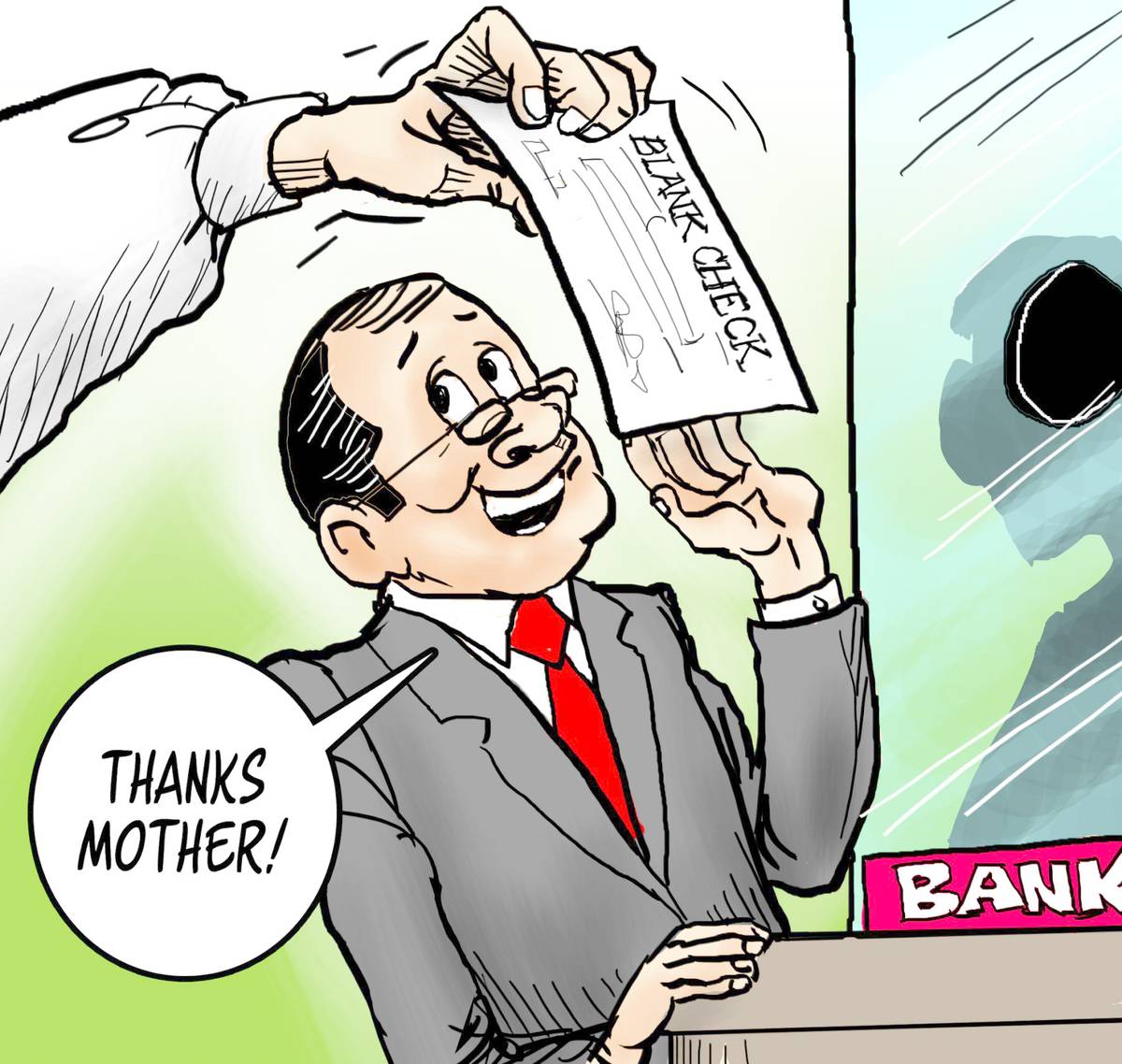
Holding firm holds bag


Nosy Tarsee learned from regulator sources that a certain red-and-yellow courier, the one whose trucks and branches you’ll find in practically every barangay doing double duty hauling balikbayan boxes and wiring remittances from abroad, just had its parent company sign for a rather large family obligation.
At a recent board meeting, the holding firm’s directors voted to stand as continuing surety for up to P1.105 billion in credit lines its operating subsidiary had drawn, and may still draw, from one of the country’s biggest banks.
If the courier arm can’t pay, the mother company will legally be on the hook, and not just for the principal. The surety covers every possible increase, roll-over, restructuring, and renewal of the debt, plus all the interest, penalties, and fees that come with it. That’s about as open-ended a guarantee as a board can sign onto.
Nosy Tarsee did some digging, and the timing raised an eyebrow. This isn’t a company flush with cash asking for a rubber stamp on routine financing. The courier has been bleeding red in recent reporting periods, swinging from a quarter-billion-peso profit to a net loss, even as it trimmed costs and shed headcount.
Revenue from its bread-and-butter retail walk-in business has been sliding for a while now, offset only partly by growth in corporate accounts.
Interest expense, meanwhile, keeps climbing, up double digits year-on-year, as older loans get refinanced into newer, presumably not cheaper, ones.
Debt-to-equity sits north of 300 percent, which is the kind of number that makes a credit committee ask more questions before it asks for collateral.
So why does a parent company issue a blank-check guarantee for a subsidiary that’s been posting losses and stacking fresh loans on top of old ones?
One theory making the rounds in finance circles: the bank wanted more comfort before extending or renewing the facility, and a holding-company surety was the price of admission —cheaper than pledging hard assets, but it does mean the group’s balance sheet, not just the operating unit’s, now carries the exposure.
With remittance volumes plateauing and e-commerce logistics getting crowded by better capitalized rivals, the courier needs every peso of working capital it can get, and the parent had little choice but to co-sign on the dotted line.