
PCCI seeks bold reforms in lowering power costs
The Chamber stressed, however, that deeper reforms are urgently needed to secure affordable, reliable, and sustainable power nationwide.

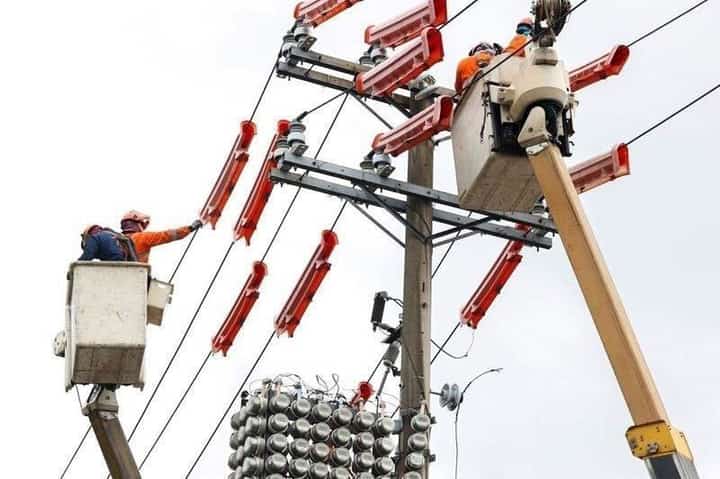
Amid calls from President Ferdinand Marcos Jr. for lawmakers to amend Republic Act 9136 or the Electric Power Industry Reform Act of 2001, and remove the burden of paying system loss to consumers, the Philippine Chamber of Commerce and Industry (PCCI) backed this by pushing bold reforms that are needed to lower power costs.
In a statement on Sunday, PCCI, the country’s biggest business organization, expressed its strong support for the removal of system loss charges from being passed on to consumers, and the removal of the value added tax (VAT) on electricity as the first steps in reducing electricity costs for Filipino households and industries.
The Chamber stressed, however, that deeper reforms are urgently needed to secure affordable, reliable, and sustainable power nationwide.
“The removal of system loss and associated VAT on electricity provides immediate relief, but it must be followed by broader reforms to truly ease the burden on consumers and industries,” said PCCI president Perry Ferrer.
“Our competitiveness depends on reliable and affordable power today while building sustainability for tomorrow. We cannot afford to let high energy costs continue to erode investment and industrial growth,” Ferrer added.
“Industry and consumers are already burdened with numerous pass-through fees. Removing system loss and VAT is a welcome start, but the bigger challenge lies in rationalizing other charges, diversifying our energy mix, and unlocking indigenous resources. These bold reforms will ensure that power supply is not only affordable but also resilient against global price shocks,” PCCI director for Energy and Power David Chua, for his part, said.
With this, the PCCI has recommended ways, encapsulated in five key pillars, which include baseload reliability to ensure 24/7 supply for manufacturing and investment; regulatory and market efficiency, including managing the transition from FiT/FiT-ALL subsidies to GEA-ALL (Green Energy Auction Allowance) or competitive renewable procurement, and a diversified energy mix with natural gas, liquefied natural gas, renewables, energy storage, and emerging technologies like hydrogen and nuclear power.
Further, the PCCI suggests expanded energy exploration to unlock untapped domestic reserves and reduce dependence on imports, and faster transmission expansion, streamlined permitting, and a flexible electricity market to ensure that new generation capacity reaches consumers efficiently, projects move without delay, and market mechanisms adapt to evolving realities.
“The PCCI affirmed its commitment to work closely with the Marcos administration and all stakeholders in pursuing a realistic, sustainable, and pro-business energy roadmap. By adapting policies to present realities — ensuring stability, affordability, and competitiveness — the country can secure the power needed for industries to compete, the economy to grow, and the Filipino people to prosper,” the group officials noted.