
The tindahan makes a neighborhood
The economic influence of the tindahan becomes more apparent when it is viewed as part of the country’s vast retail network.


We all know and love our neighborhood tindahan (store). It is a distinctly hyperlocal institution, shaped by the design of the Filipino home, the circumstances of the household running it and the routines of the community outside its window. It is a form of home-based architecture that converts a private dwelling into economic and social infrastructure for the neighborhood.
Tindahans are usually modest and improvised. It could be a garage with shelves, a porch turned into a counter, or a portion of the living room opened onto the street through metal grilles. There is rarely a clear division between domestic and commercial space because the house itself becomes productive.
Products are arranged so they remain visible and accessible from the street without requiring customers to enter the home. The counter or grille window becomes a carefully managed boundary: open enough for commerce and conversation, but enclosed enough to preserve the privacy and security of the household.
Its accessibility is both physical and economic. The store is close enough to reach on foot and flexible enough to sell one egg, one sachet or a few pesos’ worth of cooking oil. Through “tingi,” retail adjusts to what a household needs and can afford at a particular moment.
Buying from a tindahan means approaching a neighbor’s home. A bench or table beside the counter can turn a brief purchase into a conversation, allowing the store to serve as both retail space and informal gathering place. Over time, many tindahans become familiar landmarks where residents meet, wait for rides or give directions.
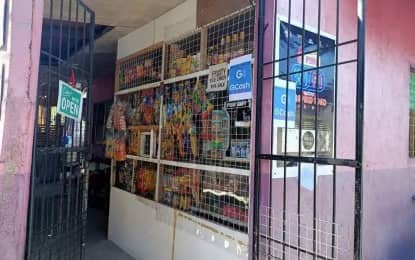
Planning for tindahans does not always require formal commercial buildings.
By placing activity at the edge of the property, the tindahan also interrupts the walls, gates and closed façades common in residential streets. Its opening creates light, movement and human presence between the home and the sidewalk.
A Philippine Institute for Development Studies survey of 311 female sari-sari store owners found that many associated their businesses with financial independence, family support, pride and social connectedness. The small space at the front of the house can therefore contribute materially to both household income and personal agency.
The economic influence of the tindahan becomes more apparent when it is viewed as part of the country’s vast retail network. According to an earlier study from the Magna Kultura Foundation, about 93 percent of all sari-sari stores nationwide are located in residential communities.
Large manufacturers and distributors may move goods across provinces and cities, yet it is often the sari-sari store that divides, displays and sells them in quantities suited to individual households. The tindahan occupies the smallest end of this system yet performs an essential last-mile function where the national economy finally arrives at the scale of one street, one family and one purchase at a time.
Future subdivisions and housing developments should make space for this kind of micro-scale enterprise. Communities need more than rows of houses and distant commercial centers accessible mainly by car. Planning for tindahans does not necessarily require constructing formal commercial buildings. It may simply mean allowing adaptable frontages, walkable streets and carefully regulated enterprises within residential areas.
The tindahan endures because it belongs to both the household and the community. Its permanence comes not from a national brand or a long lease, but from a family remaining present in the neighborhood it serves.