
ICC ousts disgraced Duterte prosecutor
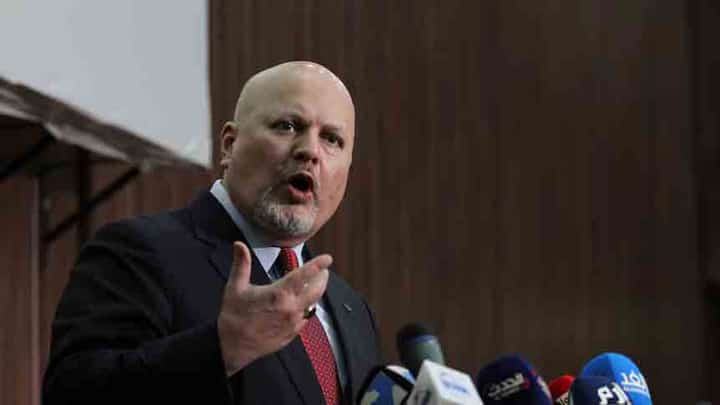
International Criminal Court (ICC) member states voted Friday to dismiss prosecutor Karim Khan following disputed allegations that he sexually assaulted a female member of his staff.
It was Khan, 56, who had formally requested an urgent application for an arrest warrant against former Philippine President Rodrigo Duterte which led to the latter’s arrest in March 2025.
Khan was suspended last month by a key governing body of the ICC ahead of the secret ballot in which 82 of 125 member states voted to remove him for “serious misconduct and serious breach of duty.”
Sources said only 13 states voted for Khan to remain at his post during the closed-door session at the UN headquarters in New York. Fifteen members abstained, while some did not attend the vote.
Khan will challenge “the lawfulness and fairness of the decision through all available legal mechanisms,” his lawyer said, while the ICC, based in The Hague, Netherlands, said in a statement that it “takes note” of the members’ vote.
In May 2025, Khan voluntarily stepped back from his prosecutorial duties to fight the allegations made by one of his female colleagues in an inquiry launched the previous year.
The alleged victim, a Malaysian lawyer who worked as Khan’s direct assistant, gave her account of what happened in an interview last week with CNN.
The woman, who asked to be identified only by her first name Sarah, described “an escalation of attempts” that resulted in a physical assault.
“There is no way for something to be consensual when you have such a power disparity,” she told CNN. “What I think many people don’t understand is that Mr. Khan was not just my boss, he was everyone’s boss.”
Khan, who had been in the job since 2021, categorically denied the accusations.
After the vote, Paivi Kaukoranta, head of the UN governing body that oversees the ICC, praised the members for their “spirit of unity shown in upholding the integrity of the court.”
The process ensured the court “can discharge its critical mandate in the interest of the international community as a whole and the victims of atrocity crimes the world over,” Kaukoranta said.
Credibility backlash
Khan’s lawyer, Tayab Ali, warned the decision had “grave implications” beyond this individual case.
“The independence of the International Criminal Court depends upon its elected officials being protected from removal through processes that are political, procedurally unfair, or inconsistent with the findings of independent judicial bodies,” Ali said on X.
Khan has faced heavy political pressure during his tenure, leading to several headline-grabbing cases.
In 2024, he successfully applied for arrest warrants against Israeli Prime Minister Benjamin Netanyahu and former defense minister Yoav Gallant over the Gaza war.
The ICC also issued warrants for the arrest of several key leaders of Hamas who have since been killed.
Double whammy
Venezuela indicated it will withdraw from the ICC over the tribunal’s perceived bias, the nation’s foreign minister said Friday.
The announcement comes amid an ongoing ICC investigation into alleged crimes against humanity committed under the ousted Venezuelan president Nicolas Maduro’s government.
Caracas had informed the United Nations of its “firm and irrevocable decision” to withdraw from the ICC, Foreign Minister Felix Plasencia wrote on X.
Interim leader Delcy Rodriguez, who took over after US forces ousted Maduro in January, had instructed the move, he said.
“Venezuela considers that the Court’s actions reflect a demonstrated geographical bias, which has disproportionately concentrated its work on African and Latin American countries,” Plasencia said.
The Hague-based court said it had not yet received a formal notification of Venezuela’s withdrawal.