
Japanese ‘ihaw-ihaw’ and ‘tusok-tusok’
New restaurant franchise eyes over 100 Philippine branches


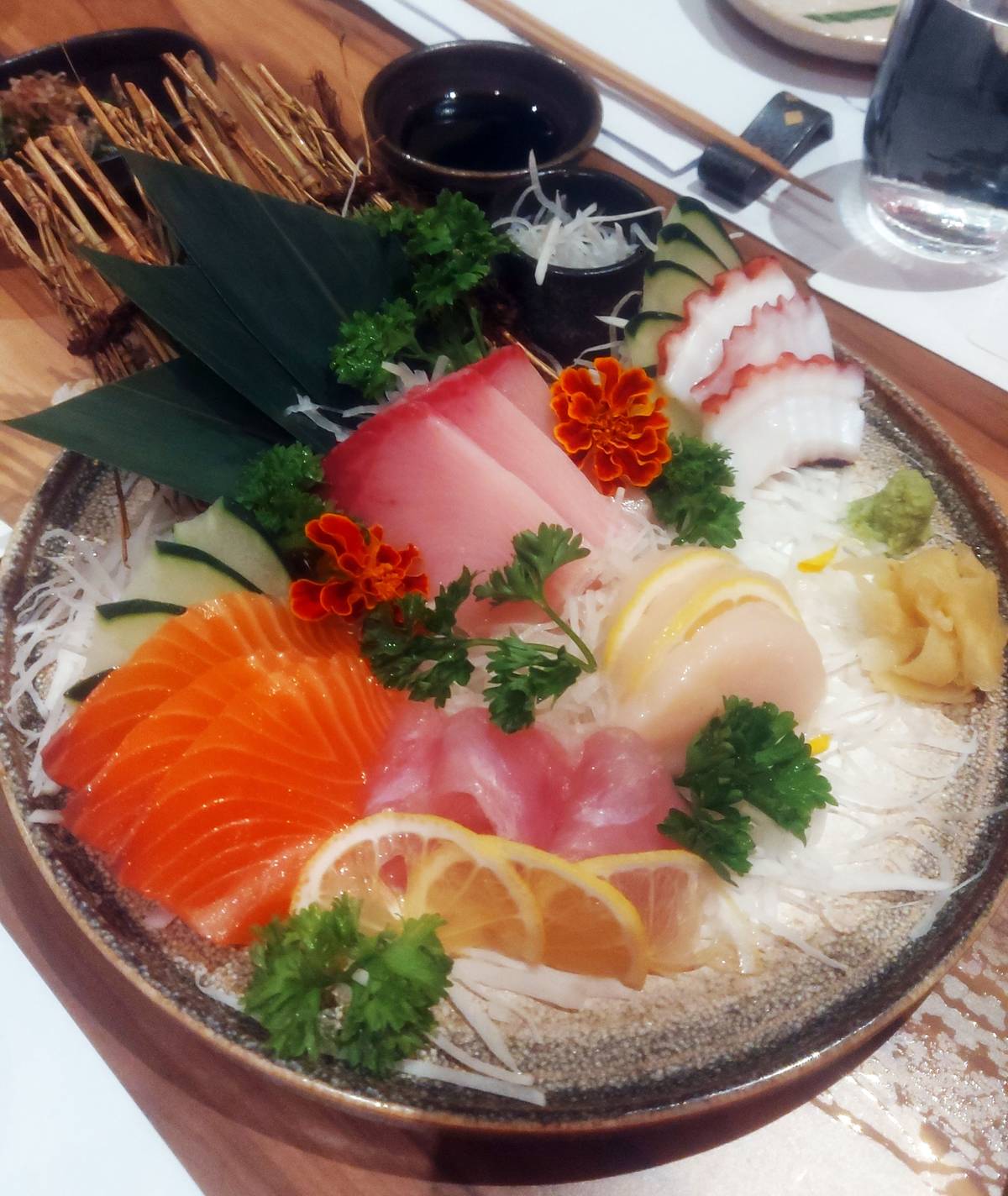
Sashimi, in five ways.
In the Philippines, if you take your date to an “ihaw-ihaw” or “tusok-tusok,” chances are there would be no more second date for you. Fortunately, today, if you love “ihaw-ihaw” and “tusok-tusok” so much but don’t want to get ditched by a date again for being mistaken as “kuripot” (frugal to a fault), a restaurant just opened last week, offering “ihaw-ihaw” and “tusok-tusok” but in a high-end setting — and even with private rooms with their own doors for a discreet entrance In Japan, they call it “robatayaki” or “robata” in short, literally meaning “fireside-cooking.” In the Philippines, we call it “ihaw-ihaw” or barbecue, but in a robatayaki, instead of grilling meats over fire, all charcoal is gathered at the center and the skewered meats are grilled around it at varying speeds.
Likewise, in the Philippines, we refer to picking food while being cooked in a pan, usually street food, as “tusok-tusok.” In Japan, a similar practice is “warayaki,” which, like the Filipino “ihaw-ihaw,” is about searing ingredients but over blazing fire fueled by straw.
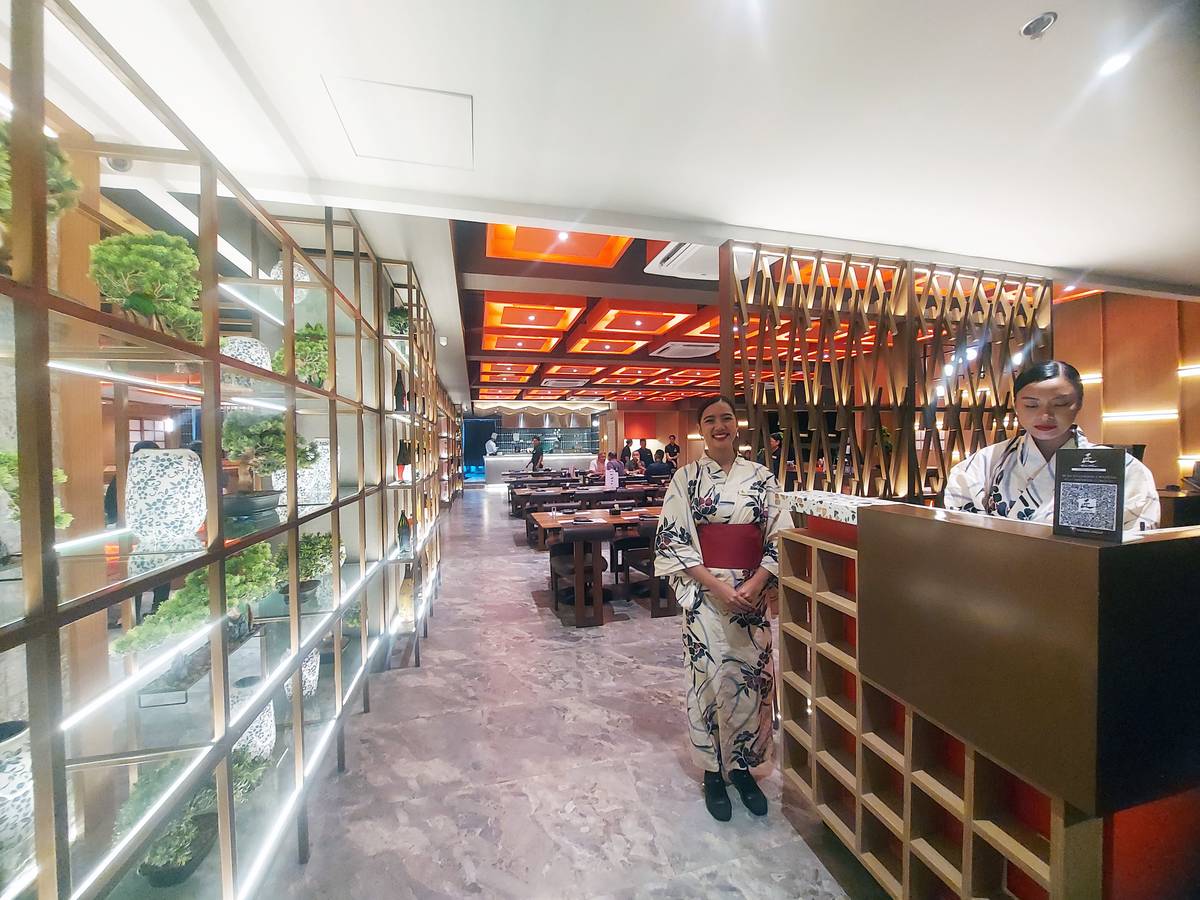
Guests are welcomed by ladies in kimono and a bonsai wall.
Live robatayaki and warayaki cooking is the centerpiece of Takumi, a new Japanese restaurant franchise brought to the Philippines in partnership with Philippines-based restaurant chain Vikings Group. Named after the Japanese word for “master craftsman,” Takumi has been envisioned to bring some of Japan’s culinary traditions such as warayaki and robatayaki in the Philippines. Japanese embassy representatives, Vikings Group of Companies president and chief executive officer Jackson Go and other Takumi and Vikings Group officials led the restaurant’s ribbon-cutting last week to officially open the restaurant’s first Philippine branch across Dusit Thani hotel in Makati City.
“We aim to serve the traditional taste of Japan as they are enjoyed today by the Japanese — the flavors, quality, vibe and culture that people in Japan are experiencing right now,” Kotaro Miyake, the Japanese restaurant’s co-owner, explained in his welcome remarks why they decided to bring Takumi in the Philippines under the operations of Vikings Group.
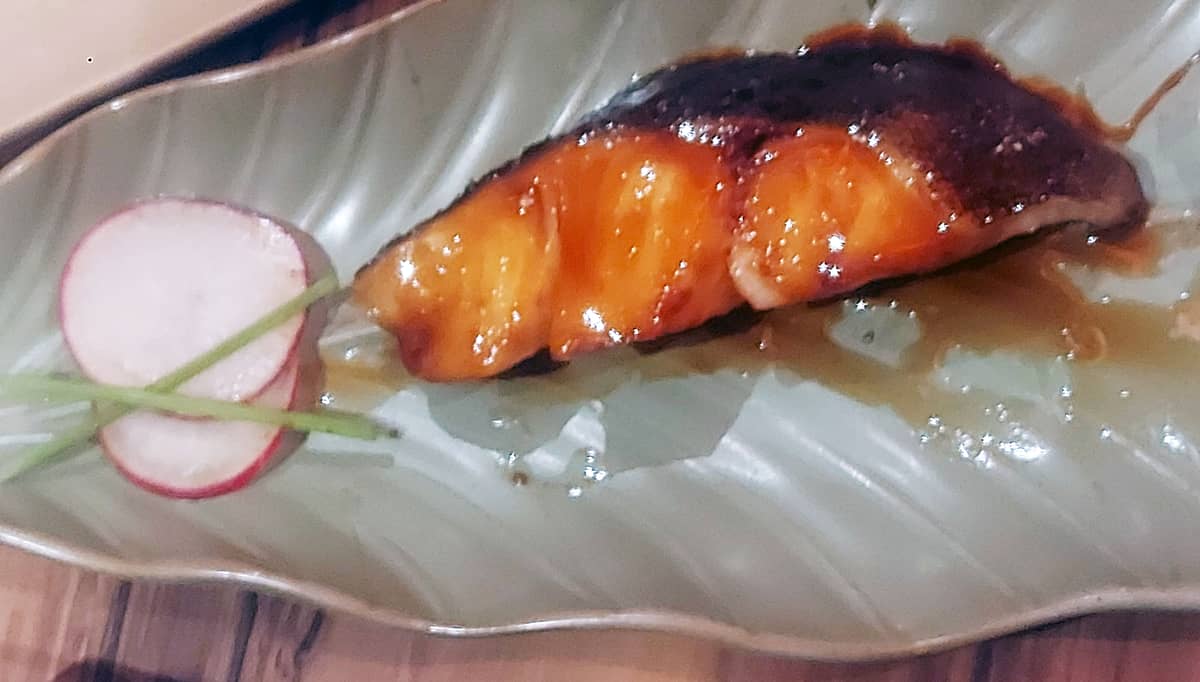
Teriyaki Gindara.
“Praise this special day because of the support and dedication of so many people… we welcome this new chapter together,” he said of Takumi and Vikings’ partnership.
The ribbon-cutting was followed by Kagami Biraki, which literally translates to “opening the mirror,” a Japanese sake drum opening ritual “symbolizing good fortune, harmony, prosperity and new beginnings,” the host said at the restaurant’s opening program. “It is a cherished Japanese tradition for special occasions to celebrate success and to welcome a prosperous future together,” the host continued.
The ceremonial sake barrel’s round lid symbolizes unity, harmony and good fortune. Breaking it open during New Year, weddings or corporate events is believed by the Japanese to usher in prosperity and a fresh start. The Kagami Biraki at Takumi was finished with a kanpai (cheers) and partaking of sake from the barrel.
Traditional Japanese barrels were shipped from Japan to adorn a doorway leading to the restaurant’s VIP rooms. The restaurant boasts of modern Japanese interiors designed by both Takumi and Vikings, which makes it similar-looking with some of the Japanese restaurant’s branches in Japan, although the Makati branch is bigger than many of its counterparts in Japan, Miyake noted.
Miyake, in an interview with DAILY TRIBUNE and other select media at the restaurant’s opening, said they chose to open their first Philippine branch at the Makati location because the Windsor Square building has been known for its restaurants, own parking space and strategic location in front SM and Ayala Malls.
What makes Takumi different from the many Japanese restaurants proliferating the Philippines, he said, is its “open performance kitchen,” where guests “can see the robatayaki and warayaki, which are normally not known to Filipinos.”
At the restaurant, warayaki is used for Takumi’s signature Tataki specialties. Originating from Tosa in Japan, warayaki is practiced at the restaurant by burning dried straw at extremely high temperatures to quickly sear ingredients, locking in their natural flavors while infusing a rich, smoky aroma. Robatayaki, meanwhile, is a traditional Japanese coal-grilling method that enhances the natural flavors of the restaurant’s premium meats, seafood and vegetables through precise cooking over glowing coal.
Moreover, the restaurant performs the down service common in Japan, but not in Philippine restaurants. Like in traditional Japanese homes, the restaurant has private rooms that can sit anywhere from four to 10 guests. Each room has a bell for easily calling attendants. Sliding doors can simply be opened to make the rooms larger and accommodate more people for special events. Overall, the restaurant can sit over 150 guests indoors and additional 12 at the al fresco area.
Miyake’s recommendations for starters include five kinds of salted warayaki; and “meticulously prepared” sushi including salmon, wagyu and duck, served with different sauces like ponzu, wasabi, garlic and salt, with lemon slices on the side. Offering a luxurious dining experience is the dining joint’s Omi Beef, one of Japan’s oldest and most prestigious wagyu brands renowned for its exceptional marbling, buttery texture and tenderness.
The expansive menu also includes traditional Japanese fare from ramen to yakitori (barbecue skewers), okonomiyaki (teppanyaki savory pancake) and several kinds of matcha and Warabimochi desserts. A separate menu features an international wine selection from the restaurant’s own bar, including different kinds of sweet and dry sake.
“We bring food and ingredients from everywhere in Japan, but most especially from Kyoto,” Miyake shared.
“Every dish reflects the artistry, tradition and passion that define Japanese cuisine,” he vouched, noting that they plan to open over 100 stores all over the Philippines in the coming months and years to educate more Filipinos about Japanese food and to spread omotenashi, Japan’s tradition of wholehearted hospitality.