
Tolosa: Evidence first, votes later
Tolosa said the prosecution has taken no formal position because its focus remains on presenting evidence.

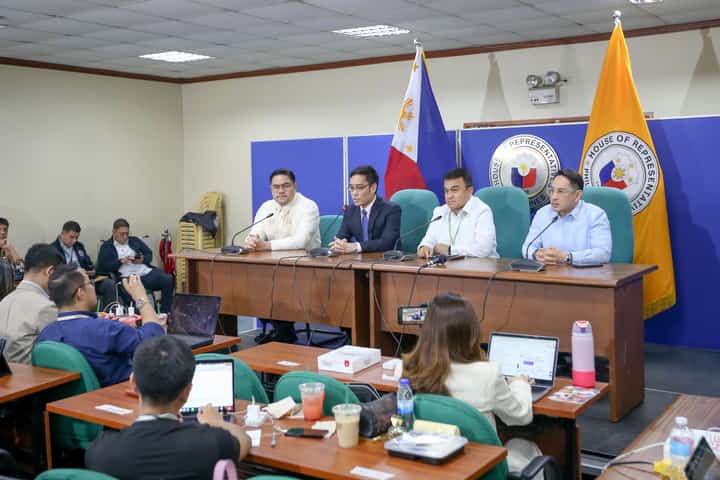
MAKING their case House prosecutors Paolo Ortega, Jay Tolosa and Zia Adiong face the media ahead of the resumption of Vice President Sara Duterte’s impeachment trial.
PHOTOGRAPH courtesy of Aram Lascano
House prosecutors said Monday they are not preoccupied with the number of Senate votes needed to convict Vice President Sara Duterte, insisting their priority is to present evidence strong enough to satisfy any legal interpretation of the constitutional threshold.
House private prosecutor Jay Tolosa said the prosecution has deliberately refrained from discussing the required number of votes for conviction.
“We don’t engage in vote-counting. At the end of the day, our priority is to establish an airtight case. We will ensure that our case is backed by solid evidence so, regardless of the final interpretation of the two-thirds threshold, we can get the required number,” Tolosa said before the resumption of the impeachment trial.
“That has been the priority of the prosecution from the start, and that remains our priority until now,” he added.
The issue stems from Article XI, Section 3 of the Constitution, which provides that no official shall be convicted without the concurrence of two-thirds of all members of the Senate.
Threshold
Debate has emerged over whether the required number should remain at 16 votes after Senators Ronald “Bato” dela Rosa, Jinggoy Estrada and Rodante Marcoleta became the subjects of criminal cases and arrest warrants that could affect their participation in the trial.
Some House prosecutors, including lead prosecutor Batangas Rep. Gerville Luistro and prosecutor San Juan Rep. Ysabel Zamora, have earlier expressed the personal view that the threshold could be adjusted if senators are unable to participate.
Senate impeachment court presiding officer Francis “Chiz” Escudero and several legal experts, however, have maintained that conviction still requires 16 votes.
Tolosa acknowledged that differing legal opinions exist but said the prosecution has taken no formal position because its focus remains on presenting evidence.
“All of the points raised are valid but, at the end of the day, we’re not focusing on that and have not taken any official step with respect to this matter. We remain focused on the continued process of the trial,” he said.
SC ruling awaited
House trial spokesperson and former congressman Robert Ace Barbers said the prosecution would welcome a Supreme Court ruling should anyone formally raise the issue before the tribunal.
“There are many schools of thought and many opinions have come out about the threshold, and the prosecution is not involved in the political arithmetic,” Barbers said.
“But if anyone raises this before the Supreme Court, it’s a welcome development. Whatever the decision of the court will be, of course the prosecution will respect that,” he added.
Lanao del Sur Rep. Zia Alonto Adiong said the public interest surrounding the threshold issue reflects the importance of resolving the impeachment trial under clear constitutional rules.