
Severe water crisis hits Catbalogan City
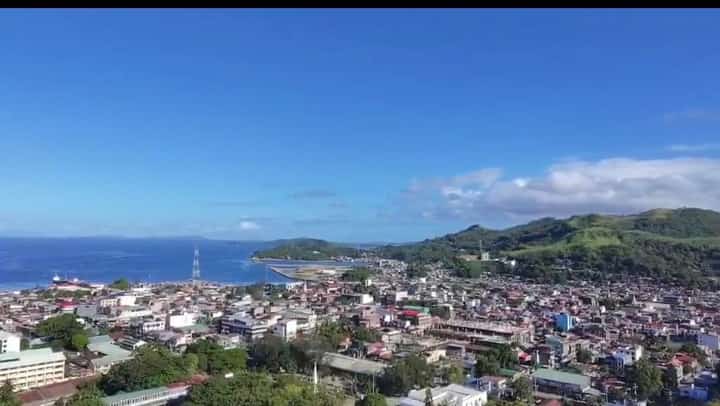
TACLOBAN CITY – When it rains, run-off water gets murky and could not be processed by its water treatment facility for distribution to households. And when there is power outage, water from another major source could not be pumped out into the city’s distribution system.
But when heavy rains and power outage come into one setting, a water crisis brews which is the case Catbalogan City is now facing.
Despite its thick forest cover, Samar’s provincial capital Catbalogan City is experiencing a severe water crisis that prompted the city government to suspend face-to-face classes in all schools and adopted a temporary work-from-home arrangement for employees of the city government.
Catbalogan City Mayor Dexter Uy issued the executive order on Monday morning for the indefinite suspension of classes and government office work but eventually withdrew it towards the evening after it drew widespread criticism in social media.
In his initial order, Uy said the severe water supply crisis left several areas suffering from inadequate or interrupted water service despite the recent heavy rainfall.
He said the recent outage disrupted the pumping of water from the Caramayon source and the high turbidity of water from the Antiao River made it difficult for the existing treatment facility to produce potable water.
Experts and long-time residents believe the water crisis has been an emerging concern waiting to happen for a decade now due to the rapid development in recent years coupled with the degradation of its water sources.
“Water demand is increasing far faster than our available supply,” says Raul Reyes, a former private sector representative of the Regional Development Council.
“The challenge before us is no longer simply how to grow, but how to grow sustainably and resiliently,” Reyes added citing the infrastructure boom such as the reclamation project, the construction of mid-rise buildings and the rise of subdivisions.
Reyes proposes that the Samar provincial government should initiate a Catbalogan City Metro Bulkwater Supply Framework, that will initially cover Catbalogan and the contiguous towns of Jiabong, Motiong, Paranas, Zumarraga, Daram, and Tarangnan.
He said the solution would be attractive to big-ticket bulkwater supply investors, because Catbalogan City alone may not be enough due to the limited number of household concessioners.
But water expert Ronald Orale, a professor at Samar State University, said the water crisis has the signs of a much bigger problem, a potential water bankruptcy which happens when a watershed, aquifer, or river system has been overused or degraded to the point where it can no longer sustainably provide water while maintaining its ecological functions.
Orale, who holds a Doctor of Engineering major in Water Resources Engineering, said Antiao River's water quality has been deteriorating due to increasing groundwater extraction and declining river flows.
“Lower river discharge means less natural flushing, allowing untreated wastewater from households and other sectors to become more concentrated in the river,” he said.
“My suspicion is that groundwater recharge within parts of the watershed may no longer be keeping pace with water extraction, especially during extended dry periods. One possible explanation is the declining condition of portions of the watershed,” Orale added.
“I am concerned that the present crisis may be exposing weaknesses that have been developing for many years,” he said.
On the other hand, Caramayon which has become one of Catbalogan's most dependable water sources, is also affected by turbidity during rainy days, insufficient to meet the growing water demand of the entire city and dependent on electrically powered pumps.
Orale said the city government should explore sustainable water sources to reduce its dependence on Antiao Watershed to improve long-term water security.
He added that it should also restore and protect the watershed, expand rainwater harvesting, and upgrade its water treatment facility.
“The current situation exposes a water supply system with limited resilience,” Orale said. “Different water sources fail under different conditions, and when two major vulnerabilities occur at the same time—power interruption and extremely turbid river water—the remaining sources cannot adequately meet the city's demand.”