
UV RIDE
Hyundai Motor and Kia said Far-UVC light has limited penetration into human skin and is designed to remain on the outer keratin layer.


SANITIZING light spreads through a vehicle cabin as Hyundai Motor and Kia test Plasma Care UVC technology for future mobility use.
PHOTOGRAPH courtesy of Hyundai
Hyundai Motor Company and Kia Corporation have unveiled a new in-vehicle sanitization technology that uses Far-UVC light to help reduce bacteria, airborne viruses and odor-causing microorganisms inside a vehicle cabin.
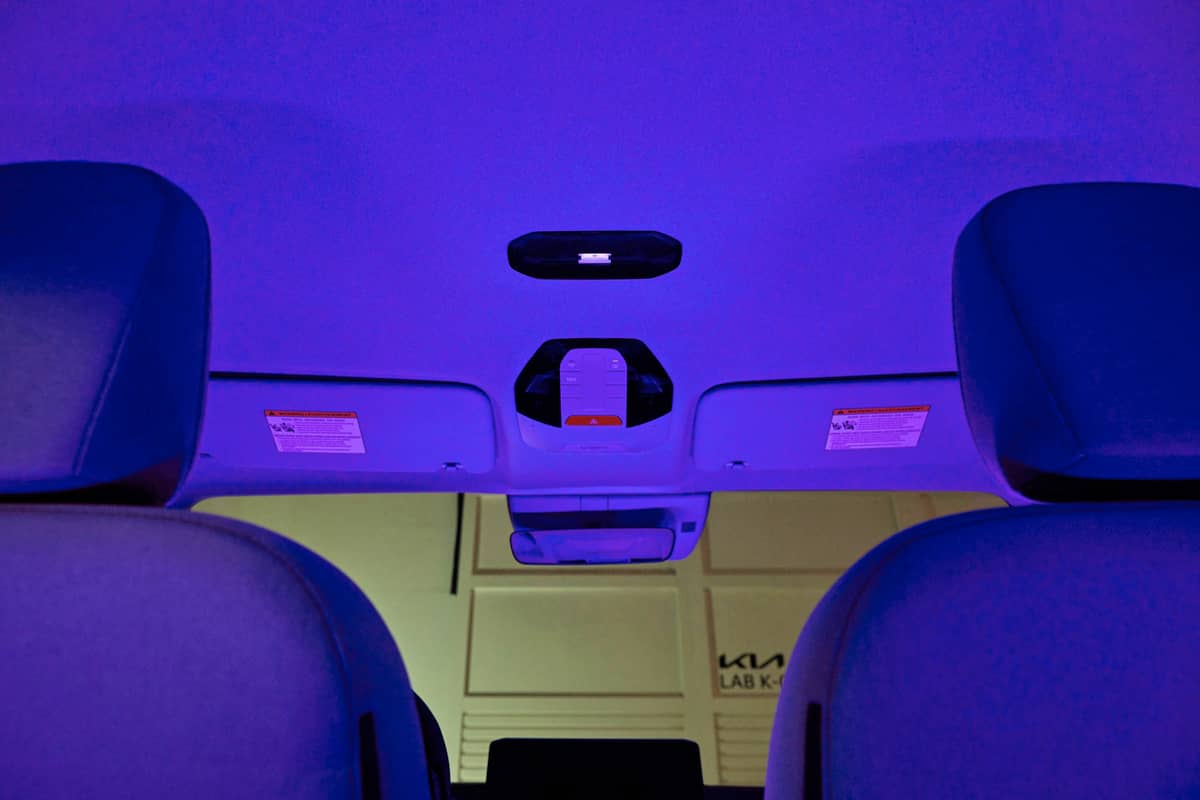
FAR-UVC light fills the cabin during Hyundai Motor and Kia’s test of a sanitizing system still under research and development.
PHOTOGRAPH courtesy of Hyundai
The technology, called Plasma Care UVC, is still under research and development and is not yet available in production vehicles. Hyundai Motor and Kia said any future use will depend on further testing, validation, engineering work and regulatory approvals.
The two automakers said the system uses a plasma lamp that emits Far-UVC light in the 200 to 230 nanometer range. The companies said this differs from conventional ultraviolet sterilization systems, which often use wavelengths that can be harmful to the skin and eyes when people are directly exposed.
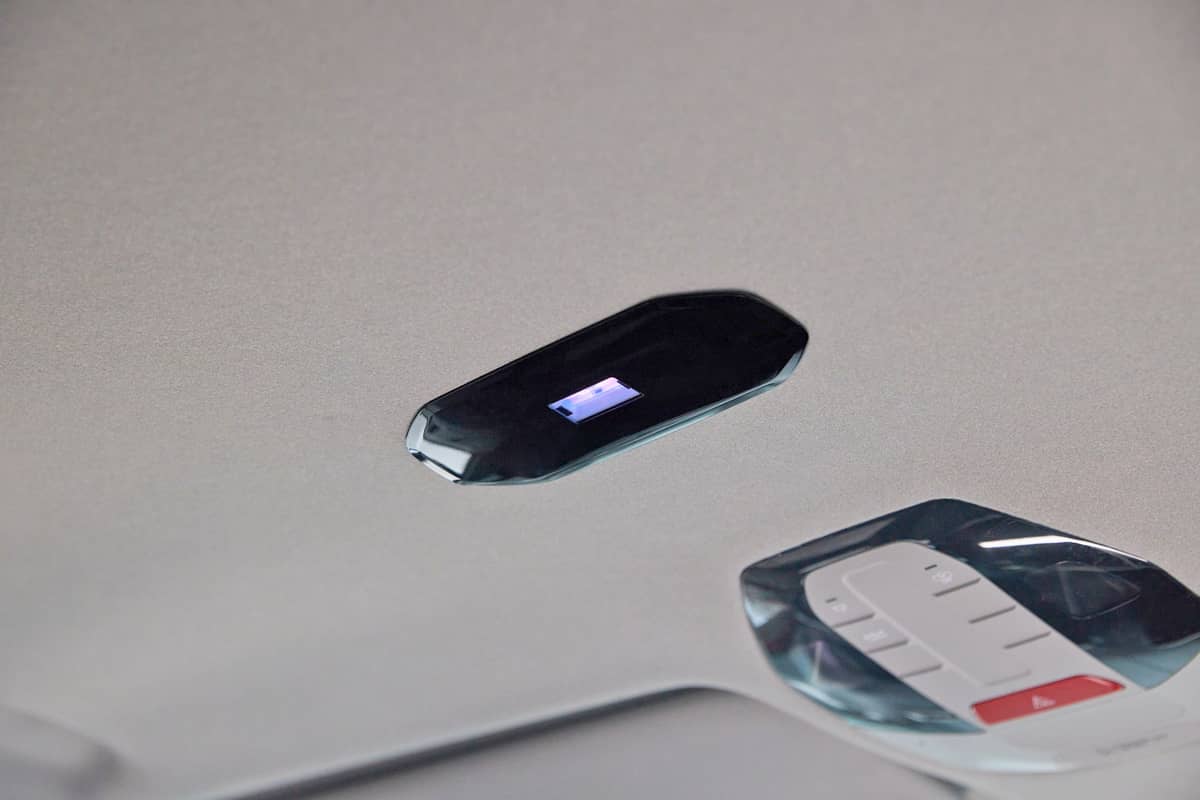
PLASMA Care UVC uses a compact ceiling-mounted unit designed to help reduce bacteria and odor-causing microorganisms inside a vehicle.
PHOTOGRAPH courtesy of Hyundai
Hyundai Motor and Kia said Far-UVC light has limited penetration into human skin and is designed to remain on the outer keratin layer. Bacteria and viruses do not have the same protective barrier, which allows the light to damage their DNA.
The companies said the technology was developed for vehicle cabins where passengers may be present. Conventional UVC sterilization, usually in the 255 to 280 nanometer range, is commonly limited to enclosed spaces such as toothbrush sterilizers and glove box sterilizers because of direct exposure concerns.
Adapting the system for cars brought several challenges. Vehicle cabins are smaller than rooms in hospitals or schools. Cars also have many electronic components and passengers sit close to interior lighting sources.
Hyundai Motor and Kia said engineers addressed these limits by using a compact plasma-based light source, improving power efficiency and adding an optical filter that helps control the wavelengths emitted by the system. The companies also said the technology was designed to withstand vibration, temperature changes and normal driving conditions.
Testing was done with outside groups and research institutions. In one test conducted by the Korea Testing Laboratory, the system was placed in an eight-cubic-meter chamber meant to simulate a vehicle cabin. The companies said the test showed a 96.8 percent reduction in airborne viruses within 30 minutes under controlled conditions.
Another component-level test was carried out with Seoul National University’s Agriculture and Life Sciences Venture Center. Hyundai Motor and Kia said the test showed a 99.9 percent eradication rate for pneumonia-causing bacteria after 30 seconds of Far-UVC exposure.
The companies said complete eradication was recorded after 60 seconds under the tested conditions.
A real-vehicle test was also conducted with the Korea Automotive Technology Institute using a Kia PV5. Hyundai Motor and Kia said the system showed 99.9 percent eradication of Escherichia coli after 40 minutes of irradiation under the tested conditions.
The automakers said the technology may be useful in purpose-built vehicles, where cabins may be shared by many passengers or used for different business needs. Hyundai Motor and Kia showed the system in a video using the Kia PV5 in examples such as a children’s shuttle and a fruit-selling vehicle.
The companies said the system can also help reduce odors because it targets bacteria and other microorganisms that produce odor-causing substances as they grow.
Hyundai Motor and Kia said Plasma Care UVC will continue to undergo technical validation based on international safety standards before any production application.
Han Joo Jang, senior research engineer at Hyundai Motor and Kia’s MPV and small sized vehicle interior engineering design team, said the technology was developed for open vehicle cabin environments with passengers, unlike existing sanitization methods limited to enclosed areas.
He said the system could serve as a cabin hygiene solution for future mobility uses, including autonomous driving and purpose-built vehicles.
Hyundai Motor and Kia said the technology remains subject to legal, regulatory and certification requirements before possible commercialization.