
Hyundai sharpens Elantra
The hybrid also gets a new Stay Mode. It allows the battery to power the climate control and infotainment system while the car is parked.

FRONT view shows the 2027 Hyundai Elantra, known as the Avante in Korea, with slim daytime running lights and a wider stance.
PHOTOGRAPH courtesy of Hyundai
Hyundai has shown the eighth-generation Elantra in Korea, where the sedan carries the Avante name and wears a sharper look, a larger body and a more tech-focused cabin.
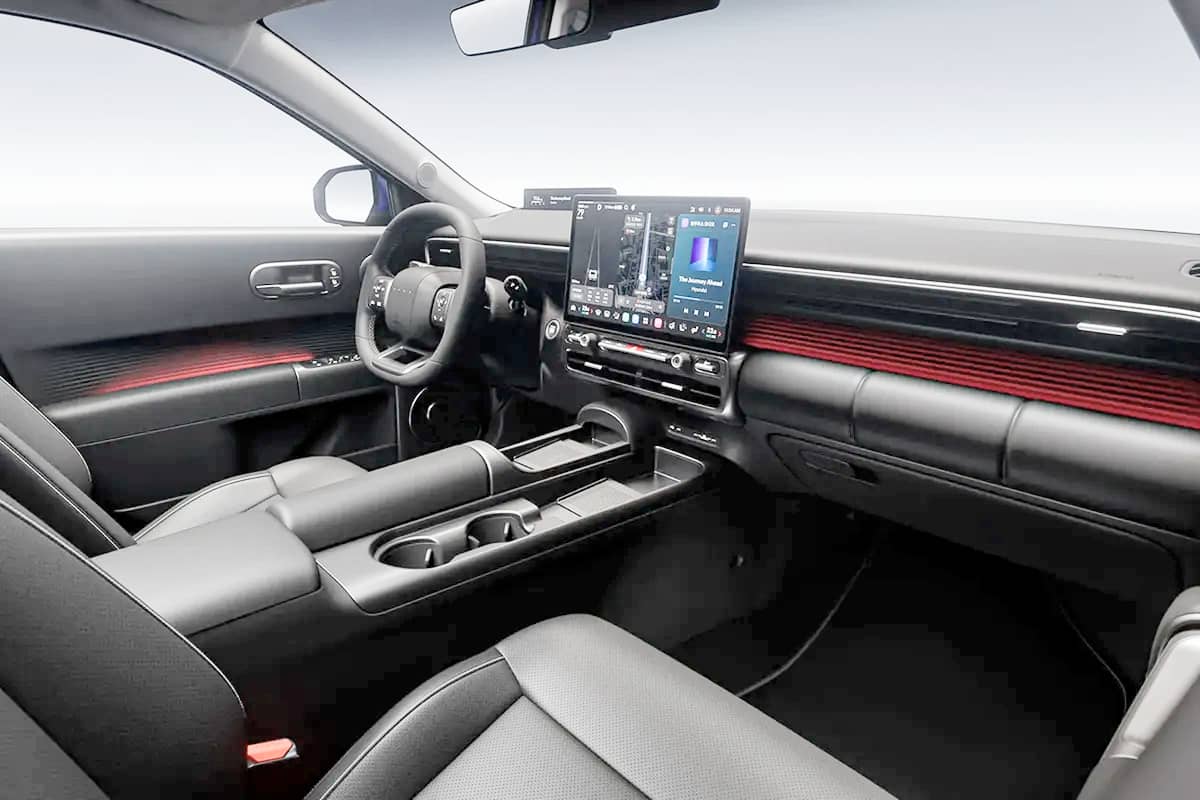
CABIN layout places a large center screen, physical controls and two wireless charging pads inside the new Hyundai Elantra.
PHOTOGRAPH courtesy of Hyundai
The new model made its debut at the Busan International Mobility Show and gives Hyundai Motor Co. (Hyundai) a fresh entry in a sedan segment that no longer gets the same attention as crossovers.
The company has not yet announced Philippine timing, although the current Elantra returned locally through Hyundai Motor Philippines Inc. (HMPH) at the 2025 Manila International Auto Show.
The 2027 Elantra is longer and wider than the outgoing model. It measures 4,765 millimeters long, 1,855 millimeters wide and 1,425 millimeters tall. The wheelbase now stretches to 2,750 millimeters. That makes it 55 millimeters longer and 30 millimeters wider than the current generation.
The size change gives the Elantra a more mature stance. It also pushes the sedan closer to midsize territory, even if it remains positioned as Hyundai’s global compact four-door.
The design takes a different path from the current model. The outgoing Elantra used sharp cuts and dramatic creases. The new one still looks bold, but its surfaces appear smoother and more sculpted. Hyundai calls the design direction “Art of Steel.”
The front end uses slim daytime running lights and hidden headlamps. The body gets flared wheel arches, semi-flush door handles and a roofline that drops toward the rear. At the back, the trunk lid also works as a ducktail spoiler. The tail lamps stretch across the rear and give the car a more futuristic look.
Hyundai also added several “H” details around the car. These touches may not jump out at first glance, but they fit the brand’s current design push across its newer models.
The cabin also gets a major rethink. Hyundai moved away from the single curved screen layout seen in many recent models. The driver now gets a slim horizontal digital gauge cluster placed above the steering wheel. The center of the dashboard gets a separate infotainment screen.
Depending on the version, the infotainment screen measures 12.9 inches or 14.6 inches. It uses Hyundai’s Android-based Pleos system. A Gleo artificial intelligence assistant is also mentioned for voice commands, navigation and vehicle functions.
The gear selector has moved to the steering column. That opens up more space on the center console. Hyundai used the extra room for two wireless phone chargers and a split center layout for the driver and front passenger.
Hyundai did not remove all physical controls. The Elantra still has knobs and switches for some functions, including climate controls. That choice should please drivers who do not want every adjustment buried in a screen.
Powertrain choices in Korea will include a 2.0-liter naturally aspirated four-cylinder engine and a 1.6-liter hybrid system. The 2.0-liter engine is expected to produce 147 horsepower, while the hybrid is expected to rise to 155 horsepower with help from a stronger electric motor.
The hybrid also gets a new Stay Mode. It allows the battery to power the climate control and infotainment system while the car is parked.
Hyundai plans to start sales in South Korea by the third quarter of 2026. More global details may follow later in the year, with the Los Angeles Motor Show in November seen as a possible venue. A new N or N Line version could also follow.
The Philippines may have to wait longer. Still, the new Elantra gives Hyundai a sedan that looks less like a carryover model and more like a fresh answer to buyers who still want a four-door car.