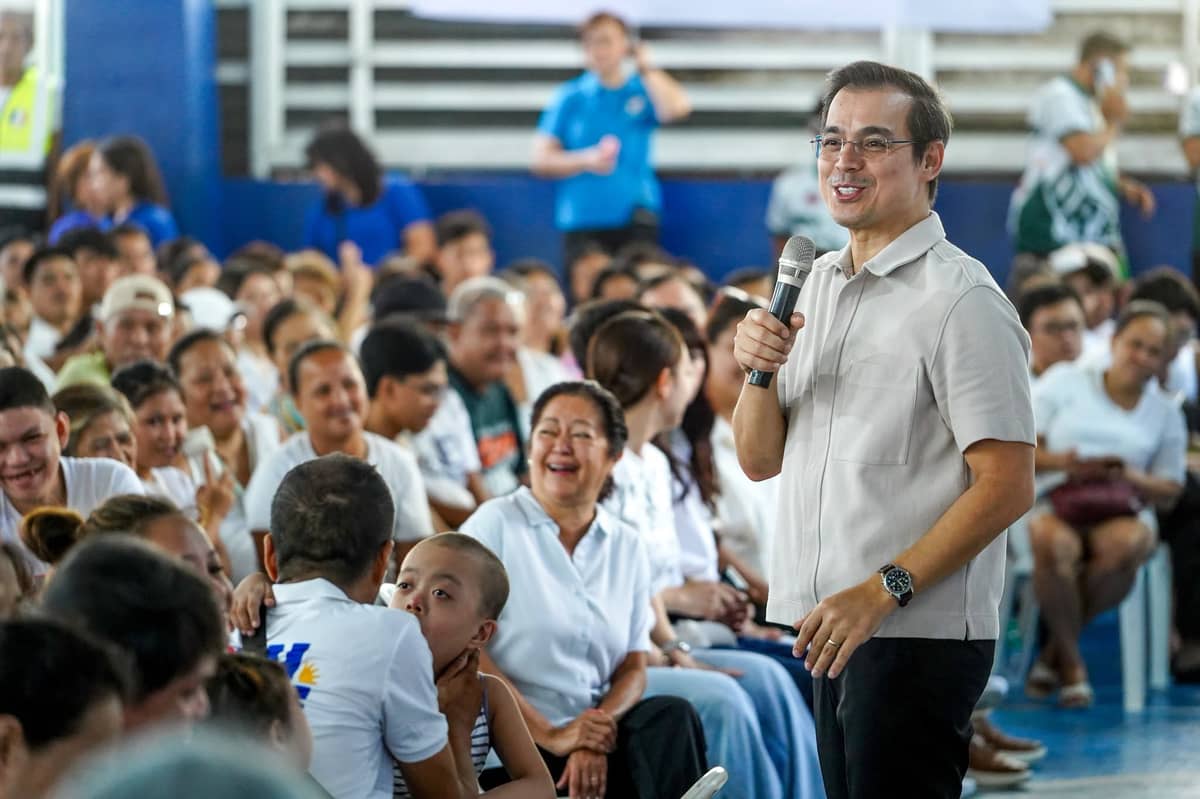
The scent of damp earth and diesel exhaust hangs heavy over Manila on a late June morning, a familiar prelude to the monsoon season. Yet, as the city gears up for its 455th founding anniversary today, there is a distinct, electric hum cutting through the humid air.
On the historic streets where Miguel López de Legazpi established the capital in 1571, the conversation today isn't just about heritage; it is about momentum.
Four hundred fifty-five years is no small feat for any city, but for Manila — a metropolis that has survived wars, calamities, and the slow erosion of public trust — this year's anniversary carries a different kind of weight: the weight of having been tested and having held its ground.
When the current administration returned to City Hall in mid-2025, it did not return to an easy situation. Behind the grand facade lay billions of pesos in unpaid obligations left by the previous administration, a heavy backlog of overdue bills owed to utility providers, and garbage contractors struggling under years of accumulated financial pressure.
The signs of neglect were visible across the city, from uncollected mounds of garbage piling up like makeshift smokey mountains, to offices operating without the systems needed to function efficiently.
Adding to the local strain, the past year brought a global oil price crisis and heightened geopolitical tensions abroad. These global ripples tested the finances of households, businesses, and local governments alike.
Faced with these conditions, the city government under the "Bilis Kilos 2.0" administration of Mayor Francisco "Isko Moreno” Domagoso chose not to make excuses.
Instead, the focus shifted to putting clear systems in place, strengthening coordination across departments, and addressing problems directly and methodically rather than allowing them to pile up.
If Domagoso’s initial mayoral stint from 2019 to 2022 was defined by rapid-fire cleanup campaigns and grand architectural blueprints, 2026 has been about institutional refinement, digital integration, and crisis-resilient urban planning.
When escalating Middle East conflicts sent global oil prices soaring earlier this year, the local government executed a sweeping efficiency directive.
Under Domagoso’s order, the Manila Local Government Unit managed to slash its internal fuel consumption by an astonishing 50 percent through optimized route planning for public services, strict monitoring of government vehicles, and hybrid work schedules for non-essential desk personnel.
"We cannot control global geopolitics," Domagoso cited during a recent briefing at the Kartilya ng Katipunan, "but we can control how much we waste."
Every liter of fuel saved by City Hall was a peso reallocated to healthcare, nutrition, and student allowances.
This disciplined approach allowed essential services to continue uninterrupted while inherited debts were settled payment by payment. Long-overdue utility bills and contractor obligations were cleared.
Simultaneously, programs for senior citizens, persons with disabilities and solo parents continued seamlessly. Electronic payouts replaced the long, agonizing lines that once snaked around City Hall, processing monthly allowances for local residents and students of the Pamantasan ng Lungsod ng Maynila and Universidad de Manila with digital precision.
Walk into the specialized district hospitals or check on local public schools this June, and the structural upgrades become clear. Capital has been channeled into expanding the vertical housing and modern school infrastructures that became emblems of Moreno’s early political legacy.
The iconic 10-story Manila City Library and the upgraded Ospital ng Maynila are now operating at full ecosystem capacity, integrating digital records to slash patient waiting times from hours to minutes.
For a populace that once viewed quality healthcare as an unattainable luxury, these institutions have democratized well-being.
Local businesses have responded with renewed confidence. Manila has seen a marked increase in new business registrations and renewals over the past year, alongside growing private investment in construction and development projects.
Yet, for all its push toward digital modernization, Manila’s true identity remains anchored in its history.
On 19 June, just days ahead of the Araw ng Maynila climax, Domagoso stood in solemn tribute at the Rizal Monument in Luneta, leading the wreath-laying ceremony for the national hero’s 165th birth anniversary.
This reverence for culture extends to the revitalized districts of Ermita, Malate, and Binondo. Under the current administration, the street-level cleanups of the past have matured into organized zoning laws, pedestrian-friendly walkways, and nighttime historical tours that have successfully lured local tourists and venture capital back into the old downtown areas.
To understand Domagoso’s unique relationship with Manila, one needs to look at how the city views him.
He remains the ultimate local boy made good. This sentiment was immortalized just this month at Star City, where the new STARtista Gallery opened to the public, featuring a hyperrealistic resin statue of Mayor Isko alongside global sports legends like Efren "Bata" Reyes and Olympic champion Hidilyn Diaz.
For the people of Manila, Moreno embodies the living narrative of Tondo — the kid who survived on salvaged food and rose to command the destiny of the nation's capital. It is this exact street credibility that allows him to enforce strict civic discipline where previous leaders hesitated.
When "Yorme" tells illegal vendors to clear a thoroughfare under the "Pwesto Ko, Linis Ko" policy, he isn't speaking from an ivory tower; he is speaking as someone who once hustled on those very pavements.
As the city enjoys the city holiday — officially declared a special non-working day by Malacañang — the mood across the capital is celebratory but focused. Araw ng Maynila 2026 is less of a retrospective and more of a launchpad for the future.
The challenges ahead remain steep. Manila is still one of the most densely populated cities in the world, constantly fighting the threats of rising sea levels, traffic congestion, and urban poverty. There remain obligations still being settled and infrastructure still being rebuilt.
But as Domagoso shared in his anniversary address, the story of Manila has never been one of ease, but one of perseverance:
"We chose to confront our challenges directly, guided by the belief that a city's strength is measured not by the absence of difficulty, but by how it responds when difficulty comes. This is the spirit we carry into our 455th founding anniversary: Matatag sa Hamon, Pinagtibay ng Panahon."
Through financial discipline, structural modernization and an unwavering pride in its identity, Manila is actively proving that ancient cities do not have to be stagnant. Through crisis and turbulence, the capital stands stronger than ever.